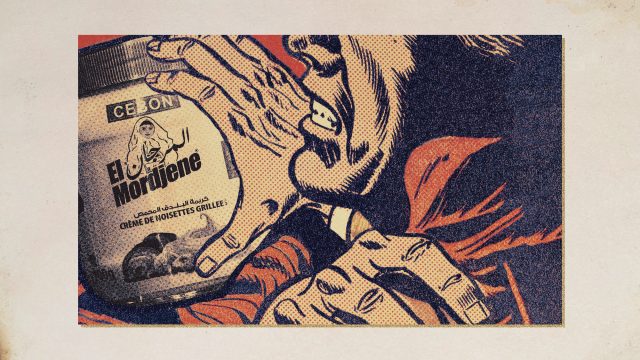
It’s sparked everything from customs seizures to raids on shops and claims of colonial insensitivity – what a time it’s been for hazelnut spread El Mordjene.
France’s decision to ban the wildly popular Algerian product has made it a “political football”, the focus of a “bitter” trade row and a “jumping-off point” for an “angry” discussion about colonialism, said The Telegraph.
Moreish and silken
El Mordjene has a “light gloopy texture” and a “sweet, hazelnutty, moreish” flavour, as if it were Nutella’s “pale, silken cousin”, said the broadsheet.
It fell foul of the French last September, when two shipments of El Mordjene were stopped at French customs. Officials claimed that the Algerian spread infringed Nutella’s trademarks, but the French government said that El Mordjene was banned because Algeria was not permitted to export dairy products to EU countries.
Officers began raiding shops to try and stamp out a black market in El Modjene, as jars were sold under the counter and online for up to €30 – more than six times the price paid for the product in Algeria. As the product disappeared from the shelves, French fans took to social media to “vent their frustration”, said Middle East Eye, and a French cooking site published a “DIY recipe” for “suffering fans”, said the New Yorker.
Some claimed that the ban was imposed to protect Nutella, the Italian chocolate hazelnut spread, because Ferrero, which makes Nutella, has its biggest factory and market in France. But the chocolate and confectionery multinational has denied any suggestion of its “potential involvement in the ban on the marketing of any product in France”.
Cebon, the company which makes El Modjene is “unhappy” and “bemused” to be banned from the French market after “freely importing” the spread for three years, said a spokesperson. The supposedly illicit dairy product it uses is actually French powdered milk, they pointed out.
But the company doesn’t plan to formally contest the ban. “Why open the gates of Hell?” the spokesperson told the New Yorker.
Craze and colonialism
Members of the Algerian-French community claim the ban is another attempt by mainstream France to “keep down” its Muslim immigrants, reported The Times. Some say that the spread was banned because its logo features a woman wearing a veil.
On the other side of the fence, right-wing commentators claim the “craze” for the spread is another symbol of a takeover of “traditional white France” by Muslims from the Maghreb.
So, the episode has gone “much deeper” than a “wacky food fight” or an “abstruse” trade dispute, said the New Yorker. Rather than being about the product itself, it’s about “nostalgia, memory, injustice, nationalism, globalisation, decolonisation, protectionism, racism, identity, immigration” and “invasion”.
But for British customers who can “still get their hands on a jar”, is a “Brexit dividend”, said The Telegraph, and the “most moreish” one to date.
A wildly popular hazelnut spread is causing a storm across the channel