Durban has been plunged into a black week of grief with the passing of several prominent community figures whose contributions spanned sport, culture, media and public life.
Johannesburg’s media fraternity is also in mourning following the recent death of veteran editor Joe Latakgomo.
On Durban’s northern flank, the prestigious Mount Edgecombe Estate — home to one of South Africa’s iconic golf courses — lowered its flag to half‐mast in honour of Kiruban Dhanpal Naidoo (1944–2026), a long-standing resident, former club captain and low‐handicap golfer.
The estate, built on the former sugar cane fields of the now‐bankrupted 134‐year‐old Tongaat‐Hulett Group, paid tribute to a man whose life intertwined with sport at every turn.
Naidoo, 82, died this week. His brother‐in‐law, Moga Pillay, former chairperson of the Gold Circle Racing and Gambling Club at Greyville, described the gesture as “a fitting tribute to one of the estate’s best‐known residents and a former 1960s athletic champion”.
The Naidoo family’s involvement in horse‐racing and betting tattersalls spans more than six decades, a legacy inherited from his father, Dhanpal Naidoo, president of the anti‐apartheid provincial athletics association at Currie’s Fountain. It was there that the young Kiruban shattered sprint records in the 100m, 200m, 400m and 800m — achievements denied national recognition under apartheid.

Durban-born Sam Ramsamy, the anti‐apartheid sports crusader credited by former president Nelson Mandela for isolating apartheid South Africa from world sport, recalled meeting Naidoo in London after he migrated to pursue a coaching career.
“I was profoundly saddened to learn of Kiruban’s passing. I officiated as a starter at many championships in which he competed — and he never lost.
He was a brilliant athlete whose opportunities were brutally limited by apartheid. That was the barrier,” he said.
Attorney Krish Naidoo, Mandela’s lawyer and co-architect of the post‐apartheid National Sports Council and the South African Sports Confederation and Olympic Committee, echoed the sentiment: “We have lost a great athlete whose early potential was robbed by apartheid policies.”
Former athlete Rashaardt Williams added that Naidoo should be remembered as one of KwaZulu‐Natal’s “forgotten legends” whose achievements were obscured by segregation.
Since 2023, Naidoo has worked to reclaim the stories of non‐racial sports pioneers.
Denied the chance to compete against white athletes, Dhanpal Naidoo petitioned the apartheid government — unsuccessfully — for his son to be tested at national level.
Kiruban’s nomination for the 1968 Olympic Games evaporated when the International Olympic Committee expelled South Africa. In 1969, British athletics official Sir Jack Crump invited Naidoo to the United Kingdom, where he joined the Herne Hill Harriers.
Granted a work permit, he competed for 15 years, clocking 10.01 seconds in the 100m at White City Stadium — a mere one‐hundredth of a second off the world record — and famously defeating Canadian champion Harry Jerome.
His career stands alongside other South Africans exiled by apartheid sport: footballer Albert Johanneson, cricketer Basil D’Oliveira, golfer Papwa Sewgolum and weightlifter Precious McKenzie.
Naidoo later played cricket in England’s Lancashire League, qualified as a test and County Cricket Board coach and became director of recreation in Hertfordshire. He also emerged as a national golf masters champion.
Returning to South Africa in 1994, he immersed himself in horse‐racing, golf and sports development, bridging athletic, cricket and golf communities.

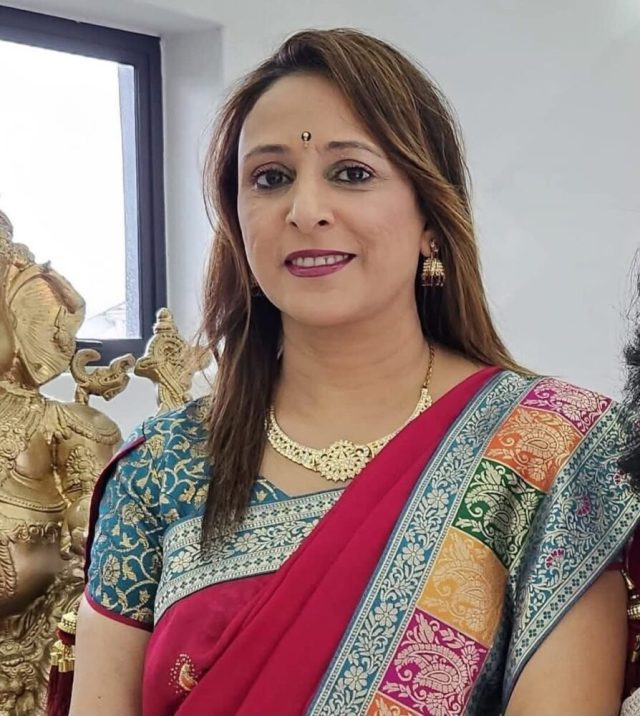
Durban’s arts and culture community is mourning the sudden death of Umita Kalyan, a beloved singer whose melodic command of Hindi, Tamil and Telugu music genres made her a fixture in the Indian cultural circles. She died at 51, leaving her family, friends and fellow musicians stunned.
Kalyan met her husband, former SABC Radio Lotus music and programme director Tansen Nepaul, when Johannesburg singing sensation Hoosen Vally referred the Pretoria-born Louis Trichardt vocalist to study music at the SABC in Durban.
The South African Hindu Maha Sabha lowered its flags in her honour, describing her death as a tragic loss to the country’s multilingual Indian community.
Veteran broadcaster Fakir Hassen wrote poignantly on Facebook: “Umita Kalyan’s voice has fallen silent.”
Both Kalyan and Naidoo were cremated at the Clare Estate Hindu Crematorium, where large crowds gathered to pay their final respects — two lives separated in their vocations, united in the city’s collective mourning.
The South African National Editors’ Forum (Sanef) has also expressed deep sorrow at the passing of veteran journalist Latakgomo on Sunday, 22 February.
“Recognised as the journalist of journalists, his contributions to the media industry have left an enduring legacy,” Sanef said in a statement.
Former editor Mary Papayya reflected on his influence: “Joe was always willing to share knowledge and experience, embodying kindness and patience in his leadership. He showed humanity in every interaction and served on the Press Council as Public Advocate with great honour.”
South African fans of American pop also mourned the death of Neil Sedaka, the Brooklyn-born pianist, songwriter, 1950s singing idol behind hits such as Oh! Carol and Breaking Up Is Hard to Do.
Though eclipsed by the rise of the Beatles, Rolling Stones and British rock bands, Sedaka reinvented himself through live performances well into the new century.
The prestigious Mount Edgecombe Estate, home to one of South Africa’s iconic golf courses, honoured long-standing resident, former club captain and high‐handicap golfer Kiruban Dhanpal Naidoo