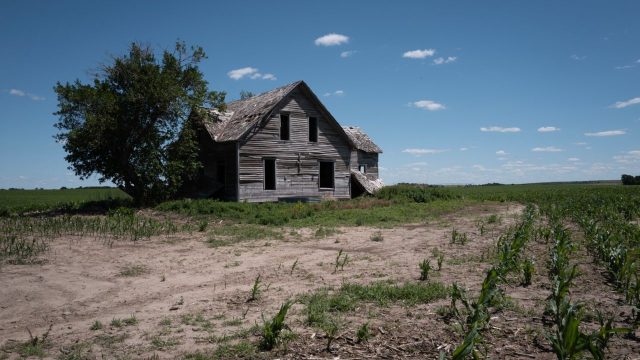
With the heat waves this summer have come droughts across large swaths of the United States, which is spelling disaster for many farmers. Coupled with the lingering problems from last year’s dry winter, some farmers say their livelihood in the fields is literally and figuratively drying up.
Why is this particular drought so bad?
While many summers bring droughts, 2026 has been worse due to a confluence of factors, including the arrival of El Niño. The ocean-warming weather pattern “can contribute to severe droughts” which often “disrupt growing seasons in key breadbaskets of the world,” including parts of the United States, said Mother Jones. Some experts believe this El Niño could be the strongest so far this century, making it an especially dry season.
The extreme heat seen in many American areas is also contributing, leading to drought patterns that are “intensifying across several key farming regions while corn and soybean crops enter critical reproductive stages,” according to the USDA. Some areas in the Western U.S. are routinely seeing days over 100 degrees Fahrenheit, which is “increasing stress on vegetation and raising concerns over fire ignition.”
Farmers are also trying to deal with the drought while still recovering from an unusually dry winter, which was an “extraordinarily dry one in the Western part of the country” that has been “taking a bite out of farmers’ plans,” said PBS News. All of this combined has created an extremely difficult season for farmers. One notable dearth is occurring along the Colorado River system in Arizona, where the drought is “pitting farmers against residents of cities and suburbs as well as industrial users including data centers, solar projects and semiconductor plants,” said Reuters.
How are farmers being impacted?
Many could be “feeling the impacts of the ongoing drought and extreme heat this summer both in the short-term and long-term future,” said WRAL-TV Raleigh. Some customers have had to cut back on buying plants because of water restrictions, which have also “led to some smaller crops” this summer. “We just have enough water to grow what we normally grow. We didn’t expand any more this year,” farmer John Harmuth said to WRAL-TV.
Across the country in California, a similar scenario is playing out; the state has been the “king of broccoli production for decades,” but “water struggles provide an opening for New York, Maine and other Eastern states to boost their own production of the green vegetable,” said Politico’s E&E News. While California isn’t “about to be unseated” as the top broccoli grower, farmers in the Golden State may see increased competition as farmers in the East “could fill some of the gap caused by drought if the region coordinates its efforts.”
With farmers continually losing access to water, many are turning to state governments for solutions. In Arizona, farmer Jace Miller is fighting with “housing developers and solar companies” who are “buying up agricultural land he leases south of Phoenix,” said Reuters. He is now urging Arizona politicians to “impose a moratorium on residential growth, arguing that farmers are critical to the country’s food security.” He also pitched ideas such as “cross-country water pipelines similar to those for oil.” Companies “can’t just keep taking water from agriculture,” Miller said.
Californians to North Carolinians are dealing with extreme weather problems