
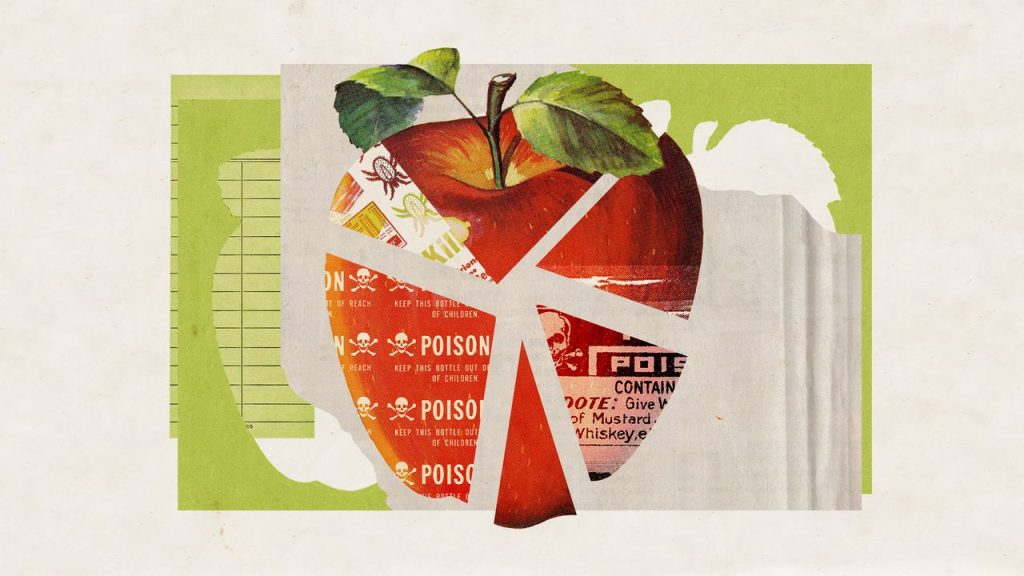
Poisoned apples may sound like the stuff of fairytales, but one of Europe’s favourite fruit might warrant a real-life health warning as environmental groups raise the alarm over toxic pesticide residues.
Pesticide Action Network (Pan) Europe, a coalition of NGOs, analysed apples bought in 13 European countries. It found residue from multiple pesticides – so-called “pesticide cocktails” – in 85% of apples.
In 71% of cases, the apples contained at least one residue of pesticides classed “among the most hazardous in the EU”, Pan Europe said.
The cocktail effect
Apples are the most widely grown fruit in Europe and “are also among the most heavily treated”, said Agence France-Presse.
Most of the pesticides employed by farmers target apple scab, “the main fungal threat to orchards”. The EU permits pesticide residue up to a certain level – but the Pan Europe research focused on the “cocktail effect”: exposure to several pesticides in one product.
The study, conducted last September, revealed that 64% of apple samples contained at least one residue of PFAS pesticides, also known as “forever chemicals”. Fludioxonil – a chemical toxic to human livers and kidneys – was found in nearly 40% of samples. “It should have been banned, but EU member states have been blocking this for a year now,” Pan Europe said in a statement.
Most residues also exceeded the stricter limits of pesticide levels for children under three. If the apples were sold as processed baby food, 93% of them would be banned.
A growing risk
The “damning report” criticised the EU’s risk assessment procedure, which assesses pesticides individually, or “in silos”, and disregards the “cocktail” effect, said Euronews.
“The European Food Safety Authority (EFSA) was tasked 20 years ago to develop a methodology to regulate the cocktail effects of pesticides, but they still do not fulfil this legal obligation,” said Gergely Simon, a campaigner at Pan Europe. “Young parents are not aware that feeding their children with fresh conventional fruits or vegetables strongly increases their exposure to pesticides, sometimes more than 600 times.”
Residue levels are also rising. Between 2012 and 2022, the average pesticide residue levels in the top 10 fruits consumed by children rose by 17%, a Foodwatch Netherlands study found.
The European Commission and EFSA have been working since 2021 to “expand cumulative risk assessments to more pesticide groups”, said Euronews. But in 2025, the EU proposed changes that would “weaken pesticide regulation”. Now, with rules to address pesticide cocktails “in limbo”, campaign groups are urging the bloc to “speed up”.
Campaign groups say existing EU regulations don’t account for risk of ‘cocktail effect’