
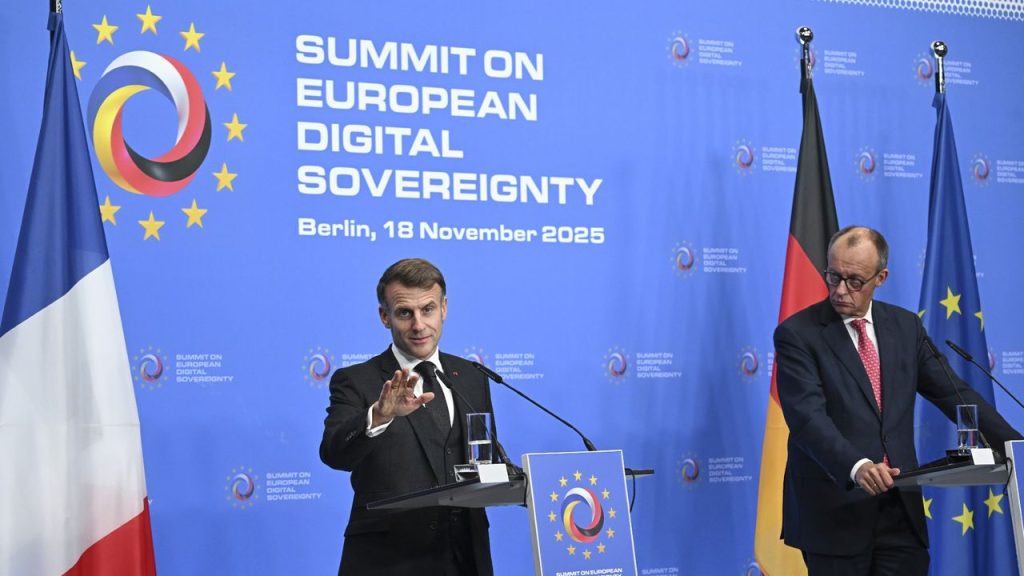
It’s about time Europe started “flexing its innovation muscles,” said John Thornhill in the Financial Times. “In spite of the ambient Euro-gloom,” the continent still boasts extraordinary economic strengths. It is home to “thousands of world-class scientists and researchers” who are seeding “a vibrant early-stage startup ecosystem.” It’s also fast becoming a worldwide leader in areas such as material sciences, pharmaceuticals, and robotics. “If it could create a VC money-mobilization machine on a par with the U.S.,” things would really transform. To that end, the European Commission recently published new legislation that it says will “encourage more investment” in areas like data centers and chipmaking, which is “a welcome sign.” The commission also revealed a new framework to reduce reliance on the U.S. and China; that will be harder to achieve. The reality is that Europe still “remains inextricably dependent on U.S. technology,” and it won’t win in a fight with the Trump administration. But it is at least “finally flicking the switch from defensive regulation to creative innovation.”
Europe is right to worry, said The Economist. “The grip of American tech is, if anything, growing tighter.” French firms alone buy more than $50 billion “in software and cloud services annually from Uncle Sam’s tech giants.” Policymakers fear the U.S. could one day “wield tech as a geopolitical weapon, in the form of a kill switch that can turn off services.” Another concern is that Europe will get left behind economically if it can’t compete in the AI race against America and China, “which reaches into many sectors where Europe remains strong.” But building tech ecosystems up from scratch “is hard,” and “America’s strong economic momentum makes it harder still.” Unplugging from U.S. tech entirely is “probably an impossible task,” said Matt Burgess in Wired. The European Parliament has switched the default search engine on its devices from Google to a French alternative, and many French government workers are using home-grown open-source office software. But Europe is “deeply intertwined with U.S.-based technology firms,” especially those that do cloud computing, AI, cybersecurity, and mobile operating systems.
European businesses fear “the EU’s efforts to wean the continent off American technology could backfire,” said Chris Dorrell in The Times (U.K.). The new legislation includes a mandatory scoring system designed to rank the safety of foreign tech systems that some entrepreneurs have already likened to “another invisible compliance tax.” Europe also needs to tread carefully here, said the Financial Times in an editorial. “Making its economy more dynamic” is critical, but “it must avoid antagonizing” a Trump White House “that views EU regulation as aimed squarely at stifling U.S. dynamism.” In a “dog-eat-dog world,” Washington will be “ready to use its tech supremacy to exert leverage.”
The continent has the scientists who could rival American innovation