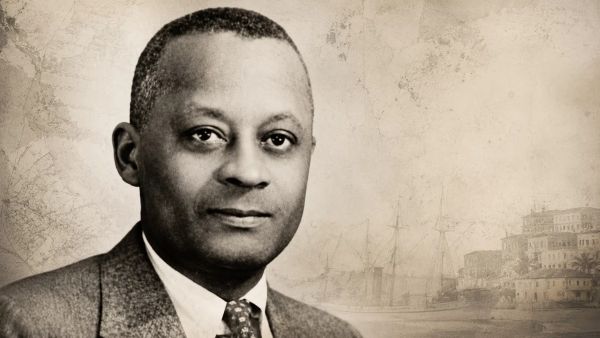
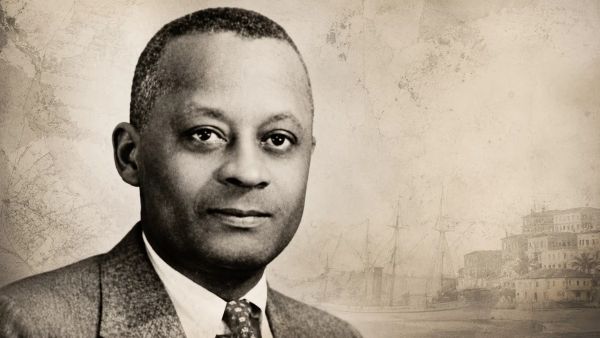
[Many thanks to Peter Jordens for bringing this article and all related links to our attention.] Richès Karayib writes about the literary trajectory of Eric D. Walrond (1898-1966) from Guyana to the United States (via Panama and Barbados) where his work as an editor and writer was significant in the Harlem Renaissance.
Eric Walrond did not leave an abundant body of work, but his name occupies a singular place in the literary history of the Black Atlantic world. Born in Georgetown, Guyana, then under British rule, he grew up in Barbados, Panama, New York and England. This trajectory forms the very material of his writing. For him, Guyana is not a point of departure erased by migration. It remains a founding origin, extended by the ports, newspapers and languages that circulate around the Atlantic.
Georgetown, the first anchor of a displaced life
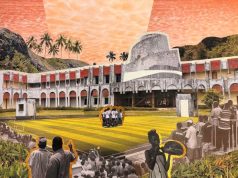
Eric Walrond was born on December 18, 1898, in Georgetown, Guyana. His father came from this mainland territory of the English-speaking Caribbean; his mother was from Barbados. From a very early age, he grew up in several different places. He left Georgetown, lived in Barbados, then in Colón, Panama, a city marked by the construction of the canal and the arrival of workers from the region.
His passage through Panama was decisive. There, he observed a society where men and women from English-speaking territories worked under difficult conditions, often locked into harsh racial hierarchies. This reality nourished his vision. He would never describe the tropics as a peaceful setting. He writes of them as places of work, tension, fear, resistance and survival.
A voice from Guyana in New York noir
In 1918, Eric Walrond arrived in New York. Harlem became one of the major centers of black thought, press and creativity. But his importance lay in the fact that he did not arrive as an American writer. He arrived with a memory of Guyana, Panamanian experience and first-hand knowledge of migration from the English-speaking Caribbean.
In the 1920s, Black New York brought together people from the United States, Jamaica, Trinidad, Barbados, Guyana and Panama. Eric Walrond brings a particular sensibility: that of a man trained in the region’s British territories, ports and press. He collaborated with several publications and became close to the intellectual circles of the Harlem Renaissance.
Tropic Death, a book that refuses to be exotic
In 1926, Eric Walrond published Tropic Death his most important work. This collection of short stories does not seek to flatter the tourist or colonial imagination. It shows fragile existences, exposed to poverty, accidents, beliefs, social violence and death. The characters are not decorative silhouettes. They are workers, isolated women, children, sailors, peasants, inhabitants of villages or port districts.
The book’s strength also lies in its language. It doesn’t smooth out the words to make them more comfortable. It lets us hear accents, oral rhythms, popular expressions and traces of Creole. This writing gives a literary place to voices that the English-language publishing of his day kept at a distance. Tropic Death thus becomes an important text for understanding how a Guyana-born author inscribed the realities of the black tropical world in modern literature. [. . .]
For full article, see https://richeskarayib.com/eric-walrond-the-writer-from-guyana-who-brought-the-black-tropics-into-the-harlem-renaissance
ALSO READ:
Gun-toting drunks, boy-eating sharks and bloodsucking babies: the violent, brilliant stories of Eric Walrond
Ralf Webb, The Guardian, May 6, 2026
https://www.theguardian.com/books/2026/may/05/tropic-death-eric-walrond-harlem-renaissance-caribbean
Eric Walrond: The forgotten genius of Caribbean literature
Gazeta Express, May 5, 2026
https://www.gazetaexpress.com/en/Eric-Walrond–the-forgotten-genius-of-Caribbean-literature
[Many thanks to Peter Jordens for bringing this article and all related links to our attention.] Richès Karayib writes about the literary trajectory of Eric D. Walrond (1898-1966) from Guyana to the United States (via Panama and Barbados) where his work as an editor and writer was significant in the Harlem Renaissance. Eric Walrond did