
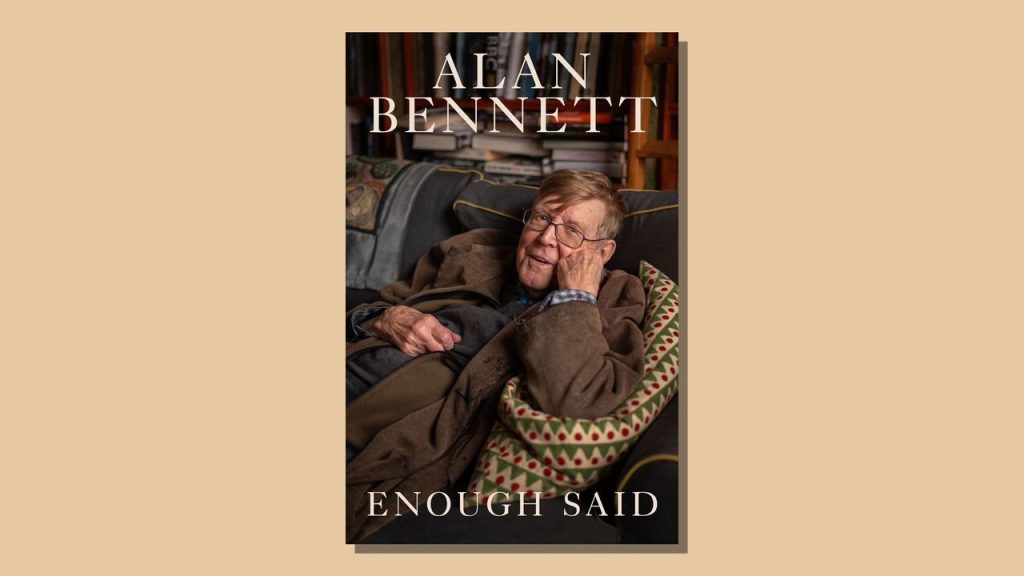
Alan Bennett once said that “if you live to be 90 in England and can still eat a boiled egg, they think you deserve the Nobel Prize”. Well, here he is at 91, serving up “another volume of his punctiliously kept and endlessly diverting diaries”, said Nick Curtis in The Independent.
“Enough Said” covers the years 2016 to 2024: “the pandemic, the rise of populism, and the likely last spurt of his formidable creative output”, with the play “Allelujah!”, the film “The Choral” and the novella “Killing Time”.
The general theme is of loss and “diminution”, as deafness, lack of mobility, cataracts and other medical problems intrude.
The “dramatis personae of his life” are dying off: Maggie Smith, his “adored” friend and collaborator; Jonathan Miller, an old friend and rival from his “Beyond the Fringe” days; and Queen Elizabeth II, his subject in the play “A Question of Attribution”. Revolted by Brexit and Boris Johnson, Bennett feels that his version of England is dying too, “its libraries closing and its churches unappreciated”. But he and his partner Rupert Thomas “still rummage through junk shops”, “frequent out-of-the-way churches” and eat fish and chips.
More than once, Bennett “apologises to the reader for saying things he’s said many times before”, said Philip Hensher in The Spectator. And he certainly does often return “to his most treasured material – family, and his exemplary standing as the grammar school boy who brought off an Oxford first”. (“Does it mean you’ve come top?” his mother asked when the results arrived.)
His memories of his Yorkshire boyhood are “wonderfully evocative of a lost world”. Rather less rewarding “are his highly conventional opinions” on politics, which “are precisely the same” as those of every other millionaire Londoner “living between Primrose Hill and Hampstead Garden Suburb”.
But his “relish” for spoken language is still there. He notes a woman in a Yorkshire newsagent, seeing news of a lightning strike, admitting cheerfully: “I love it when they have it nasty down south.”
Even as a young man, Bennett was a bit of a fogey, said Johanna Thomas-Corr in The Sunday Times. Back in the 1980s, he wrote about the elderly “with piercing tenderness” in his “Talking Heads” series. “So old age feels like a homecoming, a phase for which he has been practising all of his life.” Yet he’s still suffering “adolescent doubts”. When he enters a room full of people, he feels about 16. He worries about whether he has made his mark; he fears being remembered as a “chronicler of the toasted teacake”. “In an age of curated self-belief, his vulnerabilities feel refreshing, his reticence almost radical.”
The 91-year-old ponders mortality and loss in his fourth instalment