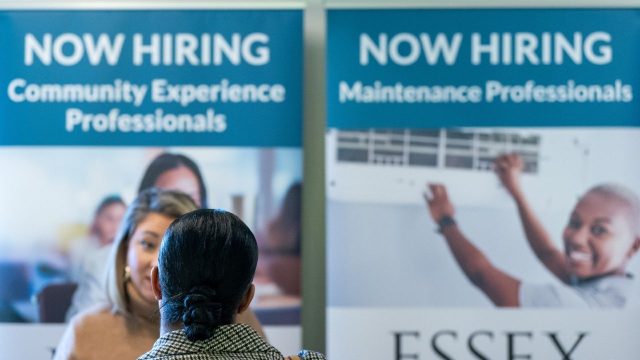
The Bureau of Labor Statistics released a “Schrödinger’s cat of employment snapshots” last week, said Alicia Wallace in CNN.com. It reported that the U.S. added 130,000 jobs in January, far more than economists forecast, suggesting a stabilizing employment market after months of deteriorating numbers. But the bureau also revised down its jobs numbers for last year to show 2025 to be “one of the worst years ever for job creation outside of a recession.” The annual recalibration meant that “a million U.S. jobs disappeared overnight,” said Larry Edelman in The Boston Globe. “Poof!” In fact, those roles didn’t vanish—they “never existed in the first place.” The revisions don’t mean the department is incompetent or “plays politics with the numbers to make a president look good or bad.” They just reflect updates as more data emerges. The main takeaway is that last year, “the economy added an average of 15,000 jobs a month, even fewer than the paltry 49,000 average previously estimated.”
The January report had one bright spot, said Vince Golle in Bloomberg. Factory jobs increased for the first time since late 2024, a sign that “American manufacturing may be starting to emerge from years of malaise.” Combine those gains “with a solid advance in the construction industry”—powered in part by data center build-outs—and we see a gain of 36,000 jobs “among goods producers, the most since mid-2023.” Still, the “lion’s share” of job growth came “from one specific task: caring for older Americans,” said Allie Canal in NBCNews.com. About 124,000 of last month’s 130,000 new jobs were in the health-care sector. We’re not talking about a boom in highly skilled and well-paid surgeons, but rather more home health and personal care aides. “Demand for long-term care is projected to keep rising” as the U.S. population ages. Most of the direct care workforce performs physically demanding work for a median wage of $16.82 an hour, barely enough to exceed the $32,150 federal poverty level for a family of four. And as immigration restrictions tighten, “the strain on this workforce is building at the very moment the country needs it most.”
The White House wants Americans to believe “that near-zero job growth is fine because immigration has plunged,” said Paul Krugman in his Substack newsletter. “All of the jobs that we were creating in the Biden years were going to illegals,” senior trade adviser Peter Navarro said last week. “Americans were going to the unemployment lines.” But the evidence shows that immigrants are “mainly complements, not substitutes, for native-born workers,” filling jobs others don’t want in agriculture, meatpacking, construction, and, yes, health care. Close to 40% of home health aides and 28% of personal care aides are immigrants, according to data from the Migration Policy Institute. One recent academic paper found that “the arrival of an extra 1,000 immigrants leads to employment of an additional 28 aides, 49 nurses, and 19 doctors.” And like the vast majority of immigrants, those workers pay taxes and boost economic growth. Waging war on them will “make native-born Americans poorer—and send thousands of us to an early grave.”
Construction and home health aide jobs are on the rise