Back in 2001, his plan to start a rocket company seemed so misguided, his friends urged him to abandon it.
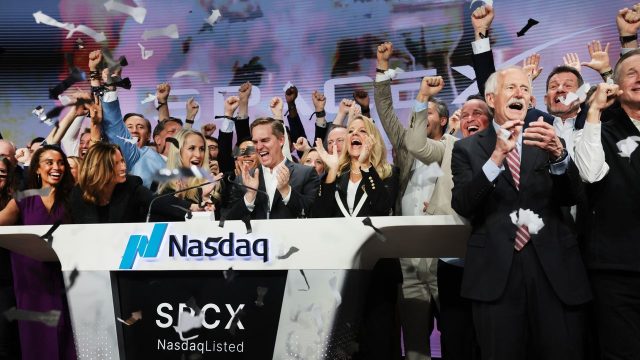
Last Friday, Elon Musk listed SpaceX on the Nasdaq at an initial valuation of $1.77 trillion. The largest flotation in history, it blasted Musk into the stratosphere as the world’s first trillionaire.
Eye-popping valuation
What makes the flotation doubly extraordinary, said Boris Johnson in The Mail on Sunday, is that it amounted to a punt, a gamble on one man’s vision for the future. In a nutshell, Musk plans to use the $86 billion capital injection to build thousands of huge, fully reusable Starship rockets, which will slash the cost of sending mass into space. These will be used to launch data centres into orbit, so that they can tap into the energy of the Sun to power our ever-growing use of AI, along with thousands more Starlink satellites, to bring reliable internet access to the three billion people who still do not have it.
With the revenue this generates, Musk will build a city on Mars. How exactly this will “butter our parsnips” on Earth, we still do not know; but what a thrilling prospect this is for humankind.
On paper, the flotation makes little sense, said John Rapley on UnHerd. SpaceX has never generated a profit; its eye-popping valuation is based on a price-to-sales ratio of 92 to one – way above the 3.6 to one average in the S&P 500. That the IPO succeeded was due in large part to excitable forecasts by investment banks who stood to make vast sums from it; but it is also the case that many investors have faith in Musk’s ability to make science fiction a reality.
A move to Mars?
His plans are hugely ambitious, said The Economist. They depend on Starship, which is already late; and tech that doesn’t even exist yet. But Musk has defied sceptics before: people said he’d never be able to land rockets for reuse; now his firm does it twice a week. And 10,000 of his Starlink satellites are already beaming internet access to 12 million people – as well as to various arms of the US government.
Of course, some people will hate the idea of doing anything that adds to Musk’s wealth and power, said Will Dunn in The New Statesman. Others, who do not object to his hard-right political interventions, may worry that his commercial vision is crackpot: cities on distant planets sounds exciting, but you have to wonder how many people will want to move from Earth – which has “terrific amenities including a magnetic field and an atmosphere” – to the toxic deserts of Mars.
But most of us will be giving Musk money, like it or not. SpaceX and Tesla are now such a huge presence in the market, there will hardly be a retirement or savings fund that is not invested in them.
The SpaceX founder has defied sceptics to post the largest flotation in history