For decades, the Justice Department has pursued wide swaths of its civil rights enforcement efforts guided by what’s known as “disparate impact” standards. These rules regulate the use and withholding of federal funds in cases where a “seemingly neutral policy or action” results in “disproportionate and unjustified negative harm to a group, regardless of intent,” said Congress.gov.
Last week, however, Attorney General Pam Bondi announced that the DOJ’s Civil Rights Division will now focus only on deliberate instances of discrimination moving forward. Accordingly, said the department in a notice posted to the Federal Register, Justice Department attorneys “will not pursue Title VI disparate-impact liability against its federal-funding recipients.”
‘Important tool’ taken ‘off the table’
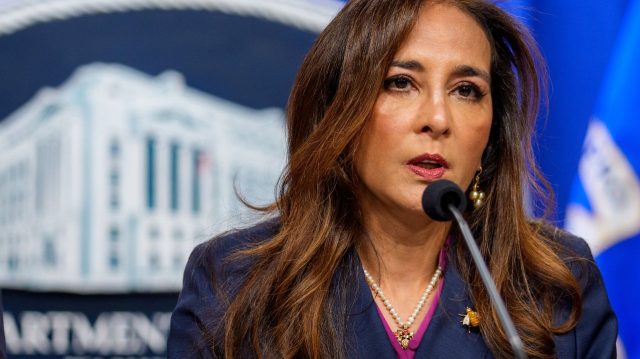
“For far too long,” the Justice Department has “required recipients of federal funding to make decisions based on race,” said Bondi in a statement announcing the policy change. The previous rules “encouraged” people to challenge “racially neutral policies, without evidence of intentional discrimination,” said Assistant Attorney General Harmeet K. Dhillon in the same release. But those rules also “undergirded” other organizational investigations into police departments of housing providers “accused of engaging in a ‘pattern or practice’ of discrimination,” said Politico.
It is a “sad commentary” that the White House has “chosen” the 68th anniversary of the DOJ’s Civil Rights Division to do away with a rule which “for nearly 60 years has helped root out illegal race and national origin discrimination by recipients of federal funds,” said former DOJ employee Christine Stoneman to Bloomberg Law. The move is “part of a broader policy overhaul” for the department, “in a year of personnel and enforcement upheaval” for the civil rights division, said Bloomberg.
The change allows institutions to “turn a blind eye to troubling statistics” if they “didn’t mean to do it,” said Antonio Ingram II, a senior counsel at the NAACP Legal Defense Fund, to The Chronicle of Higher Education. “This is 2025,” and “examples of discrimination based on race or sex are not going to be what we saw in the Jim Crow South.”
‘Laudable’ decision
Critics’ claims that the new policies “somehow authorize discrimination” are “bogus,” said The Washington Post editorial board. Instead, the revised regulations “do the opposite.” Although some of Trump’s “anti-woke agenda” has been “irresponsible,” the rule change is a “reasonable correction to past overreach.”
Disparate impact theory was “imposed undemocratically and conflicts with the Constitution,” said The Wall Street Journal. Despite having sent “mixed signals over the years,” the Supreme Court should “eventually reject it” altogether. While the administration’s push to rescind disparate impact regulations is “laudable,” it won’t “solve the constitutional problem” at the heart of the issue. The “best thing that could happen,” said Hans von Spakovsky, a senior legal fellow at The Heritage Foundation, to The Daily Signal, would be for Congress to “pass a bill making it clear that only intentional discrimination is covered by the Civil Rights Act.”
The new DOJ rules will likely face legal challenges, said Newsweek, and will “shape debates” in both the judicial and legislative branches “regarding the role of statistical evidence in civil rights law.”
By focusing solely on ‘intentional discrimination,’ the Justice Department risks allowing more subtle forms of bias to proliferate