
“Once scorned by purists as the fake Rolexes of the reading world”, audiobooks are booming, said Nilanjana Roy in the Financial Times. As the industry continues to thrive, the definition of what it means to be a reader is shifting. But does listening to a book instead of poring over its pages count as reading?
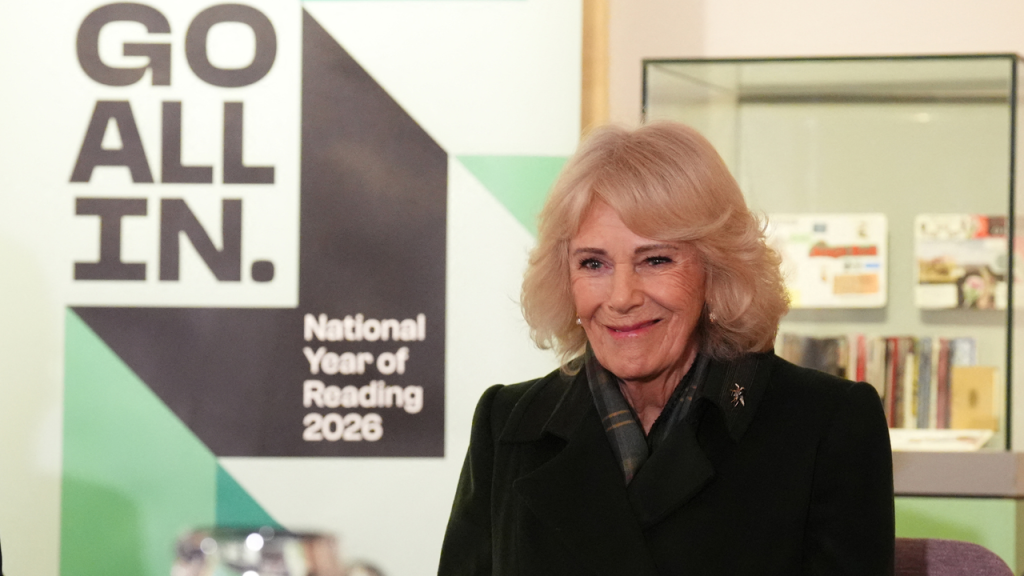
Queen Camilla certainly thinks so. During a visit this week to the National Library of Scotland in Edinburgh to launch a reading initiative, she was presented with a special edition of “The Beano” comic. In it, her cartoon character tells Dennis and his dog Gnasher: “Go all in for the National Year of Reading, Dennis! Comics and audiobooks count too!”
Pride and snobbery
Income from audiobooks generated by UK publishers rose by 31% in 2023–24, reaching a record £268 million, according to figures from the Publishers Association.
But many people don’t think audiobooks “qualify” as proper reading, said Brian Bannon, chief librarian at the New York Public Library, in The New York Times. “There is a pride – even a snobbishness – to being well read.” Telling someone that you have listened to a book instead of reading the physical copy often “comes out sounding like an apology”. In fact, an NPR-Ipsos poll conducted last year found that 41% of American adults believe “listening to audiobooks is not a form of reading”.
Our minds sometimes “wander” when we’re reading or listening, David Daniel, a psychology professor at James Madison University in Virginia, told Time. Snapping out of these “little mental sojourns” and finding your place again in the text isn’t as easy when you’re listening to a recording, especially when you are “grappling” with a complex piece of writing. “Turning the page of a book also gives you a slight break”, creating a “space for your brain to store or savour the information you’re absorbing”.
“There’s no doubt reading is good for us,” said Helen Thomson in New Scientist. An array of studies tie “good literacy in childhood with physical and mental health – and even longer life”.
The evidence for audiobooks is “thinner, but reassuring”. Most studies find “comprehension is broadly similar regardless of whether you’re reading or listening to a book”. However, there are some “subtle differences”: a meta-analysis of 46 studies found reading had “the slight edge” when it comes to “making inferences about a text – such as interpreting a character’s feelings”.
How you listen can also impact cognition. “Listening to audiobooks isn’t necessarily detrimental,” said Janet Geipel, an assistant professor at the University of Exeter. What can be problematic is the way attention is managed: when you are concentrating, listening can be “just as effective as reading”, but if you try to “multitask” your “depth of processing may be lower than when you sit down and read without distraction”.
‘Hugely positive’
“Audiobooks were my lifesaver,” said Miranda Larbi in Stylist. They turned out to be a “gateway for physical books – a key for unlocking a world that felt totally inaccessible”. “Gloomy” news coverage often focuses on how fewer children are finding pleasure in reading, so I found the National Literacy Trust’s new report, that more than 40% of children are using audiobooks to read, “hugely positive”.
The “content” is more important than the “medium” when it comes to reading, Debbie Hicks, creative director of the Reading Agency, told The Guardian. And audiobooks can be a great way to appeal to those who are “less inclined to read”, like men. It’s crucial we “reframe what it means to be a reader”, moving past the “traditional hierarchical values” that still put physical books at the top.
To suggest that reading books is the “only kind of reading that counts” does a “disservice” to the “many dyslexic or visually challenged booklovers among us”, said Roy in the Financial Times. Audiobooks should be seen as a “parallel way to read”, not dismissed as inferior.
The “destigmatising” of audiobooks could offer a “path to a more nuanced way of thinking about literacy”, said Bannon in The New York Times. “However we read – by eye, by ear or both – it all counts. We need more readers – however they get there.”
Queen Camilla insists listening is legitimate but a snobbery remains that’s hard to shift