
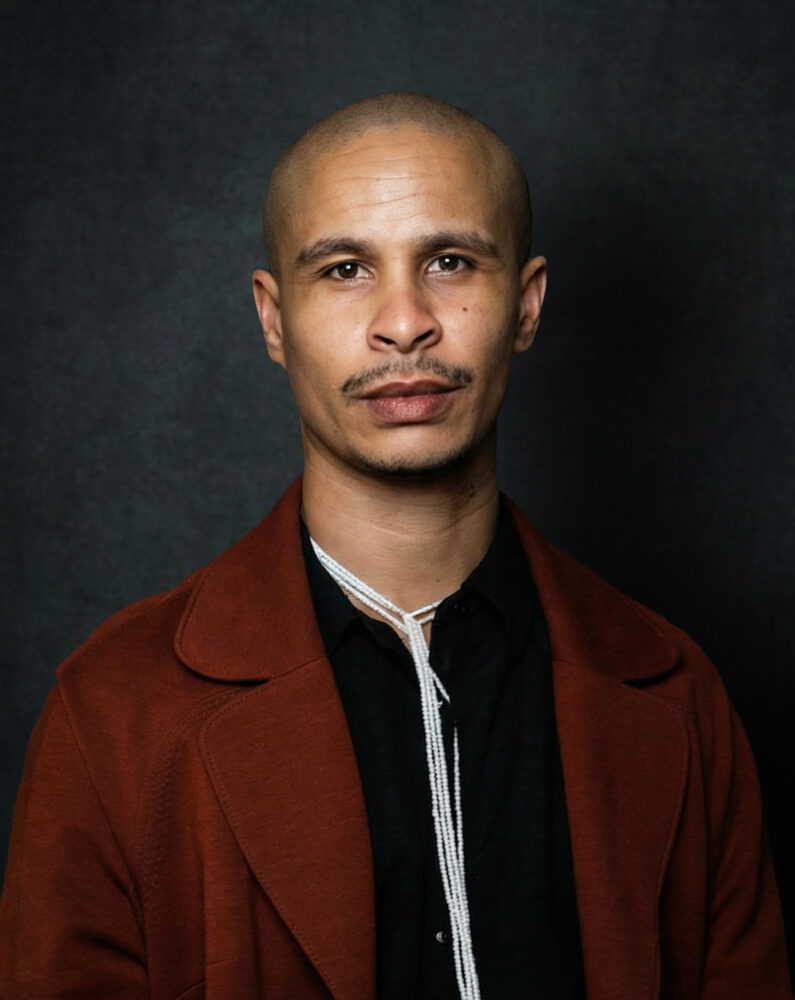
After winning the Best African Film at this year’s Joburg Film Festival, Variations on a Theme will have a limited one-week run in select cinemas starting Friday, 8 May 2026, over the Mother’s Day weekend.
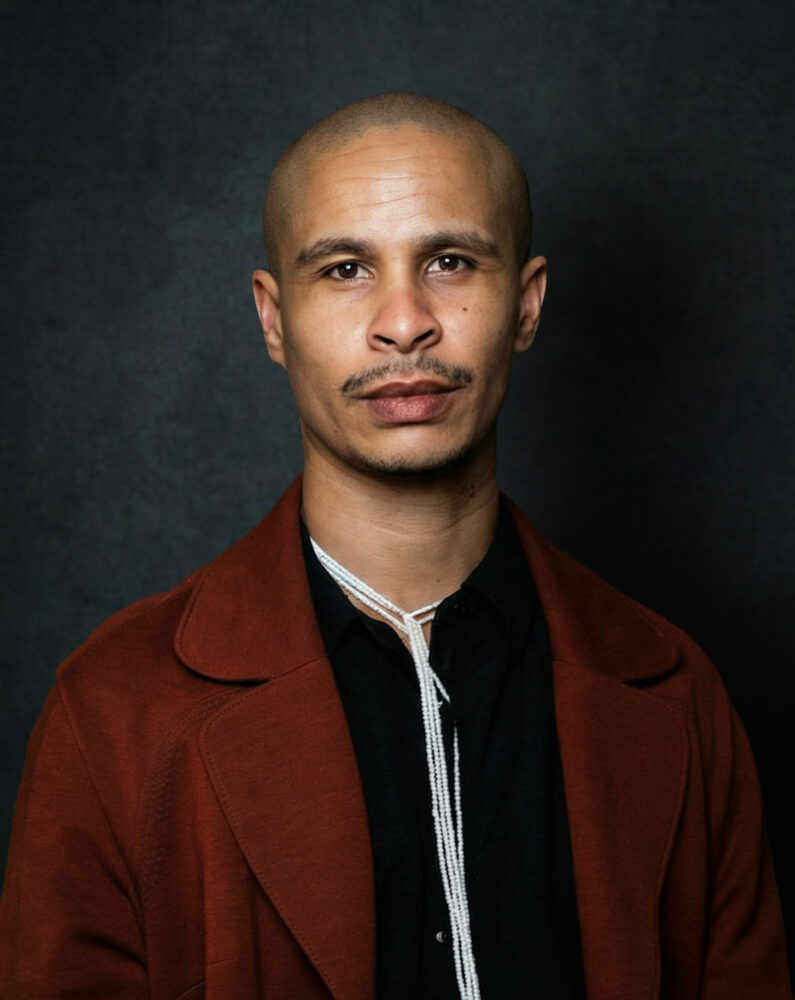
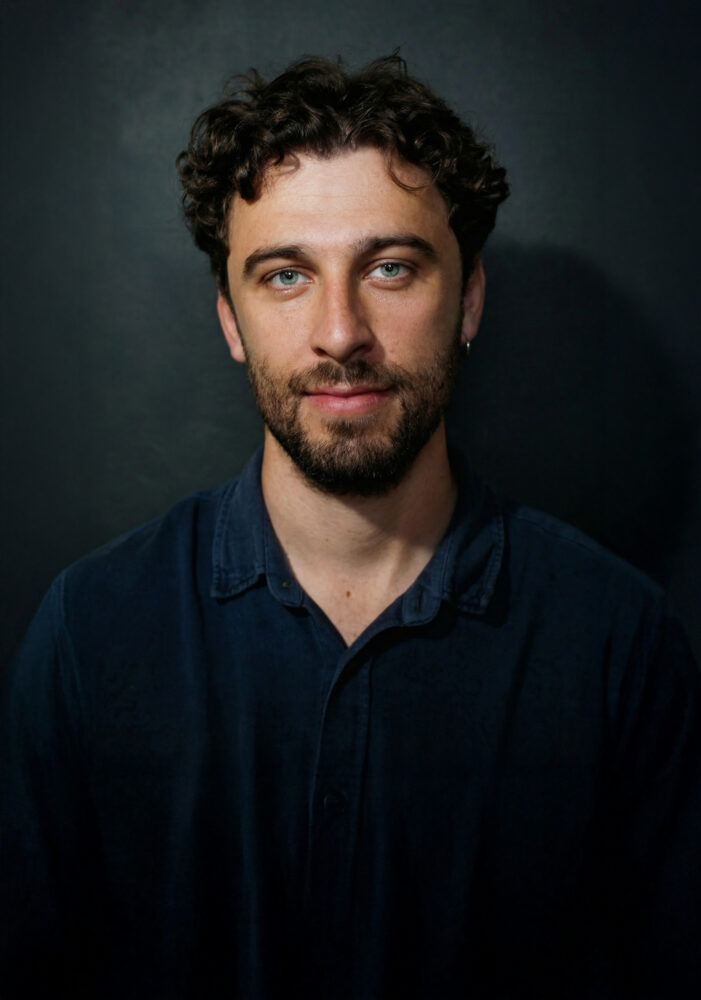
Directed by Jason Jacobs and Devon Delmar, the 65-minute film also won the top prize at the International Film Festival Rotterdam. The prestigious Tiger Award previously went to two-time Oscar winner Christopher Nolan for his debut feature Following.
Set in the mountains of Kharkams in the Northern Cape, Variations on a Theme follows Ouma Hettie, an 80-year-old goat herder who is taken in by a scam promising long-overdue reparations for her father’s World War II service.
Although it appears to be a documentary, the film is actually fictional, drawing on real-life experiences. It features Jacobs’ grandmother, Hettie Farmer and is inspired by his great-grandfather, Petrus Jakobus Beukes, who enlisted in the Allied forces during World War II at the age of 19.
Variations on a Theme is a masterpiece that unearths the memories of such unsung heroes and celebrates marginalised communities. These themes mostly underpin Jacobs and Delmar’s work at KRAAL, a production company based between Namaqualand and Cape Town.
“We are all the consequences of our ancestors, the recent ones and those that date back millennia,” Delmar shared with me during our interview.
“We carry in our bodies much of their memories and traumas, consciously or not. We live in the towns and cities that they built and their beliefs and ways of understanding the world shaped our present realities. So yes, in one sense it is a celebration but it’s also an act of witnessing something,” he added.
Ghosts and grief
Shot over five days with 30 shots per day, Variations on a Theme was sparked by the need to confront the ghosts and grief haunting many people in the Kamiesberge region.
“We spent time listening to the stories collected by our team at KRAAL and how these stories echo ancestral grief,” Jacobs also tells me.
“A grief that is difficult to forget or explain. It was a process of deep listening and patience, much like the stories in the film and it was worth the wait to tell this story,” Jacobs said.
Born in Kharkams, the 2026 Standard Bank Young Artist of the Year said he learned very late about his great-grandfather’s involvement in the Cape Corps. Upon their return home from war, these unsung heroes arrived at a now-barren place, displaced and isolated, with boots and a bicycle being their only compensation.
Like many descendants in the community, Jacobs often wondered about the immense guilt, shame and disappointment his great-grandfather might have experienced when returning home to Kharkams.
Jacobs was also haunted by his grandmother’s hope that her father would be remembered and that he would finally be laid to rest with honour and dignity as a form of reparation.
Accordingly, the film speaks to the many black and brown families waiting for reparations – verbally and monetarily – their forebears never received, fighting in world wars that primarily were not their own.


Visual variations and repetitions
Variations on a Theme was cast entirely from the local community with project manager Cleveland Hopp laying the groundwork. This is however not Jacobs and Delmar’s first rodeo shooting in a deeply rural setting. Their debut film, Carissa, which won the La Biennale Prize for Best Film in the 2023 Venice Final Cut programme, was also set in Wupperthal, a hilly small town in the Western Cape.
The film is shot with aesthetic brilliance with the wind and community spirit serving as the soundtrack.
Heartfelt and hopeful, the film’s sombre tone showcases a community waiting for something to happen, as some cling to the past like an old blanket that once gave heavenly warmth.
Despite being surrounded by family, Ouma Hettie seems to be floating in distant planets held by grief and memories, in a community that also seems to be forgotten by the rest of the country.
“Her grief was not incidental to the film; it is the film,” Delmar stated.
“We wanted the camera to honour the weight of her daily rituals—the goats, the walking, the cleaning, the cooking—not as something picturesque but as a living relationship with the land and with the people she has lost,” the co-director added.
Jacobs’ narrations in Afrikaans further embrace the visual experience with compassion; with the subtitles reading like poetry.
“It is a dance of meaning-making and every time the style is different,” Jacobs added.
“The narration is the closest proof we have that the stories are based on truth. In the film people are playing versions of themselves and we wanted to dig a bit deeper into these versions to unearth the meaning that impacts people across age, gender, race or faith. I am very proud of what we did,” Jacobs said cheerfully.
Apart from the splendid narration, structurally the film offers variations and repetitions of the same scenes shot on different days.
Inspired by the mathematical and transcendent music of Arvo Pärt and Bach, Jacobs and Delmar obsessively aimed for a unique directing style to the film.
“The Goldberg Variations, for example, presents an underlying harmony upon which Bach then played with variations in key, tempo, harmony and so on.
“So, we got to thinking what it would mean for a musical compositional form like this to exist in a narrative medium,” Delmar said.
The duo married this way of thinking about story structure with the reality of Ouma Hettie and other Kharkams villagers’ day to day life and how repetition plays such a big role in making ends meet.
Reflecting on the legacy of colonialism and apartheid on communities such as this, Delmar added: “It’s very evident the pattern of exploitation, how for so many generations in South Africa’s marginalised communities bore the brunt of oppression and sheer swindling, a cycle of violence.”
Thus, what Ouma Hettie’s character faces is merely a variation on a theme that goes back generations.
Delmar continued: “So, we felt that it was important to bring these ideas together and we arrived at a point in our writing where it became clear that the camera had to repeat the exact same shots every day for five days and that that would be the frame upon which we hang the narrative.”
“It’s there almost like a bassline, not announcing its presence too loudly but allowing other stories to take centre stage,” Delmar added beaming with pride.
Oumas and Ooms
Another overriding theme in the film is the gloomy portrayal of elderly loneliness in the countryside. Living alone, Ouma Hattie spends her days herding goats, feeding chickens and sewing.
Watching the film, I questioned whether, as urban folks, we check up on our Gogos and Oupas enough. Or perhaps we have relegated them to the fringes of society, only remembered during school holidays when we drop off the grandchildren?
As a rural boy, the eerie sight of community struggles also tugged at my heart. After more than three decades of democracy, many marginalised communities are still struck by the reality of unemployment, poverty, teenage pregnancy and water and sanitation issues.
As such, Jacobs and Delmar’s work deeply rooted in the Kamiesberg region is necessary. It’s not only the resurrection and preservation of local culture but also a much-needed celebration of unsung people — dead or alive — through award-winning visual storytelling.
It is not surprising, their production collective, KRAAL, also received the Outstanding Provincial Contribution Award for their work in the Northern Cape at this year’s SAFTAs.
“The dead do not simply leave, they remain folded into the landscape, present in the light of day and Kharkams itself carries that weight,” Delmar concluded.
Variations on a Theme will screen at The Labia and Ster-Kinekor V&A Nouveau in Cape Town, as well as at The Bioscope and Ster-Kinekor Rosebank Nouveau in Johannesburg.
A poetic, genre-blurring film, Variations on a Theme excavates ancestral grief, memory and forgotten histories in a Northern Cape community still waiting for justice