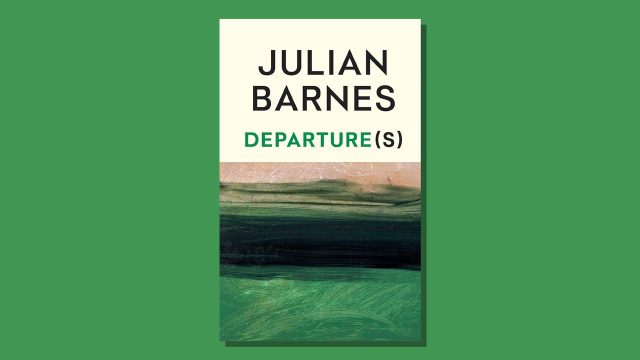
Julian Barnes’ latest book has the words “a novel” printed “bold as brass” on the cover, said Clare McHugh in The Washington Post. But it soon becomes clear that the celebrated author – who has just turned 80 – has “not merely blurred the line between fact and fiction; he has expunged it”.
“Departure(s)” begins with a “rambling meditation on the nature of memory”, examining the “involuntary” and “sudden recollections” that appear, like the familiar smells that can, without warning, transport people back to another time.
In part two, we dive into a “story” which we are told is “true”, said Frances Wilson in The Spectator. We meet Stephen and Jean – a pair of students who are introduced to each other by Barnes during their time at Oxford in the mid 1960s. Their relationship ends after 18 months and they lose touch. But after a “40-year silence”, Barnes receives an email from Stephen out of the blue “to ask if he might reunite him with Jean”. The pair rekindle their relationship and marry – only for things to fall apart again.
To what extent Barnes is “to blame for the failure of their second go-round” is unclear, “not least because the ground keeps shifting”, said Alex Clark in The Guardian. His characters may or may not be real, but Barnes is “excellent, and always has been, at this kind of Pooterish persona”.
The final section sees Barnes delve into the “struggle to find happiness and accept life’s ending” following his diagnosis with incurable but manageable blood cancer, said Max Liu in the Financial Times. His musings are, at times, “unexpectedly funny” – like when he inherit an elderly Jack Russell which he “sometimes envies for being unaware of his own mortality (he ‘doesn’t even know he’s a dog’)”.
In this part “essay, memoir and story”, Barnes reflects on the “mysteries of love and sex amid erudite references to French culture and DIY eschatology”, said David Sexton in The Standard. It concludes “beautifully”, with the author “imagining sitting at a pavement cafe with his faithful reader, enjoying a drink, watching the world go by”.
Barnes tells us this is his “last book”, said Liu in the Financial Times. “Should we take this at face value?” While his blend of fact and fiction “could have been confusing” in the wrong hands, “Departure(s)” is both “enthralling” and “moving”. At just over 150 pages it’s a slim book but “each time I read it, I thought about it for days afterwards”. If this really is Barnes’ swansong, “he has given his career a triumphant ending”.
The Booker prize-winning novelist ponders the ‘struggle to find happiness and accept life’s ending’