
“Winning was the easy part,” said Kristal Thompson in The Atlanta Journal-Constitution. Still giddy after their sweeping midterm victories, some Democrats are now signaling that when they take control of Congress in January, they will use their healthy House and Senate majorities for “political score settling.” Rep. Robert Garcia, incoming chair of the House Oversight Committee, has advised every member of President Trump’s administration to “lawyer up,” while Sen. Ed Markey promised that between investigations of Elon Musk, ICE, and Trump’s vanity construction projects, “they are going to need to plant new forests for all the subpoenas we’ll be printing.” But that is not what “we the people” want. “Where wrongdoing has occurred,” yes, there must be accountability. But if Democrats spend the next two years “consumed by endless investigations,” instead of delivering “relief from rising costs,” their return to power will be short-lived.
Americans don’t want Democrats to “just ‘move on,’” said Jan-Werner Müller in The Guardian. About 90% of this month’s voters cited government “corruption” as a top concern. For our future civic health, the nation needs a full accounting of the Trump administration’s “unprecedented” grift, from Trump’s crypto schemes to the sketchy oil deals in Venezuela. And accountability also means impeaching Trump’s most “egregious” Cabinet members—including Defense Secretary Pete Hegseth, who has committed war crimes in Iran and the Caribbean, and Health Secretary Robert F. Kennedy Jr., who has used his office to undermine American science. Democrats may as well focus on accountability, said David A. Graham in The Atlantic, because affordability isn’t happening. Come January, they’ll learn they have “few direct levers to bring down prices” and little hope of bipartisan action with a president who has vowed to become “Mr. Veto.”
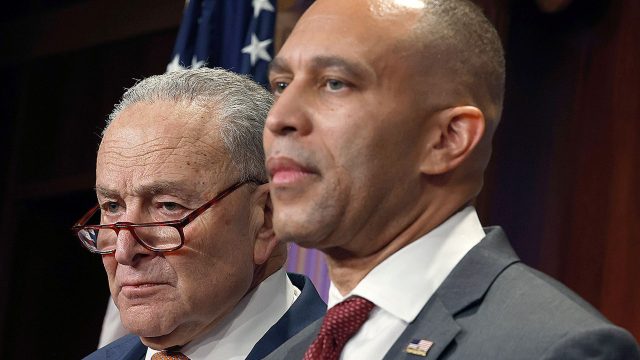
“Democrats can’t fix the inflation picture overnight,” said Rana Foroohar in the Financial Times, but they’re far from powerless. They can defund the war in Iran. They can pass a bill reversing Trump’s ruinous tariffs. They can vote to restore the funding that Trump’s “big, beautiful bill” stripped from Medicaid and drive home the insanity of a health system where people with no insurance have to go to the ER for basic care. Even if Trump vetoes it all, the goal must be to connect the dots between “today’s cost of living crisis and the broader economic systems that need to change.” That might require a change in Democratic leadership, said Michael Tomasky in The New Republic. Only the conflict-shy Chuck Schumer and Hakeem Jeffries—expected to be the next Senate majority leader and House speaker, respectively—would agonize over whether to pursue affordability or accountability. Democrats can and must do both behind leaders who understand the “risks of under-reach.”
These “factional fights” feel “almost like relics of a bygone era,” said Lauren Egan in The Bulwark. The biggest wins earlier this month were delivered by Democrats who don’t fit in “neat ideological boxes,” like Sens.-elect Annie Andrews in South Carolina, who opposes both Kennedy’s MAHA movement and Medicare for All, and James Talarico in Texas, a champion of his state’s oil and gas sector. Democrats lack a “comprehensive economic agenda,” said The New York Times in an editorial. But if they govern the way those candidates campaigned, embracing “commonsense populism” and rejecting the excesses of the woke era, the party will at least “change its image among working-class Americans.” That is a necessary first step to “an enduring Democratic majority in Washington.”
Congress looks to balance affordability, Trump investigations