The South African Constitution is hailed as one of the best in the world. Yet among those who praise it, fidelity is often limited to provisions that do not significantly alter the economic architecture inherited from an unjust, unequal past.
One of the most important provisions is the right to equality in the Bill of Rights. This right underpins the Broad-Based Black Economic Empowerment Act and related policies. Those who reject broad-based black economic empowerment (BEE) in effect reject the right to equality for black people, even if this is rarely stated explicitly.
Instead, the argument is framed as: “We support transformation but …” — and what follows the “but” usually negates what came before it. This reflects a troubling comfort with economic and institutional discrimination and the inequality that continues to define South Africa. It is not simply a passive legacy; it is defended and reinforced by resistance to transformation.

The legal sector is no different. Recognition of this inequality led to the development of the BEE legal sector code of good practice, gazetted on 20 September 2024 by trade, industry and competition minister Parks Tau. The inaugural Legal Practice Council (LPC), chaired by Kathleen Dlepu, played a key role in facilitating the code.
Although there has been some progress, transformation in the legal profession remains insufficient. Black attorneys and advocates face two main challenges.
The first is the lack of a sustainable flow of quality legal work to enable them not only to survive but to flourish. This stems from discriminatory procurement practices in the private sector and inconsistent briefing practices by the state.
The irony is that black legal practitioners study at the same universities as their white counterparts, obtain the same LLB degrees, complete the same candidate attorney training or pupillage and write the same LPC admission examinations. Once admitted, the only difference is race.
Discriminatory procurement practices keep black law firms small, while many black advocates are forced to leave the Bar. LPC statistics for 2024 show that the largest majority white-owned law firm has 396 partners, compared with 18 in the largest black-owned firm.
At the Bar, figures from the Johannesburg Society of Advocates show that, over the past five years, 406 advocates left, 66% of whom were black. More starkly, black junior advocates accounted for 85% of those who left within their first four years.
To address this, the legal sector code requires that 70% of legal work outsourced by the state be allocated to black attorneys and advocates in the first two years, rising to 80% by year five.
To curb high attrition among black advocates, the code also sets briefing targets for medium and large law firms: in the first two years, 40% of the total annual fee expenditure on advocates must go to black advocates, with 30% allocated to black women advocates.
The second challenge is the lack of representation of black attorneys in ownership structures of large, majority white-owned firms. LPC data shows that, on average, 72% of equity partners or directors in these firms are white, compared with 28% who are black.
These firms perform better at associate level, where 59% are black. The code sets targets of 30% black equity partners or directors in the first two years, including 15% black women, rising to 50% and 25% respectively by year five.
The Legal Sector Charter Council, established under the code, began operating in March 2025. Its role is to monitor compliance and guide stakeholders. In its first year, it conducted outreach and issued guidance and clarification notices. Its engagements indicate broad support for the code and a willingness among most stakeholders to comply.
The council is also finalising memorandums of understanding with several organs of state.
South Africa faces a clear choice: retain the economic and institutional architecture inherited from apartheid or pursue the path towards a more equal society as required by the Constitution.
For the legal profession, the legal sector code provides a roadmap for that journey.
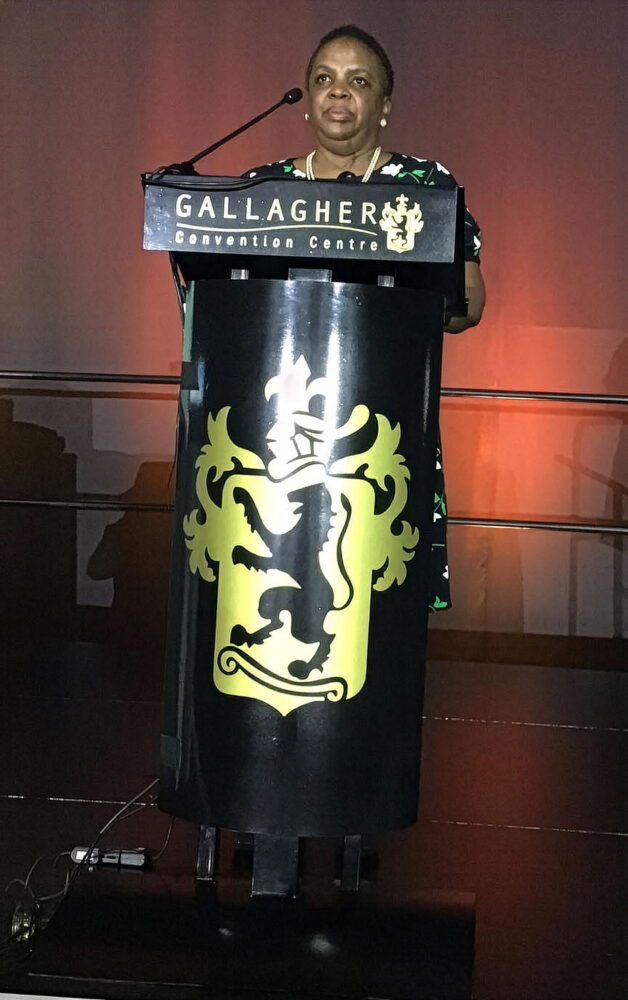
Christine Qunta is the chairperson of the Legal Sector Charter Council.
Discriminatory procurement practices keep black law firms small, while many black advocates are forced to leave the Bar. LPC statistics for 2024 show that the largest majority white-owned law firm has 396 partners, compared with 18 in the largest black-owned firm