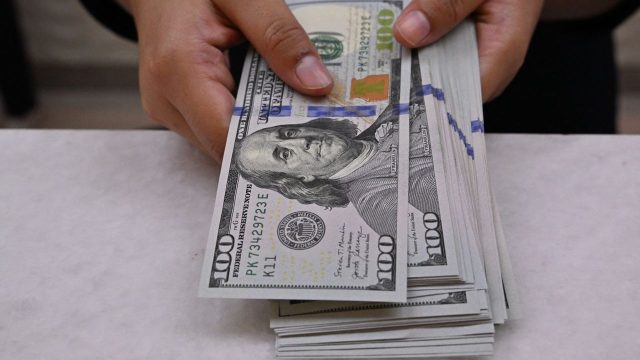
President Trump loves to boast about American might, but the American dollar is rapidly weakening on his watch, said The Economist. Last week, the greenback “slid to its softest in almost four years against a basket of other currencies,” and its value has declined by about 12% since Trump took office for a second time. There are reasons to think the dollar still has “a long way to fall.” Many investors “scrambled to hedge their currency exposure in the aftermath of Trump’s tariff broadside in April, which caused American assets to tumble, taking the dollar with them.” Market players have since continued to seek out alternatives they see as offering better stability than the buck, including gold and silver as well as foreign assets. What does Trump think of everyone dumping the dollar? He said last week he thought the dollar was “doing great.”
Decline is exactly what Trump wants, said Sam Sutton in Politico. He “has long maintained that a weaker currency” helps the American economy, arguing that it would help U.S.-based companies by making their products more competitive overseas. That would potentially boost Trump-favored industries like manufacturing, oil, and gas and also help companies that sell services in foreign countries, since foreign sales translate into higher reported earnings when converted back into dollars. The president “should be careful what he wishes for,” said The Wall Street Journal in an editorial. Politicians who have taken Trump’s approach “often discover that a weak dollar is a liability.” A declining currency can help companies and the stock market in the short term, but it will eventually lead to domestic inflation and a reduction in consumer spending. Anything that drives inflation higher should “set off alarms” for Trump, since he can’t afford additional cost-of-living concerns ahead of the midterms. At least Treasury Secretary Scott Bessent seems to recognize this. He issued a rare counter to Trump’s comments last week, reiterating that the U.S. has always had a “strong dollar policy.”
Alarm about the dollar’s status is understandable, said Paul Blustein in the Financial Times, but the greenback is in no “danger of losing its place atop the currency hierarchy.” It is “entrenched in the global financial system,” playing an outsize role in foreign markets, where “dollars are used in nearly 90% of trades.” Well over 50% “of the foreign currency reserves held by the world’s central banks consist of U.S. Treasury and other dollar assets,” and the dollar makes up “a similar share of cross-border trade, international bank loans, and bond issuance.” So, no matter how fed up the world gets with the U.S., “efforts to de-dollarize” in favor of “a new currency regime” will face “major obstacles.” The dollar can get weaker, but “there is no alternative.”
The dollar has fallen 12% since Trump took office