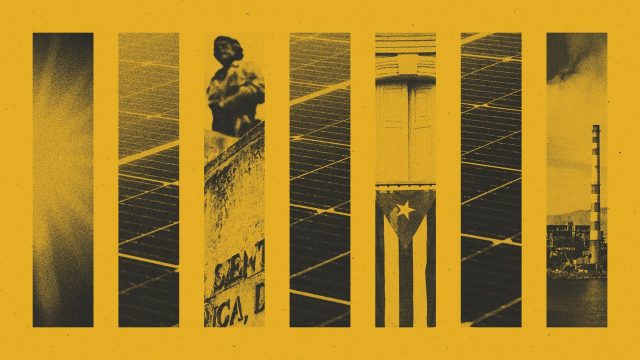
Cuba has been rapidly expanding its solar infrastructure because of the U.S. oil blockade. With the help of China, solar farms have popped up all over the country. But renewable energy access is unequal across the island and Cuba still has a ways to go before it can survive without oil.
Looking to the skies
Cuba’s “energy crisis is chronic” and the United States’ blocked fuel shipments have “pushed an already fragile system to the brink,” said El País. The country, which ran out of oil in the middle of May, has been experiencing 24-to-30-hour-long blackouts regularly. In the last four months, “only a single oil tanker has reached Cuban ports, that of the Russian Federation,” Juan Antonio Fernández Palacios, Cuba’s representative to Belgium and the European Union, said to Jacobin. “Cuba requires, at a minimum, eight tankers per month simply to sustain the basic functioning of the country.” The situation is “critical, harsh, approaching the contours of a humanitarian emergency.”
But where one door closes, another opens. Cuba is “currently pulling off one of the fastest solar revolutions on the planet, with help from China,” said CNN. “Imports of Chinese solar panels and batteries have soared over the past year.”
Chinese exports of solar equipment to Cuba “skyrocketed from about $5 million in 2023 to $117 million in 2025 and show no sign of stopping,” said The Washington Post. “Beijing pledged last year to help Cuba build more than 92 solar parks by 2028, and more than half of these projects have come online.” Along with providing materials, Chinese companies “have also been facilitating installation” and “working directly in Cuba to build solar farms.”
Because of the U.S. blockade and Cuba’s longstanding energy crisis, the Cuban government announced plans to move completely to renewable energy by 2050. The “installation of 52 solar photovoltaic parks has been completed, contributing more than 1,000 MWp and generating, at peak output, 38% of the energy consumed during daylight hours,” said Granma, the official newspaper of the Central Committee of the Cuban Communist Party. Renewable energy “now accounts for some 10% of the island’s electricity, up from 3.6% in 2024,” said The Associated Press. However, “distribution remains limited, and few Cubans can afford such a system.”
A long way to go
While solar power and renewable energy in general have ramped up in Cuba, it is “highly unlikely that, considering their current situation today, Cuba could achieve the goal of 100% renewables by the year 2050,” Jorge Piñon, a researcher at the University of Texas at Austin’s Energy Institute, said to NBC News. The “surge may be rapid but solar power is not yet available at scale,” said CNN. Cuba’s solar parks are “small and scattered.” Solar power is “also only generated when the sun shines, meaning it cannot meet peak evening demand.”
To make solar power work at all hours, batteries would be necessary. But much of the country does not have the necessary infrastructure. “You’re talking about a major overhaul of a system that is old, is broken, is tired,” Piñon said to CNN. This overhaul is not cheap and historically, the country’s energy problems have “disproportionately affected rural areas and provincial hubs,” said Bloomberg. “Havana, the wealthiest part of the island, would see greater uptake of solar panels,” as “battery systems that charge while the electric grid is on, to then power appliances when it’s not, are also commonly used in the capital.”
The oil blockade is pushing the country toward renewables