Will Grant (BBC News) reports on how people in Cuba are faring and reacting to ongoing hostilities against Cuba. He writes, “The US has imposed a near-total fuel blockade that has affected almost every facet of daily life.” Here are excerpts; see BBC News for the full article.
The incident at the centre of a murder charge against Cuba’s former president, Raúl Castro, is burned into the collective memory of both Havana and Miami. The US case, unveiled on Wednesday, accuses Castro and five others in the shooting down of two planes belonging to Cuban-American group Brothers to the Rescue in 1996 – killing four people, including three Americans.
Cuban President Miguel Díaz-Canel has called this and other charges levelled at Castro “a political manoeuvre, devoid of any legal foundation”.
US Secretary of State Marco Rubio has since said Cuba poses a “national security threat” and the likelihood of a peaceful agreement between the two countries is “not high”.
As the charges against Raúl Castro were announced, many Cubans were unaware and incommunicado due to the 20-hour blackouts continuing to grip the island. The US has imposed a near-total fuel blockade that has affected almost every facet of daily life.
US President Donald Trump has repeatedly sought to exert pressure on Cuba and has openly discussed toppling its communist regime.
The US has demanded political and economic reforms but the specifics are unclear beyond a leadership change. They could include a pledge to open up the economy to more foreign investment and a commitment to end the presence of Russian or Chinese intelligence agencies on the island.
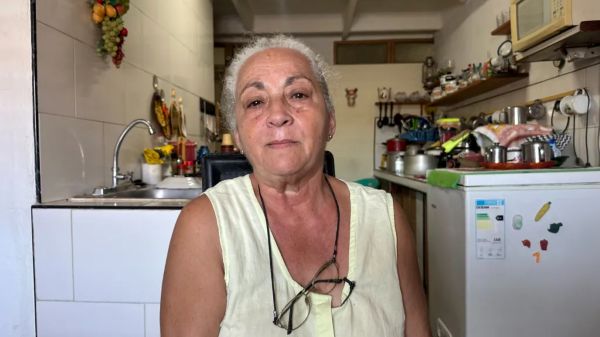
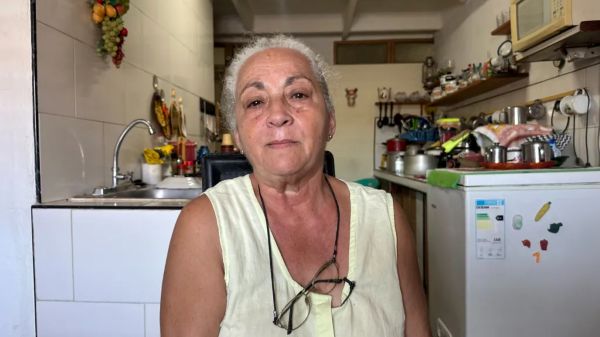
Ana Rosa Romero lives on the 11th floor of the Granma Dos building, an imposing modernist social housing block in the Cuban capital, Havana. A widow in her 70s, she said that when her husband died recently, a blackout in her neighbourhood meant she had to sit with his body for hours before it could be moved. [. . .] “You can hardly go out,” said the former philosophy teacher, a framed picture of Fidel Castro on her wall.
“If you do venture out, it’s with the uncertainty of not knowing what’s coming next. When is the power due to go out? When is it coming back? How many hours are we going to be without electricity?” [. . .]
Her hope is the state can provide solar panels to bring some respite to her residents, particularly the most vulnerable.
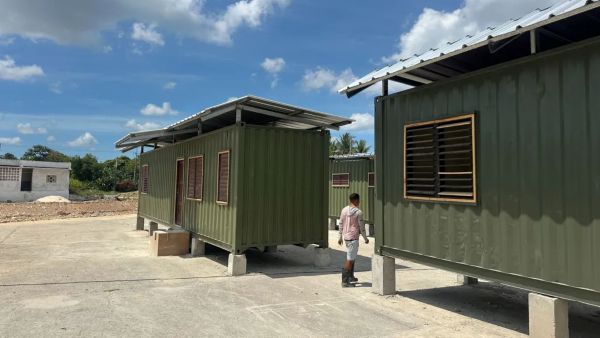
In another part of Havana, Barrio Toledo, a new form of social housing is under construction. Around 40 disused shipping containers are being repurposed into two-bedroom homes, with a kitchen and a bathroom. Around a dozen are close to completion while others sit with the logos of the shipping companies still visible on the outside, rudimentary windows cut out of the sides. [. . .]
None are yet inhabited as the Cuban state tries to carry out a plan amid the fuel shortages for a small community of container houses around a children’s playground and a local store.
Critics say the heat inside the metal homes will be unbearable in the height of Cuba’s summer. But the site’s foreman, a committed revolutionary called Orlando Diaz, insists they are a well-ventilated, smart solution to the capital’s acute housing crisis.
“This technique is already being used successfully in other countries,” he says. “We’re just catching up.”
Diaz says he and all the workers at the site will take part in a government-organised march on Friday in defence of Raúl Castro over the US murder charges. [. . .]
For full article, see https://www.bbc.com/news/articles/c3e2w43lkvzo
Will Grant (BBC News) reports on how people in Cuba are faring and reacting to ongoing hostilities against Cuba. He writes, “The US has imposed a near-total fuel blockade that has affected almost every facet of daily life.” Here are excerpts; see BBC News for the full article. The incident at the centre of a