
What’s the situation in Cuba?
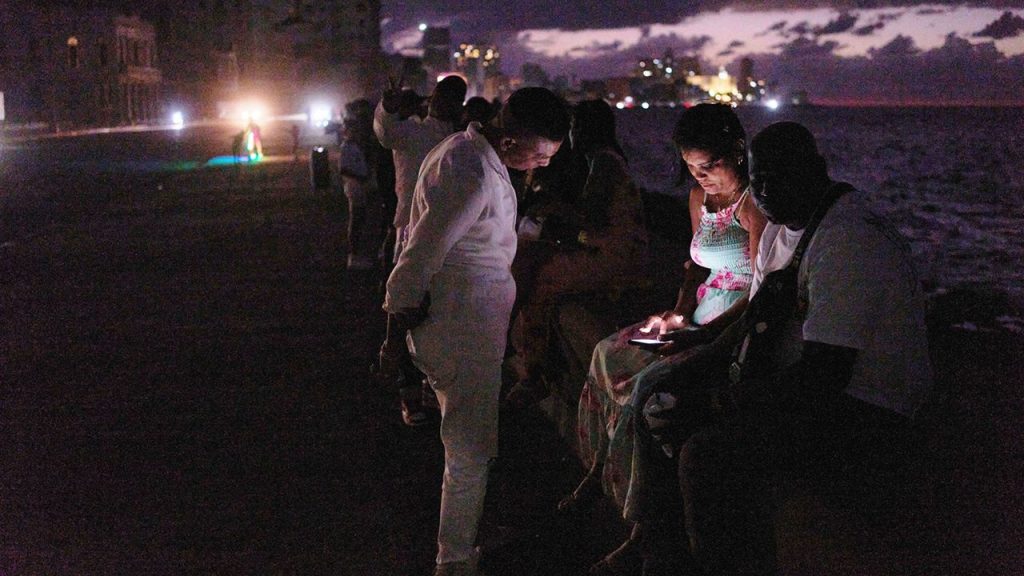
The country is running out of fuel—and fast. Oil shipments from Venezuela, Cuba’s main fuel supplier for the past three decades, ended in January after the U.S. attacked the South American country and captured its president, Nicolás Maduro. President Trump then declared a full oil blockade, threatening severe tariffs on any country that sent Cuba fuel. The blockade has exacerbated a long-simmering economic and humanitarian crisis for Cuba’s 11 million people. Blackouts of up to 20 hours are routine, and their consequences are severe: Running water has been cut off in many urban areas because the systems rely on electric pumps; trash has piled up for lack of gas to run garbage trucks; and doctors say preventable deaths are rising as equipment fails. In late March, the U.S. Coast Guard allowed a single Russian oil tanker carrying about 730,000 barrels of oil to pass through the blockade, providing Cuba with at best a few weeks of fuel. “It’s not going to have an impact—Cuba is finished,” Trump said. “And whether or not they get a boat of oil, it’s not going to matter.”
How did Cuba get here?
The island has been under U.S. sanctions for nearly seven decades. What began with an arms embargo during the Cuban Revolution in 1958 was broadened into a full trade and travel embargo after Fidel Castro established his communist government. While Castro’s rule saw an expansion of access to education and health care, alongside those gains came political repression and the confiscation and nationalization of private land, businesses, and homes, prompting millions of Cubans to flee. The U.S. trade embargo— the longest in modern history—intensified Cuba’s chronic economic woes, which deepened after the collapse in 1991 of its main foreign backer, the Soviet Union. The Cold War–era embargo continued until the second term of President Barack Obama, who sought to ease what he called “a rigid policy that is rooted in events that took place before most of us were born.”
What did Obama do?
Believing a rapprochement could reduce repression on the island and provide economic opportunities for ordinary Cubans, he opened discussions in 2014 with Raúl Castro, Fidel’s brother and successor. The Obama administration restored diplomatic relations and struck Cuba from its list of state sponsors of terrorism. In March 2016, Obama became the first U.S. president to set foot in Cuba since Calvin Coolidge in 1928. Americans were allowed to travel to Cuba for “educational” purposes for the first time in decades, and direct commercial flights resumed and embassies opened. Cuba’s tourism revenue jumped 15% in the first half of 2016, and a record 4 million foreigners visited that year. But few Cubans reaped benefits, as increased demand for food and poor planning caused shortages and price hikes. “It’s a disaster,” said Lisset Felipe, a government-employed air conditioner seller, in 2016. “We never lived luxuriously, but the comfort we once had doesn’t exist anymore.”
Why didn’t the thaw last?
On the campaign trail in 2016, Trump pledged to undo Obama’s policies—promises that helped him win the votes of a majority of Cuban Americans in Florida. In office, he imposed a “maximum pressure” campaign against Cuba and put the country back on the list of state sponsors of terrorism. Though President Joe Biden reversed that move in his last week in office in January 2025, Trump quickly reimposed it after returning to the White House last year with a newfound interest in Latin America, heavily influenced by Secretary of State Marco Rubio, a foreign policy hawk and the son of Cuban immigrants. Trump’s first target was Venezuelan autocrat Maduro, a close ally of Cuba, and many Cuban Americans saw that intervention as a step toward realizing Rubio’s desire to topple the island’s communist government. “If I lived in Havana, and I was in the government, I’d be concerned—at least a little bit,” Rubio warned hours after the January raid that captured Maduro.
What does the White House want?
The end of Cuba’s communist government. The Trump administration has been negotiating with President Miguel Díaz-Canel’s regime and seems inclined to avoid using military force, hoping the blockade will inspire Cubans to rise up against their government. Protests are spreading, with furious residents banging pots and chanting, “We’ve had enough,” “Freedom,” and “Put the lights back on.” In the central city of Morón last month, protesters set the Communist Party’s local headquarters on fire—the biggest show of dissent in years. But the blockade is also inflicting pain on ordinary Cubans. “The U.S. is trying to punish the Cuban government,” said one Havana resident. “But it’s the people who are suffering.
How do Cubans feel about the blockade?
They’re desperate. In a country where the official average monthly wage is about $15, gas is now nearly $40 a gallon—if you can find it. There were three major blackouts in March, and the United Nations has warned the blockade will result in a “severe humanitarian crisis,” with fuel shortages hitting every aspect of the island’s food system, from irrigation and harvesting to refrigeration and distribution. Health experts predict diseases such as dengue and chikungunya will return. Cuba’s once-vaunted health system is collapsing. There’s little fuel for ambulances, doctors and nurses are unable to commute to work, and pharmacy shelves are bare. Many refrigerated medicines spoil when the power goes out. Doctors say premature births are increasing as an antibiotic shortage leads to rising infections. It’s also getting harder to administer chemotherapy amid blackouts, and patients on ventilators now rely on backup batteries or hand pumps. “I don’t know how long we can keep going,” said Xenia Álvarez, whose 21-year-old son’s lungs can’t pump air on their own. “His life depends on electricity.”
The U.S. oil blockade is pushing the island and its communist regime to the brink of collapse