
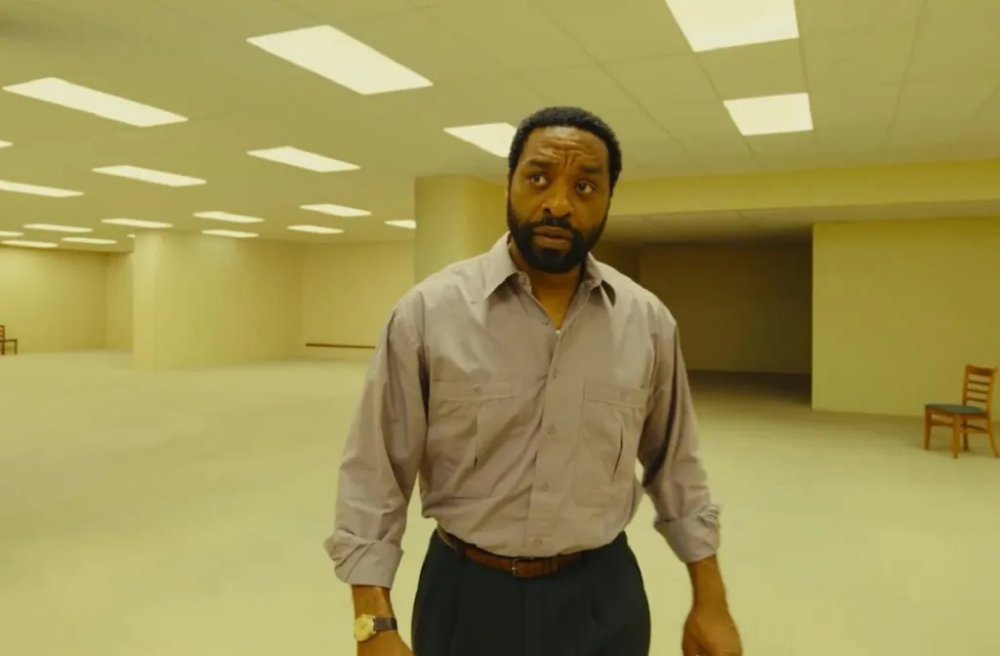
Two of the biggest movies in the world right now were made by guys in their twenties who started their careers on YouTube.
As of this writing, Backrooms has made $117 million (about R1.9 billion) in just four days since its international release. Sitting right below it at the box office is Obsession, which has taken in $151m since it came out on May 15.
But the thing that’s most striking about the movies is how much they’re making relative to their budgets.
Backrooms was made on a budget of $10m and Obsession $750000. That means Obsession has made more than 200 times its budget back. Its momentum is showing no signs of slowing down. All the while Obsession writer-director Curry Barker is 26 years old and Backrooms director Kane Parsons 20.
Hollywood has long operated on the assumption that the path to the director’s chair runs through film school, short film festivals and years of grinding through the industry’s lower ranks.
But the internet has quietly been building a parallel pipeline where a teenager with a camera, editing software and a YouTube account can amass an audience of millions and develop a filmmaking voice that rivals anything coming out of the traditional system. And now, that pipeline is starting to empty directly into the multiplex.
Known online as Kane Pixels, Parsons began publishing the viral web series Backrooms to his YouTube channel in 2022, based on the creepypasta (horror-related legend) of the same name.
Parsons uploaded a short animation on his YouTube channel on January 7, 2022, under the name The Backrooms (Found Footage). The video grew in popularity and now has more than 80 million views.
Before the upload, Parsons intended the short film to be a standalone work and had an unrelated story he had developed some time before. While the story’s themes were somewhat connected to that first short, he didn’t think it would be popular.
However, with the newfound popularity of Found Footage, Parsons reconsidered the story idea and decided to create a series following it. He was later hired by A24 to direct a film about the same world and concepts at 19 years old, becoming the youngest director in the studio’s history.

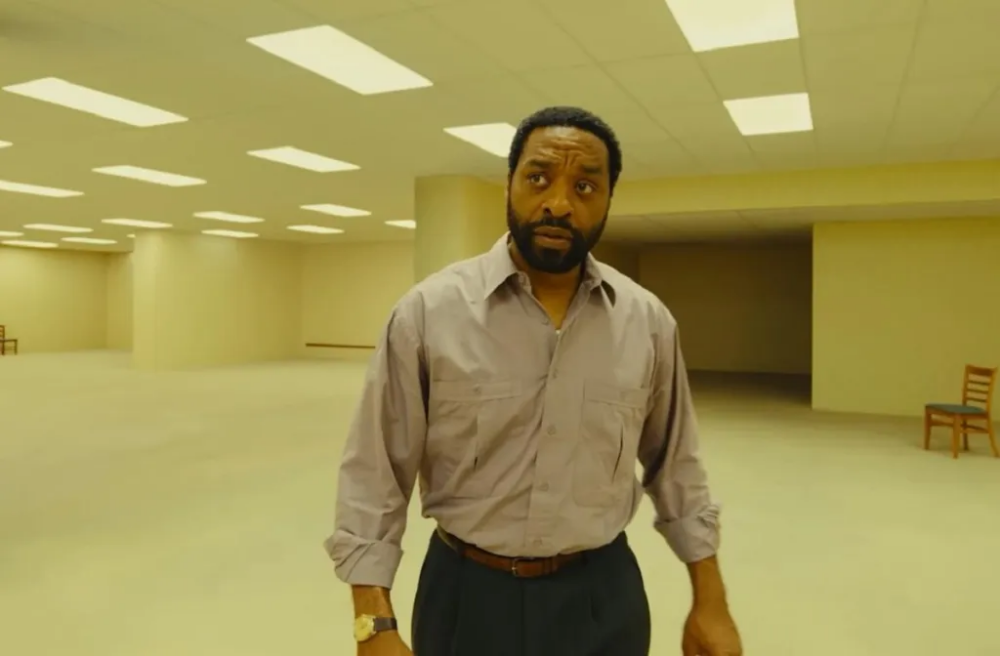
Backrooms takes place in 1990 and follows Clark (Chiwetel Ejiofor), a failed architect and furniture store owner who, reeling from his divorce, has been reduced to sleeping in said furniture store. Through his sessions with his therapist, Dr Mary Kline (Renate Reinsve), it quickly becomes clear that Clark is stuck in a loop of anger and resentment that destroyed his marriage.
Then Clark stumbles onto a secret world through the wall of the furniture store basement that is soon revealed to be as vast as it is bizarre. These are the backrooms.
When Clark tries to tell Mary about the world and she doesn’t believe him, he recruits his employee (Kat) Lukita Maxwell and her videographer boyfriend (Finn Bennett) to go into the backrooms with him to collect evidence. As with any horror movie of this kind, they soon regret their decision.
The strongest thing about the film is undoubtedly the production design by Danny Vermette and cinematography by Jeremy Cox. The drab monotony and incongruous elements of the world of the backrooms is so well rendered that it’s easy to believe this is something director Parsons has been exploring for years and has much more to say about than this film does.
That’s probably the biggest weakness of the film. It feels less like a complete narrative and more like a random chapter of a story that has been unfolding for a while.
Despite a memorable performance from Ejiofor that reminds you he’s an Oscar-nominated actor, neither Clark nor Mary’s characters are fully fleshed out. Reinsve, who also recently became an Oscar-nominee, is woefully underused.
I left the film feeling more impressed by the world and concepts it had introduced than by the story it told. With all that said, this is such an accomplished achievement for a 20-year-old filmmaker that I’m excited to see what Parsons does next.
Barker is best known for the sketch comedy YouTube channel “that’s a bad idea” (stylised in lowercase) that he co-created with Cooper Tomlinson (Tomlinson has a supporting role in Obsession).
In 2023, Barker wrote and directed horror short film The Chair and uploaded it to YouTube where it has been watched nearly 10 million times. Film producer James Harris, of Tea Shop Productions, reached out to Barker to adapt it into a feature, at which point Barker instead pitched him on his horror film Obsession.
Barker directed the $800 found footage horror film Milk & Serial (2024) and despite spending a year trying to get distribution for the film, he ultimately decided to release the full film on YouTube.
The film went viral, gaining nearly three million views and leading to a representation deal with United Talent Agency in early 2025.
Obsession is a perfect example of how you can take a familiar and even predictable plotline and make a great movie through the sheer quality of your execution.

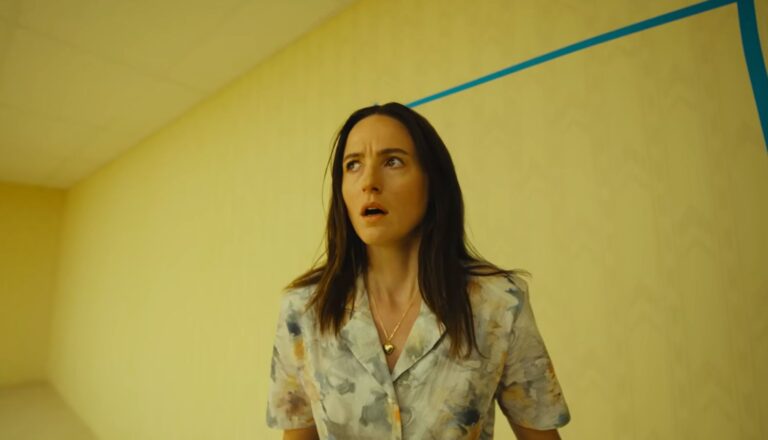
The film follows Bear (Michael Johnston), a young man so deep in the friendzone with his long-time friend Nikki (Inde Navarette) that he can barely see the light of day. After failing to work up the nerve to confess his true feelings, he wishes on a wishing willow — a strange supposedly mystical object he randomly buys in a curio store — for Nikki to be madly in love with him.
It’s a new take on the classic be-careful-what-you-wish-for trope but it’s done so effectively, in large part due to subtle choices in lighting and sound that keep the psychological terror of this scenario at a 10 almost throughout its runtime.
Inde Navarette also has to be singled out for giving a stunning performance that oscillates between horrifying and sympathetic — so much so that it might give you whiplash. She essentially has a dual performance in which she simultaneously has to convey being imprisoned in her own body as well as being murderously determined to get what she wants.
Johnston has the task of giving us a character who sees himself as a decent person yet is clearly willing to override another person’s freedom to get what he wants.
Anybody familiar with the “nice guy” archetype so heavily discussed on Reddit forums and YouTube videos will see in Bear everything wrong with “well-intentioned” men without the awareness to recognise when the pursuit of their own desires causes others harm.
While it’s a different film from the Jordan Peele classic, I couldn’t help but think that Obsession is Get Out for the incel era.
The way Peele applies body-snatching to a story about racism and fetishisation to explore the horrors black people suffer in the face of white supremacy, Barker applies it to one about consent and bodily autonomy to explore the horrors women suffer in the face of patriarchy.
Barker and Parsons are not the first YouTubers to make the transition to mainstream filmmaking. Others like Chris Stuckmann, Markiplier and the Philippou Brothers came before them.
But the outsized success of Obsession and Backrooms has generated discussion about how this could mark a significant shift in what kinds of films and filmmakers Hollywood is willing to bet money on.
It’s especially significant that the filmmakers are drawing audiences to the cinema to see smaller movies made for relatively little money.
Over the past 10 to 15 years and especially after the Covid-19 pandemic, there’s been a growing sentiment that people will go to the theatre in droves to see only huge blockbuster franchise films, as demonstrated by the success of the Marvel Cinematic Universe and The Fast & Furious Saga for instance.
Simultaneously, it’s become conventional wisdom that streaming platforms like Netflix would become the natural home for smaller, more character-focused films.
But this development is challenging that narrative.
In a world where Disney is said to be sinking an eye-watering $700m into the production and marketing of Avengers: Doomsday, films that are dominating the box office with a tiny fraction of that price are understandably going to get people talking.
Perhaps the most telling detail in all this is the age gap between the filmmakers and the franchises they’re competing with.
The Marvel Cinematic Universe has been running since 2008 while the Fast & Furious saga started in 2001, four years before Parsons was even born.
Yet here is a 20-year-old, forged entirely on the internet, pulling audiences into theatres with a $10m film and making a multibillion-dollar machine nervous.
If Hollywood is paying attention — the box office numbers suggest it has no choice but to — the lesson is hard to ignore: audiences aren’t tired of going to the movies; they’re tired of being told what a movie has to be.
A wave of YouTuber-turned box-office-record-breaking horror auteurs have Hollywood nervous and rethinking the filmmaking playbook