
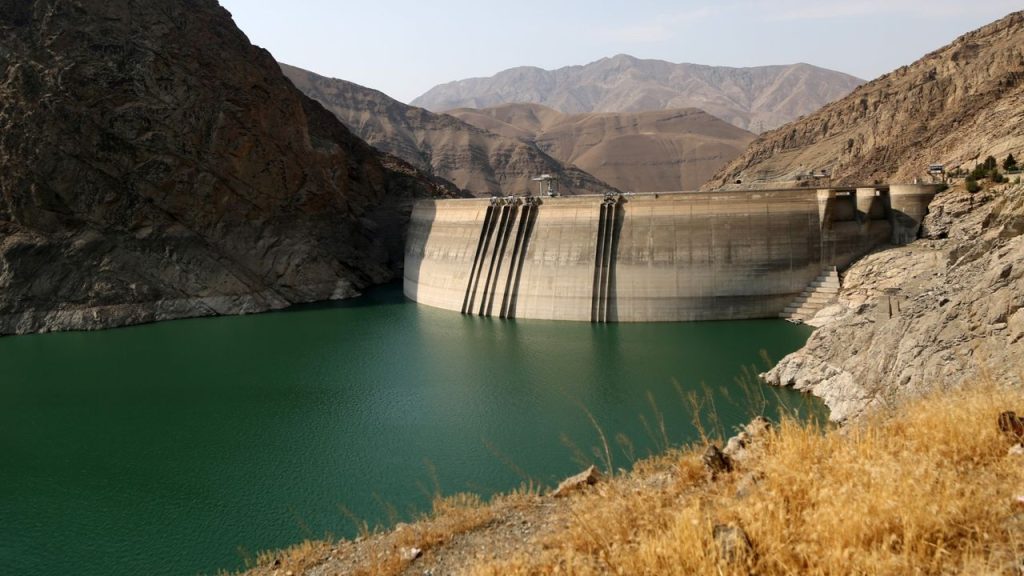
Tehran is running out of water. Residents of Iran’s capital city are working to “stave off catastrophe” brought about by climate change and resource mismanagement. The crisis could threaten an Islamic regime already struggling in the aftermath of conflicts with Israel and the United States.
The city of 10 million people could be “weeks away” from a “day zero” in which “taps run dry for large parts of the city,” said CNN. Authorities are “scrambling to reduce water consumption” and sounding the alarms. Urgent decisions are needed, or “we will face a situation in the future that cannot be solved,” said President Masoud Pezeshkian on Monday. The country is in the midst of a terrible drought, but the water supply crisis has been compounded by “excessive groundwater pumping, inefficient farming practices and unchecked urban water use,” said CNN. The result “can only be described as water bankruptcy,” said Amir AghaKouchak, a civil engineering professor at the University of California, Irvine.
“Water shortages and collapsing public trust” are creating a “perfect storm” for Iran, said AL-Monitor. The government is taking emergency action to deal with the shortages, but many Iranians see those moves as “signs of panic, not planning” from what is already regarded as a “‘broken’ system.” That has “domestic implications” and could even “inflame regional tensions.”
What did the commentators say?
Iranians find themselves in a “daily struggle against a regime that has failed them for decades,” said Dana Sameah at The Jerusalem Post. The country’s social media channels have been “flooded” with images of “desperate farmers and business owners” in distress over the “loss of their livelihoods” as “vital services have ground to a halt” thanks to shortages of both water and electricity. Does that mean regime change is in sight? There is no “organized political force” capable of leading a revolt. But a regime that cannot get water to its citizens “knows deep down that its time is running out.”
“A thirsty Iran provides an opening for the U.S.,” said Janatan Sayeh at the Foundation for Defense of Democracies. The scarcity of water has previously “triggered unrest” throughout the country, including a 2021 uprising in Khuzestan province and again the next year in Hamedan province. There have been more protests since then. Washington has an opportunity to “demonstrate alignment with the Iranian people” against a government that is responsible for the country becoming “increasingly uninhabitable.”
What next?
The water crisis comes as Ayatollah Ali Khamenei, the country’s supreme leader, is “fading into the shadows,” said The Economist. The 86-year-old leader has largely receded from public view since Israel’s 12-day bombing campaign earlier this summer. That leaves “actors inside and outside the regime jostling for position” when Khamenei leaves the scene. But time is running out, said Reuters. Without cooperation from Iranians to conserve water, Pezeshkian said on Thursday, “there won’t be any water in dams by September or October.”
Drought is a problem. So is government mismanagement.