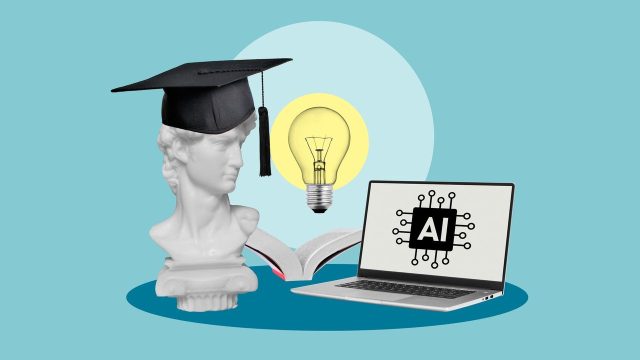
As artificial intelligence increasingly entrenches itself in society, universities are no exception. From clubs to classes to professional events, AI companies have grown to make themselves staples on campus. The technology has been used unethically to cheat in class, but many also worry that AI could influence higher education in new and potentially destructive ways.
How is AI being pushed in universities?
AI companies have been clawing their way onto college campuses. Google worked with Purdue University, California Community Colleges and other schools to “offer AI courses, certificates and products such as its AI assistant Gemini,” while OpenAI has launched a “consortium with 15 leading research institutions” and Microsoft is “offering eligible students 12-month subscriptions to its AI productivity tools at no cost,” said The Wall Street Journal. Now, Anthropic is partnering with CodePath, which is the “nation’s largest provider of collegiate computer science education,” to “redesign its coding curriculum as AI reshapes the field of software development,” said the AI firm.
Anthropic’s initiative will “put Claude and Claude Code at the center of its courses and career programs,” said the company. The goal is to “enable students to learn to build with Anthropic tools such as Claude Code and contribute to real-world open-source projects,” said the Journal. CodePath is also incorporating the program into institutions that “cater to low-income and first-generation college students and include historically Black colleges and universities and Hispanic-serving institutions.”
Even before making its way into the curriculum, AI clubs started popping up on campuses all over the country. These are not just intended for computer science and STEM students. At least 16 law schools have founded AI clubs in the past two years as “future lawyers seek to understand the rapidly expanding technology and how it will affect their careers,” said Reuters.
What is the future of higher education?
AI’s growing presence in universities is no surprise. Companies across industries have “pushed their employees to adopt AI tools, and many are now asking in job interviews how prospective hires use the technology and whether they are willing to learn,” said the Journal. “Three-quarters of employers expect the new graduates they hire to have used AI tools, though most say colleges haven’t prepared them sufficiently.” As a result, the tide has changed.
But as more students embrace the power of AI, educators have become increasingly worried about cheating, leading to an AI Cold War. Some students are “turning to a new group of generative AI tools called ‘humanizers,’” which are tools that “scan essays and suggest ways to alter text so they aren’t read as having been created by AI,” said NBC News. In response, “companies such as Turnitin and GPTZero have upgraded their AI detection software, aiming to catch writing that’s gone through a humanizer.”
Tweaking AI copy in an attempt to sound more human is a troubling sign that the “technopoly is thriving,” said Ronald Purser at Current Affairs. “Universities are being retrofitted as fulfillment centers of cognitive convenience. Students aren’t being taught to think more deeply but to prompt more effectively.” Meanwhile, AI companies seem to “look at college students as a strapped customer base to hook when they are most stressed,” said Matthew Connelly, a vice dean for artificial intelligence initiatives at Columbia University, at The New York Times.
The technology is affecting all aspects of college life