
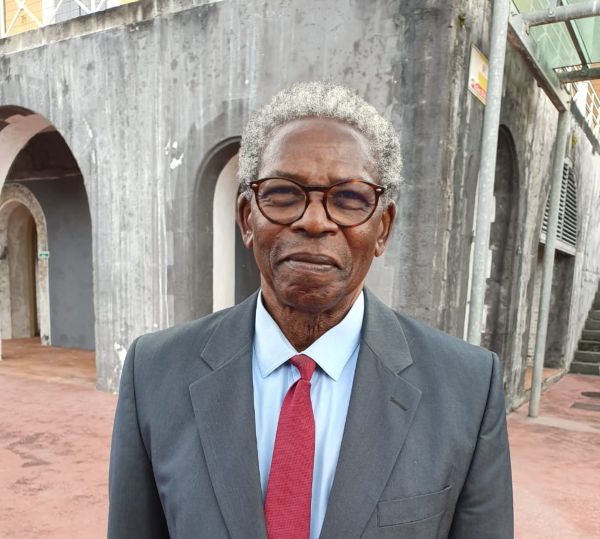
[Many thanks to Peter Jordens for bringing this item to our attention.] Here is a call for articles for a special issue of Archipélies (N° 23; June 2027): “Afro-Caribbean Literary Discourse – A Tribute to Professor Roger Toumson,” to be edited by Xavier Luce (University of the Antilles) and Maria Yaksic (University of Chile, Catholic University of Chile). The deadline for receipt of article abstracts is May 11, 2026. Here we share the main argument. For thematic areas, bibliography, submissions guidelines, and information on coordinators, go to Open Edition Journals: Archipélies.
Argument: This call for papers is intended as a tribute to the literary history work carried out by Professor Roger Toumson since the publication, in the journal Présence africaine, of his article “La littérature antillaise d’expression française. Problèmes et perspectives.” The major issue was the Caribbean writer’s enunciative ambiguity; the Hegelian perspective underpinning the study was the development of a “self-consciousness ‘for itself’” (Toumson 1982, 131-32). This, in turn, called for a focus on the “mental structures” that shape literary creation (Goldmann 1970), in the singular context of the slave societies of America and the Caribbean, where a “coloniality of power” is instituted (Quijano 2007). Here, literature develops along a “color line,” a major problem of the twentieth century as pointed out by W. E. B. du Bois (Edwards 2024, 13-14), linked to “the stakes of a double struggle: the struggle of races and the struggle of classes” (Toumson 1982, 132). To grasp this struggle, which lies at the heart of literary creation, it was important to look back at the first Caribbean writers, i.e., those who were in solidarity with a supremacy that expressed “a euphoric, profuse celebration of the feudal-slavery order,” “apologies for the conquering warrior,” and “praise for the system of despotic terror” (Toumson 1989a, 179-82). His work in literary history had to meet this philosophical criterion. Roger Toumson’s essays, including Mythologie du métissage (Toumson 1998), his biography of Aimé Césaire (Toumson and Henry-Valmore 1993, 2002), and L’Utopie perdue des Îles d’Amérique (Toumson 2004), all bear witness to this ongoing concern.
In November 1985, Roger Toumson defended his thesis, “Le Discours littéraire afro-antillais d’expression française: thèmes, structures, significations,” which aimed to “establish when, why, and how the aforementioned Afro-Caribbean literature achieved signifying autonomy” (Toumson 1989a, 7). It was adapted and published four years later by Editions Caribéennes under the title La Transgression des couleurs: littérature et langage des Antilles, XVIIIe, XIXe, XXe siècles. This monograph is a literary history that examines the political orientation and conditions of possibility of an “Afro-Caribbean literary discourse” in the Caribbean territories under French jurisdiction (Guadeloupe, Martinique, and Guyana). The adjective “Afro-Caribbean” qualifies a “specific discursive ensemble” whose cohesion derives from the enunciative emergence of the Negro subject and its representation within literary history (Toumson 1989a, 7). In the fourth section of the book, “Une instance d’accession à l’autonomie signifiante: la négritude,” Toumson considers Paulette Nardal’s article, “Éveil de la conscience de race,” as “one of those in which the outlines of the group’s ‘theoretical’ ideological aim are set out” (Toumson 1989b, 354), gathered under the banner of négritude. Given the publication of the first anthology of Paulette Nardal and her sister Jane Nardal’s writings, it now seems necessary to revisit the theoretical scope and ideological orientation of this movement. This movement consisted of “writing the Black world” (Nardal 2024) in a colonial context where Afro-Caribbean and African, but also Indochinese, intellectuals were subject to police surveillance (Sagna 1986; Goebel 2015; Bollenot 2022).
Afro-Caribbean literature can be interpreted as an effort to “deoccult its formative myth” (Toumson 1989a, 39), as it is intrinsically linked to a genocidal policy that was implemented in a “new world” (Todorov 1982). Its structuring feature is the examination and critique of a “dominant discourse.” Toumson’s work provides a framework for intellection and interpretation that is influenced by a humanist erudition and should be evaluated for its heuristic appeal in research. The method of literary history applied by Roger Toumson to the Caribbean field will have shown the richness of transnational and transcultural myths such as Caliban, from William Shakespeare to Aimé Césaire via Ernest Renan (Toumson 1983).
It should be remembered that literary history, as a discipline, was gradually institutionalized during the 19th century, particularly in France under the impetus of Professor Gustave Lanson. The discipline was to support, within the academy, from secondary to higher education, a criticism based on the reading and explanation of texts rather than on the biography of writers and preconceived generalities. It was important to consolidate the republican regime by training the citizens of a democracy through literary mediation. It was also necessary to institutionalize a literature that conformed to this ideal and to provide the elements for a critique of monarchical literature. The authors of the Enlightenment were thus included in curricula, paving the way for a reappraisal of earlier centuries. A new reading of the classics and their sociological “testimony” was called for (Lanson 1912). Postcolonial studies obey the same imperative: to decolonize knowledge to establish a post-imperial republic.
Decolonizing knowledge presupposes identifying the mental structures that have conditioned sensibility and normalized certain relations of domination, i.e., the “mythologies” that Roland Barthes set out to describe and analyze as early as the 1950s, notably “coloniality” and “imperialism” (Barthes 1970, 203; Achille and Moudileno 2018). As far as the Caribbean field is concerned, shouldn’t we question certain obvious facts? For example, when the editors of the Revue du Monde Noir declare their intention “[t]o create among the Blacks of the whole world, regardless of nationality, an intellectual and moral bond which will enable them to know each other better, to love one another fraternally, to defend their collective interests more effectively and to glorify their race,” can we limit its scope and reduce it to a racial and/or cultural question? Was it truly the case that “the racial question remained dissociated from the political question” such that “[t]he tension between race consciousness and class consciousness, in other words, between negritude and Marxism, was not yet felt” (Toumson 1989b, 354-55)? In a footnote, Roger Toumson mentions that the absence of a legal deposit and “police intervention” are the causes of the disappearance of issues of L’Étudiant noir, the journal in which Aimé Césaire theorized the revolutionary action of the “negro philosopher” (Toumson 1989b, 357). We also know that the Ministry of Colonies was attracted to the reception of Batouala, A Negro Novel from the French of René Maran, which resulted in suspicions of communism and anti-French sentiments from its author (Rubiales 2005; Allouache 2018). We also know that Les Continents, the magazine to which René Maran was to dedicate himself, was shut down a few months after its creation in May 1924, following a trial initiated by the Ministry of the Colonies. The first issue, absent from library collections, can be found in the archives of the imperial surveillance network (Demougin 2022), which is indicative of the political climate under which a “Black internationalism” was being coordinated alongside the Marxist international (Nardal 2024, 357-60).
Literature is a space of reflection, more than a mere mirror of society (Lanson 1965, 32-33). Literature, when considered in its relationship with social institutions, is as much their expression as it is their denial (Staël-Holstein 1991). According to Gustave Lanson, literature is infinitely more than the mere “expression of society” unless we “assign to the term [society] a meaning that encompasses not only institutions and mores, but also that which is nonexistent, that which is invisible and cannot be revealed by facts or the pure document of history” (Lanson 1965, 33). In this context, the act of engaging with Afro-Caribbean literary discourse entails “sifting through the dominant discourse” and “verifying its legitimacy, its validity” (Toumson 1989a, 38). In this tribute to Professor Roger Toumson, we aim to bring together research on Afro-Caribbean literary discourse. These should be dedicated to writers who are part of the corpus defined in La Transgression des couleurs: littérature et langage des Antilles, XVIIIe, XIXe, XXe siècles. This corpus encompasses all works of the mind produced in French, Creole, or any other language by nationals of the French overseas departments of Guadeloupe, Martinique, and Guyana. This includes works published in the written press, such as articles, briefs, and feature reports, as well as radio and television productions, such as adaptations and series.
For submission guidelines and more information, see https://journals.openedition.org/archipelies/5666
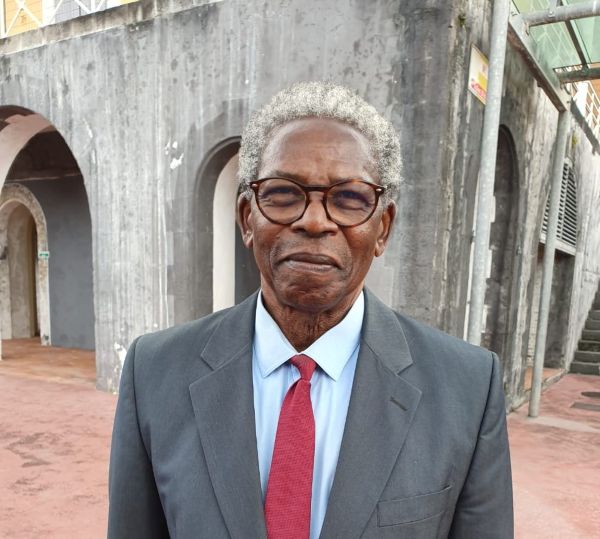
[Photo above from https://memoiredencrier.com/auteurs/roger-toumson/]
[Many thanks to Peter Jordens for bringing this item to our attention.] Here is a call for articles for a special issue of Archipélies (N° 23; June 2027): “Afro-Caribbean Literary Discourse – A Tribute to Professor Roger Toumson,” to be edited by Xavier Luce (University of the Antilles) and Maria Yaksic (University of Chile, Catholic University