“February in Salinas is likely to be damp and cold and full of miseries.” So wrote John Steinbeck in “East of Eden”, describing how the weather patterns of Central California governed the agricultural land and the farmers who worked it.
Arriving in the same valley under unseasonably blue skies and warm winter sun, you might be tempted to think that Steinbeck’s California has vanished entirely. But travel through this stretch of the West Coast on the trail of the American writer and there are echoes of his world all around you.
Cannery Row and Pacific Grove
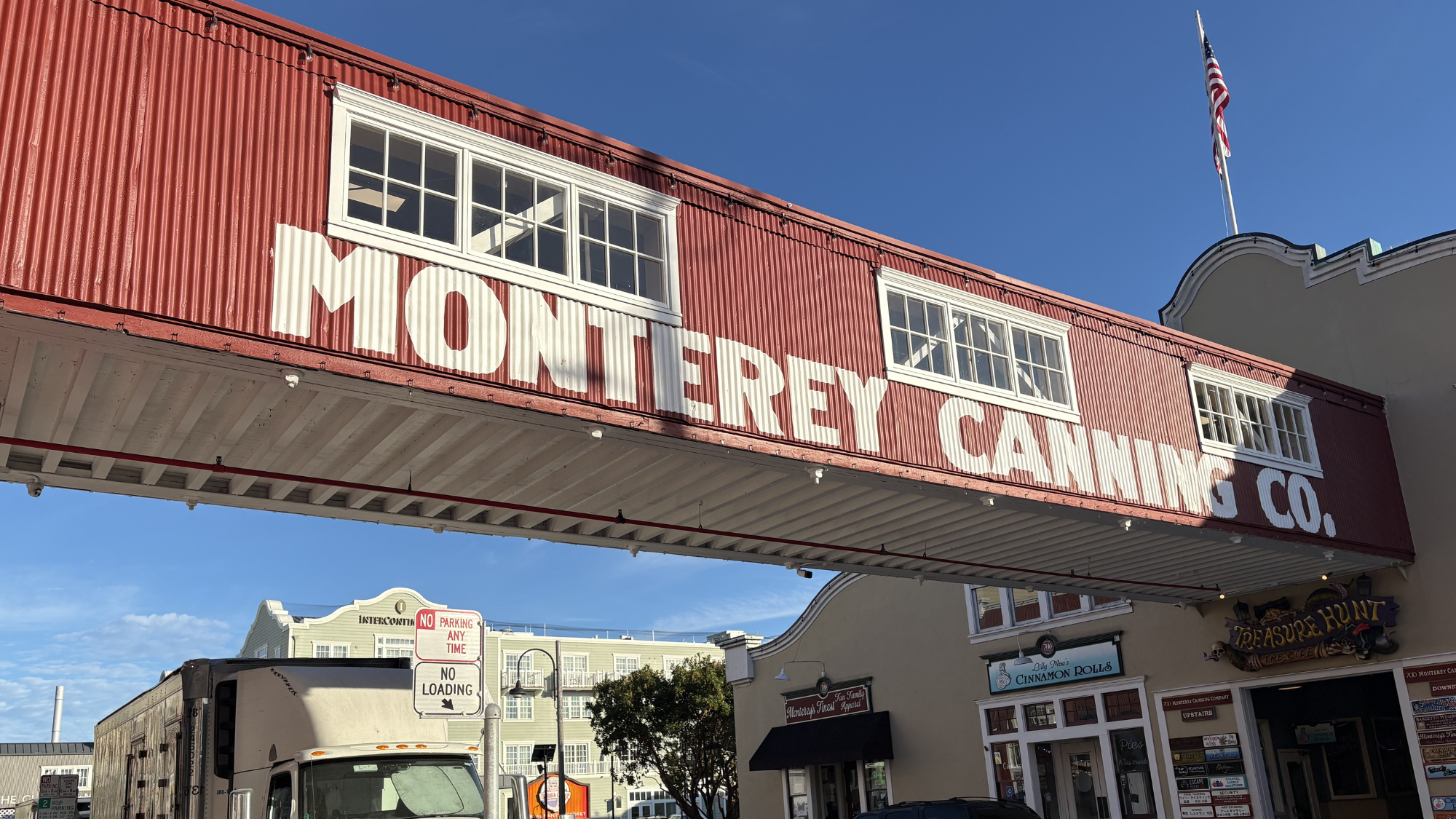
We stayed at the Spindrift Inn, right on Cannery Row itself, and having re-read the novel on the flight over, I was delighted to find myself dropped into the heart of its comic, ramshackle happenings.
The sardine canneries that once defined the strip are long gone – victims of overfishing in the 1940s and 50s – but the bones of the place remain. During an early morning stroll I found Doc’s Pacific Biological Laboratory, the original building still standing, a modest placard acknowledging the legend within. Doc was modelled on Ed Ricketts, Steinbeck’s closest friend and intellectual companion, whose passion for the bay’s marine life shaped Steinbeck’s own philosophy throughout his writing.
Today, the bay holds some of the richest marine biodiversity on earth, a fact that would have delighted Ricketts and Steinbeck. From the near-panoramic window of our room at the Spindrift, we were greeted each morning by sea otters floating on their backs in the kelp beds, pods of dolphins arcing through the swell and the occasional seal hauled out on a nearby promontory.
A beautiful coastal walking path connects Cannery Row to Pacific Grove, the small town where Steinbeck lived for a time, and it’s worth the stroll. The architecture is predominantly grand Victorian villas in candy-box lilacs and creams, their aged wooden panels faintly reminiscent of a Norwegian coastal town.
We had lunch at the aptly named Aliotti’s Victorian Corner Restaurant, a charming throw-back, with healthy portions. Monterey town rewards an afternoon’s wandering before dinner; we ate at Stokes Adobe, a tastefully restored building whose Californian menu feels entirely in keeping with the town’s layered history.
Tracing Steinbeck’s steps in Salinas
Salinas sits inland, the undisputed centre of one of the most productive agricultural valleys on earth. Steinbeck grew up here, and his ambivalent relationship with the place – he was largely shunned by its conservative establishment after “The Grapes of Wrath” – is one of the more poignant stories in American literary history.
The California Welcome Center, housed in what was once the first railway station in the region, is an excellent scene-setter. It tells the story of Monterey County’s agricultural heritage with sweep and intelligence: from the Southern Pacific Company’s campaigns to attract settlers westward, to the valley’s evolution, to the family businesses that have grown into global leaders.
It makes clear something Steinbeck knew instinctively: California was built by migration. It was the Swiss who brought dairy expertise, the Italians who planted artichokes and the Chinese who constructed the railways. There were also the Japanese abalone fishermen, and the Mexican labourers whose descendants now make up the majority of the population and whose food, available all over town, is extraordinary.
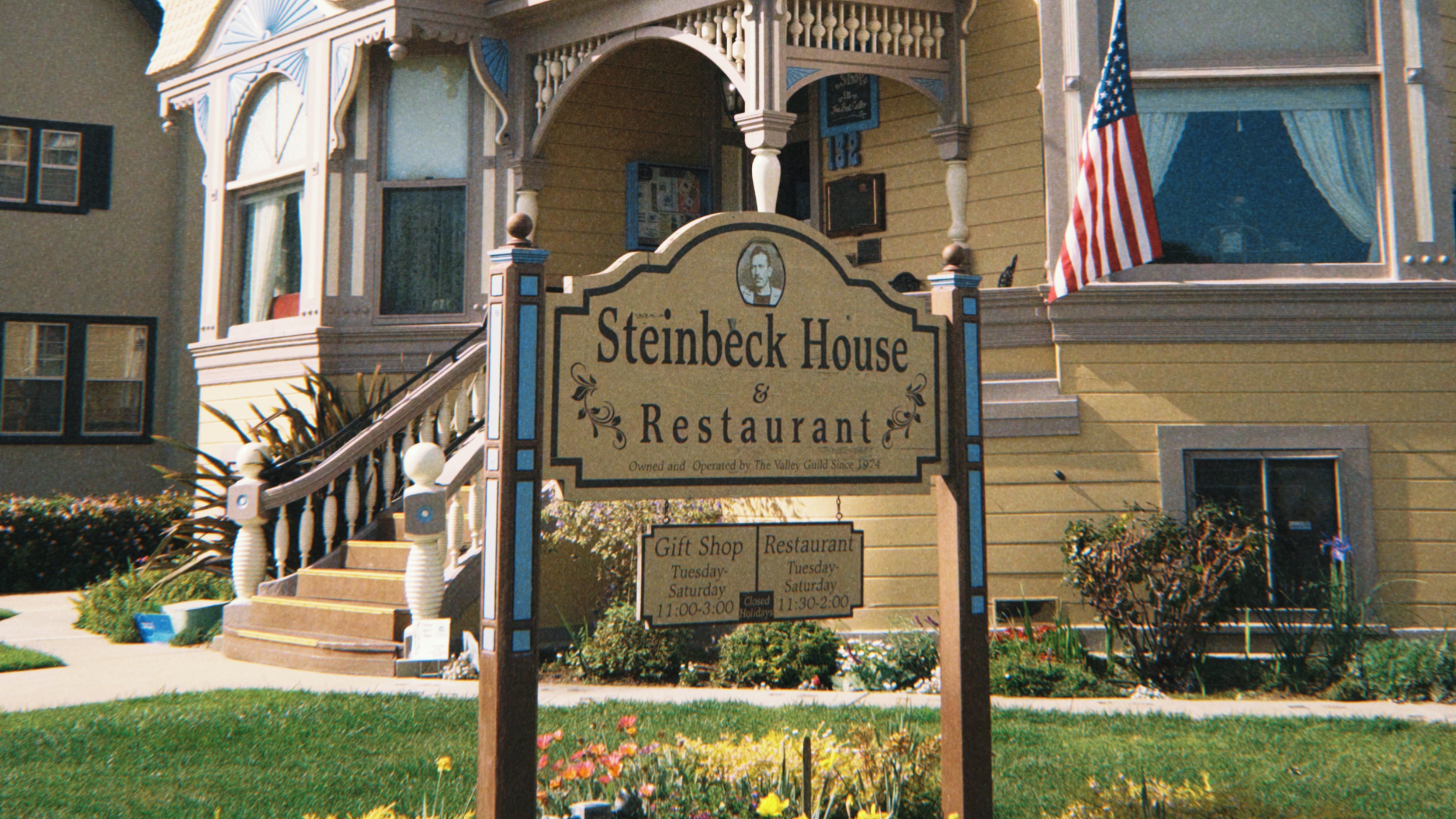
We had coffee and cake at the Steinbeck House, the grand Victorian home where he was born. Now run as a restaurant by a non-profit, it’s an inspired solution to the challenge of preserving a literary heritage home: perpetually full of Steinbeck pilgrims comparing notes over homemade lunch. We received a brief tour of the downstairs floor by a volunteer, including the front room where Steinbeck was born.
The Californian landscape is a central character in Steinbeck’s fiction and in particular in the seminal “East of Eden”, where the Salinas Valley is rendered with a loving, geological intimacy.
A short drive from town into the valleys (along the rural River Road rather than the official John Steinbeck Highway) takes you through miles of vineyard and farmland, past dozens of family wineries. We visited Odonata Winery for a tasting: the valley’s cool winds and marine influence produce excellent chardonnays and pinot noirs, and the experience was unhurried and delicious.
Big Sur and the storied Highway 1
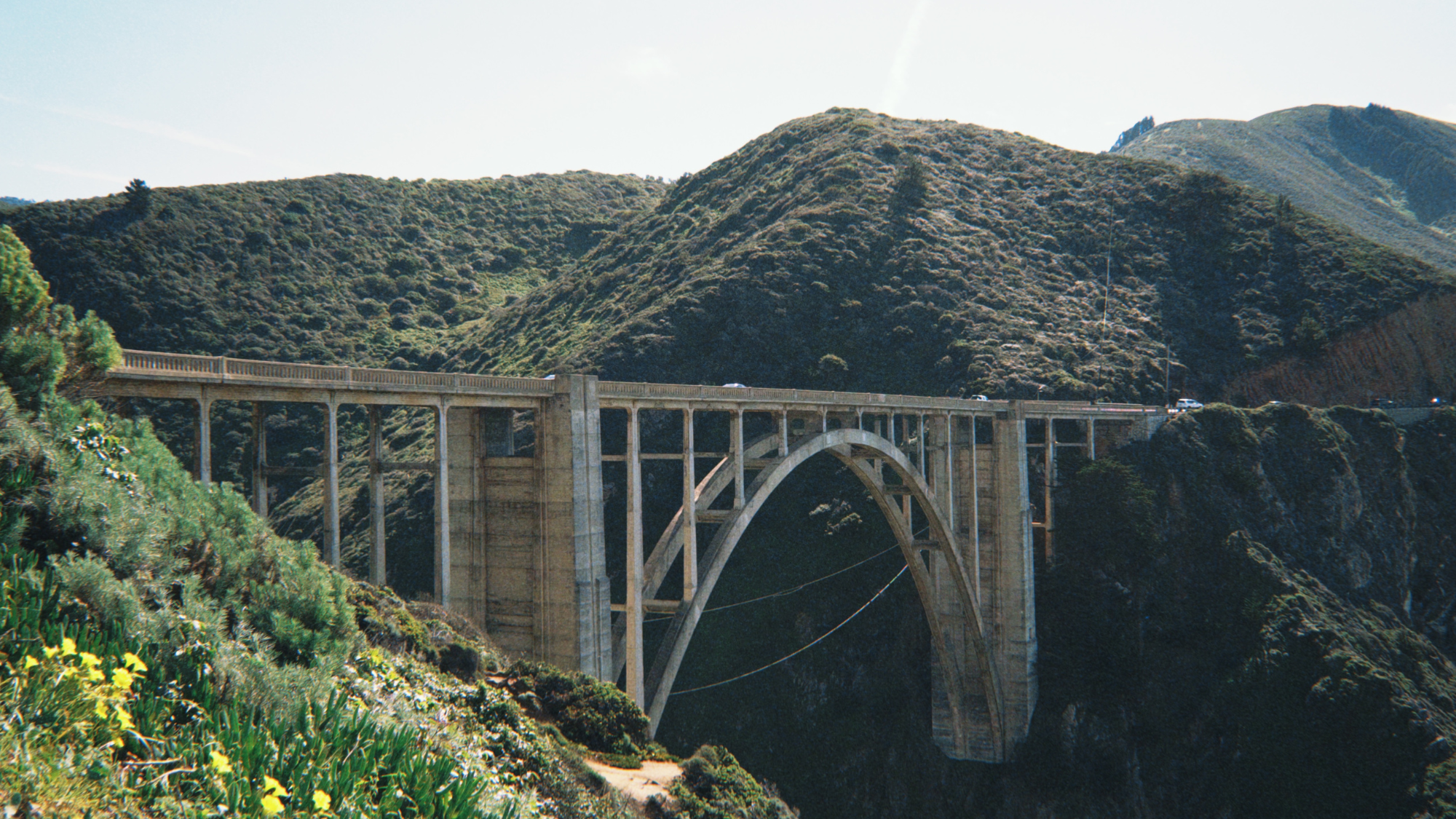
Steinbeck experienced Big Sur before Route 1 was even built, working as part of the first surveying crew in the area, pre-construction. The storied road had reopened just a month before our visit, following storm-induced landslides that had closed this notoriously fragile, distractingly beautiful, coast for months.
Steinbeck’s short story “Flight” is set along this stretch, tracing the primal, terrifying journey of a young man fleeing into the mountains after a killing, and as you edge into the cloak of the redwood forest, the violence buried in this landscape doesn’t feel far away.
We stayed for two nights in this area. First, at Glen Oaks Big Sur, a historic property that began as a 1950s motor lodge and has evolved into a rustic-modern retreat. We had dinner at Fernwood Resort, a short moonlit walk from our cabin, where we enjoyed burgers on a vast decking area surrounded by redwoods. The evening was elevated by live music from a local country band, complete with a pedal steel guitar, reminiscent of Lee Hazlewood.
The scale of this coastline only reveals itself on foot and we spent both days exploring spectacular, well-worn trails. We hiked in Julia Pfeiffer Burns State Park on a route that rises through redwoods and opens on to vertiginous coastal views, and ate a picnic on a clifftop watching two whales make their slow way across the bay. A morning hike up Buzzard’s Roost trail in Pfeiffer Big Sur State Park rewarded us with a panoramic view of the ocean below, before circling back to the Big Sur Lodge for a well-earned coffee in the stately lobby.
Lunch at the Post Ranch Inn was a world apart. We scrubbed off the morning’s soil, put on our best outfits and made our way up the miles-long winding road to a restaurant that is essentially one enormous sheet of glass looking over rolling hills that fall into the sea. The staff are extraordinarily attentive and the food spectacular. The day closed with a sunset drink at Nepenthe, the famous clifftop restaurant and terrace. It’s not to be missed; the entire mountain-range turns blood orange as the light floods in from the west.
We ended the trip at Deetjen’s Big Sur Inn, built by a Norwegian immigrant in the 1930s: a collection of hand-built cabins of great charm set in a redwood canyon above a creek. We dined at the restaurant for dinner and breakfast, the rooms were buzzing with hikers and locals and the food was deliciously decadent. The guest book in our room was a remarkable document; visitors write at length and with unusual honesty. One woman hailing from Massachusetts described her pull towards California in a register that was unmistakably Steinbeckian; proof that the passage from east to west on the tail of a dream endures.
More than a century on from the world Steinbeck documented, the migrations continue. The American dream persists. The land endures. Come for the charming towns, the diverse cuisine and the most dramatic coastline in America. Stay for what Steinbeck called “one of those pregnant places from which come wonders”, where history, landscape and the human story compress into a single, overwhelming present.
Alexandra was a guest of See Monterey; seemonterey.com
From Salinas Valley to Big Sur, experience the landscapes that shaped the legendary writer’s books on this literary road trip