
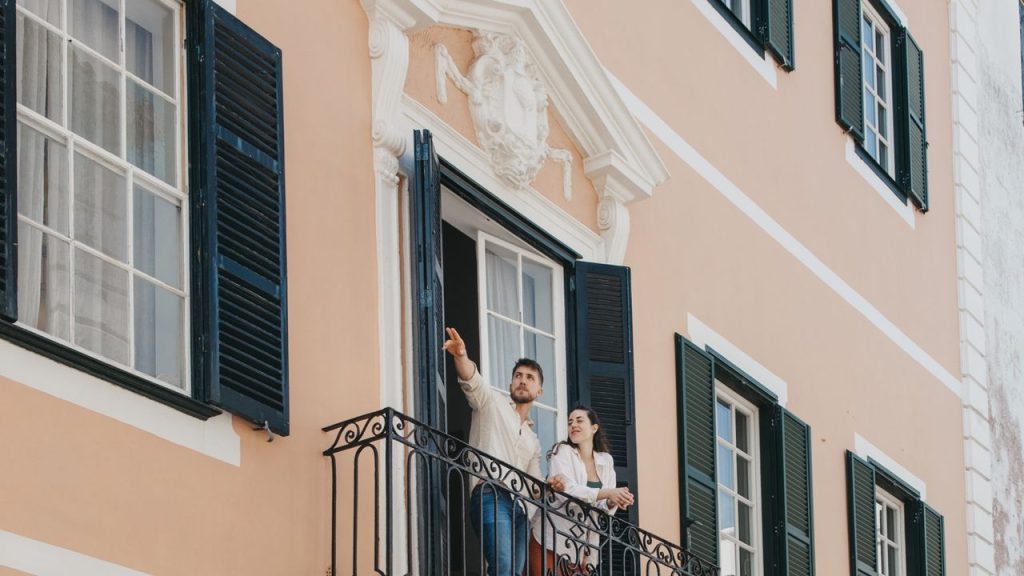
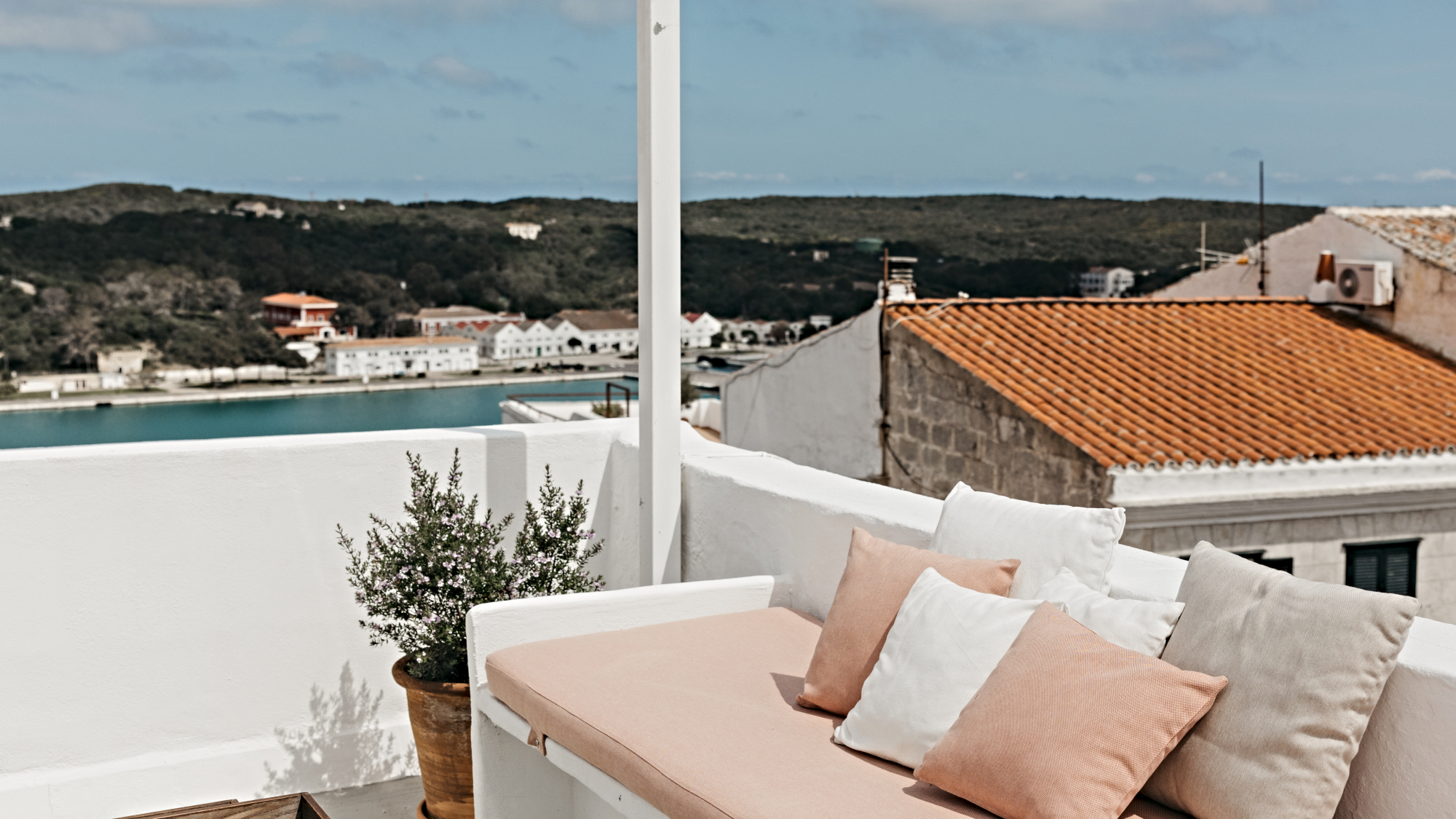
Mahon old town’s stone-paved narrow streets, lined by sandy limestone buildings, top the cliff overlooking one of Europe’s best natural harbours. That harbour has attracted invaders over the centuries: Romans, Byzantines, Vandals, north Africans and the French have all taken ownership – and it has passed between the UK and Spain three times. A British influence lingers, with words like “grevi” (gravy) and “boinder” (bow window), and “Hannover” and “Stuart” street names.
In the heart of this historic setting lies Can Alberti: a salmon-pink townhouse turned boutique hotel. The property’s own interactive map, detailing bars, restaurants, beaches and places to see, makes it easy to explore from here.
Why stay here?
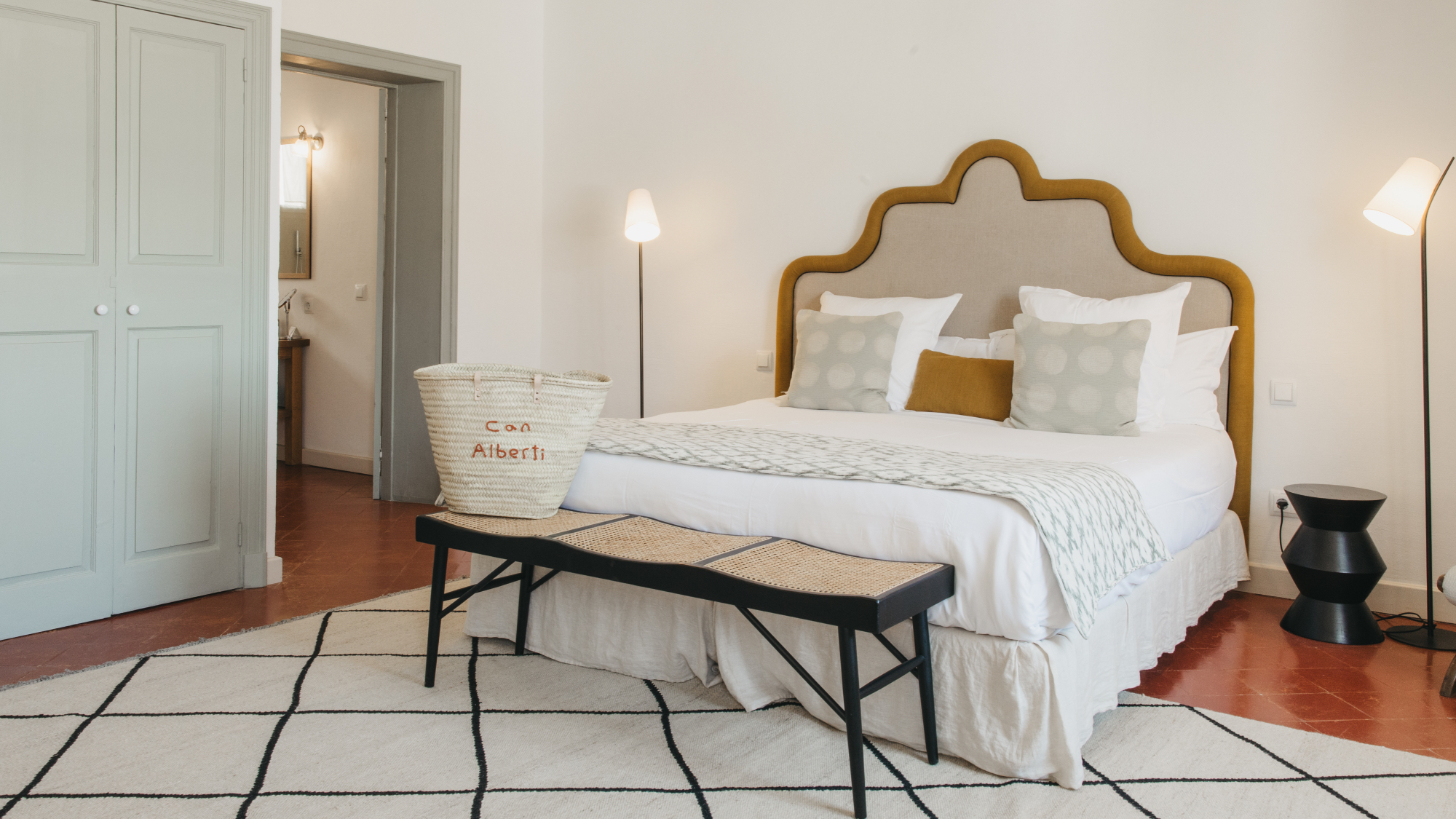

Tucked away on a quiet street, this 18th-century mansion is home to 14 rooms, each decorated in calm tones and natural textures, with tiled floors softened by rugs. The wardrobe conceals a kettle, drinks and snacks plus minibar, robes and the bang-on-trend bonus of a straw basket, to use during your stay. In the bathroom, a non-plastic toothbrush and other necessities are practical, thoughtful touches.
The hotel dates from 1740, when it was built by Vicente Diego Alberti Mercadal, whose great-grandson Vicente Alberti Vidal, a theatre enthusiast, was important during the Enlightenment.
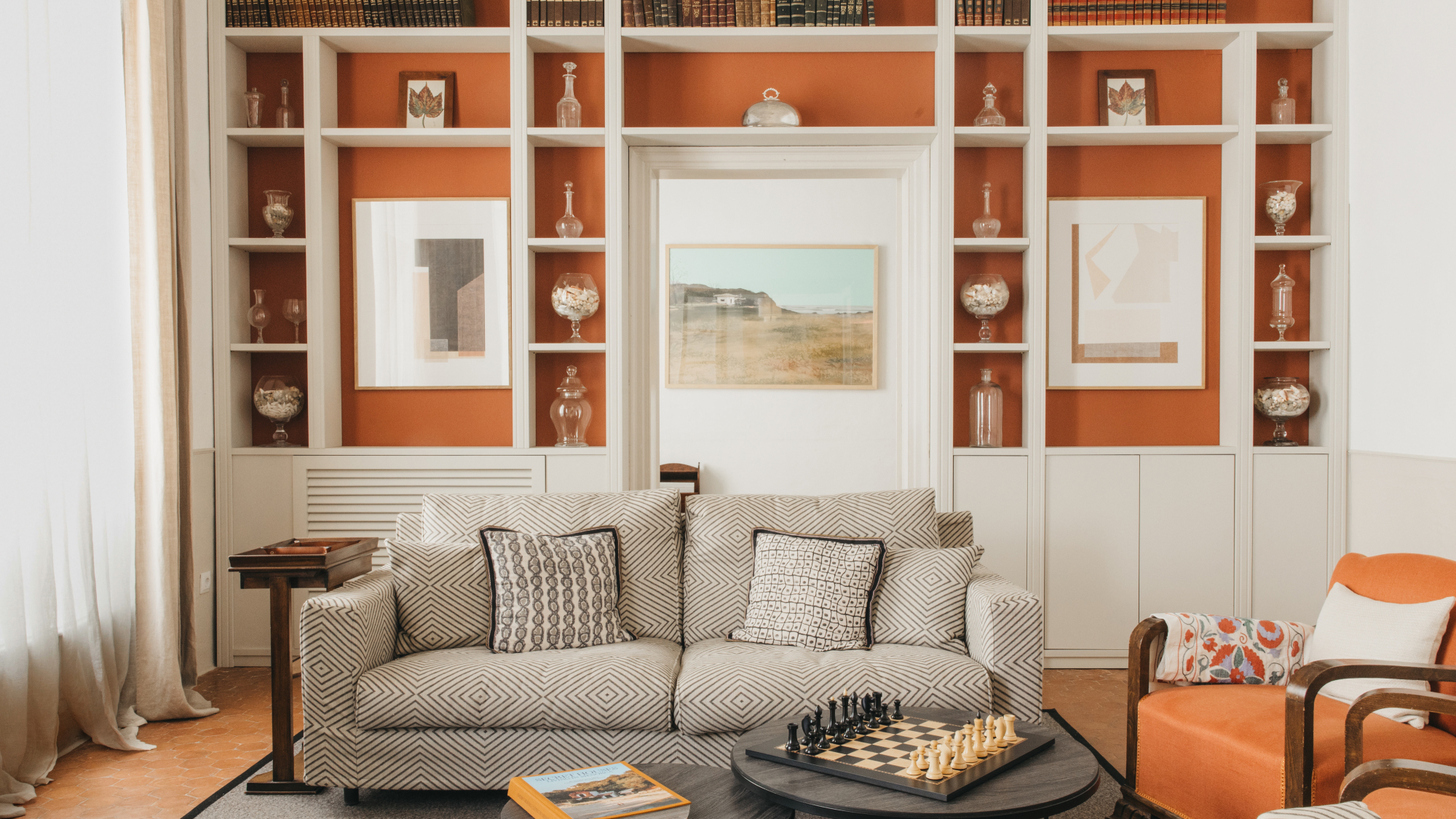
Since 2016, the owners have continued the artistic connection by filling the place with art, from nautical signal flags to Shepard Fairey’s “Obey”, and organising exhibitions in collaboration with galleries. The next, which runs until 25 July, features works by gallery artists Teresa Gancedo and Pepo Hernando, French artists Lionel Sabatté and /w, and photographs by Mallorcan artist Toni Amengual.
Eating and drinking
Breakfast is taken on the patio under a white shade sail, while swallows swoop across a blue sky. Eggs are cooked to order, and oranges freshly juiced. Fruit, Greek yogurt and granola filled my plate, plus delicious seeded bread from local bakery Pigalle. Try Menorcan specialities like sobrasada – squidgy sausage – and at least three cheeses, plus the Catalan classic of grated tomato on bread with olive oil. Coffee comes from an upmarket machine, each cupful ground fresh.
Can Alberti has no restaurant but its central location puts you only a couple of minutes’ walk from dinner. A popular staple for over two decades, Ses Forquilles offers French/Spanish classics such as beef tartare and foie gras, pan de coca, traditional Catalan flatbread, and jamón croquetas. In the plant-filled courtyard, my partner was leaning towards grilled sea bass or beef tenderloin before being seduced by the waiter’s suggestion of slow-roasted Menorcan suckling pig, deliciously succulent. The vegetarian options were slightly limited… my starter-as-main was a long sausage of skinned aubergine, dressed with flavourful basil, cheese and tomato-based sauces, garnished with browned breadcrumbs. For dessert, the almond coulant oozed its caramel-coloured ‘lava’ at my spoon’s touch.
Anna y Pepe is a buzzy restaurant serving a selection of tapas, run by the couple it’s named after. Anna is a consummate host, making everyone feel welcome. After sharing pan con tomate and tortilla, sweet with caramelised onions, we diverged: for him, potatoes, leeks and Catalan black pudding topped with a fried egg; for me a burrata and tangy tomato salad with pesto. Somehow we found room for dessert: creamy cheesecake for him, a battle between banoffee pie and lemon and basil sorbet for me (the pie won).
Things to do
Menorca’s art scene dates from the 1960s when the Grupo Menorca founded the island’s first contemporary art gallery. In recent years, its importance in the art world has grown, most recently with the 2021 opening of the free-admission Hauser & Wirth gallery, open from May until October. Take a €10 (£8.60) boat trip from Moll de Llevant 61 to the Isla del Rey, where, from 21 June, there’s a group exhibition curated by Rashid Johnson.
The Cantina café has tables beneath the olive trees, wicker lampshades swaying above. The grounds were created by renowned garden designer Piet Oudolf, whose other works include the Planting Ribbon in Queen Elizabeth Olympic Park.
The island was the site of a British naval hospital, built in 1711, which became a general hospital. After closure in 1964, the site fell into disrepair, before local volunteers set to work. On summer Sundays you can take a guided tour of fascinating collections of medical equipment, and the Royal Navy’s chapel, with a white ensign flag, and commemorative items from royal family visits.
Many artists live and work in Mahon, including self-taught ceramist Blanca Madruga, who creates deceptively simple textural forms such as ring-shaped halo lights, El Santo and La Santa (male and female saint).
In the Encant gallery, owner Elvira has imaginatively transformed the space, while retaining original features such as sash-window shutters – protection from the up-to-100mph “tramuntana” wind – and a rain water cistern beneath a glass floor, a common feature in old homes. Here, she curates exhibitions from international artists, almost all connected to Menorca, as well as her own photography. Currently on show is the work of Rita Moreno Mir, whose palette reflects the island’s landscape.
Turn left out of the hotel for the Museu de Menorca, revealing a comprehensive history from modern mass tourism back to prehistoric times, and the Talayotic culture, from 1600 BCE to 123 BCE. The “talayots” – structures built from massive stone blocks without mortar – won the island Unesco World Heritage Site status. The hotel’s interactive map shows itineraries for the 1,600 prehistoric sites.
Next to the museum, climb the church tower of Sant Francesc (weekends only) for unrivalled city views. Suffering from visual fatigue? A massage always restores a sense of calm, and the hotel can arrange sessions, so I happily made my way down to the subterranean treatment room, where Andrea skilfully undid the tension in my neck and shoulders, caused by my sedentary work, a very early start, and a not-so-spacious middle seat on the flight.
For further relaxation, head to tranquil Es Grau beach, a crescent of pale sand backed by a quiet fishing village, around four miles (7km) from Mahon. The loudest sound was my sloshing as I waded through the shallow warm water to swim near moored boats. Behind the beach is the Parc Natural de s’Albufera des Grau nature reserve, with marked trails and binoculars to borrow from the information centre to spot wildlife. Los Tamarindos bar/restaurant serves Spanish and Menorcan favourites right on the sand, shaded by tamarisk trees.
The bus service is seasonal, so it’s best to book a (strictly metered) taxi online or by calling the central number, 00 34 971 48 22 22.
The verdict
The friendly, attentive staff and laidback set-up really made me feel part of the household, free to come and go, while the lounge and bar area on the first floor felt genuinely welcoming. A lack of signage adds to the “at home” feel, and taking a wrong turn – as I did almost every time I left the room – merely encourages slowing down to savour your surroundings, and see more art, or perhaps another elegant staircase and chandelier.
No one actually said “mi casa, su casa” but it would have felt entirely appropriate if they had (probably just as well, or I might still be there…).
Adrienne Wyper was a guest of Can Alberti 1740, hotelcanalberti.com
Boutique hotel in Menorca’s capital blends historic character and contemporary comfort