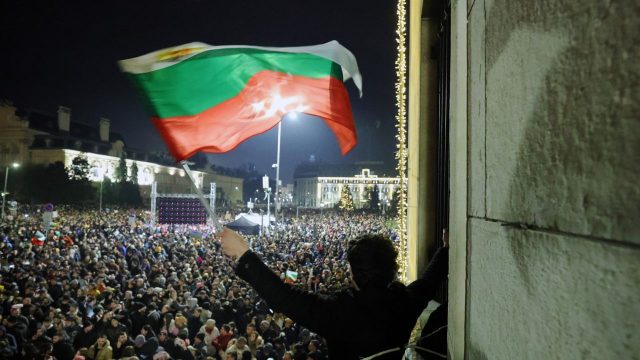
Gen Z protests have been sweeping the world’s countries, and they have now toppled their first European government: Bulgarian Prime Minister Rosen Zhelyazkov announced his resignation on Dec. 11, marking the latest in a slew of Bulgarian heads of government to step down in recent years. The protests were largely held over perceived corruption in the country, and now politicians will look to form a new government.
Why are Bulgarians protesting?
The demonstrations were largely “mass protests against government corruption in recent weeks,” said The New York Times, as well as precipitated by anger toward a proposed tax increase for the private sector. Thousands of Bulgarians took to the streets, mostly in the nation’s capital city, Sofia, but also “across the country in a rare show of nationwide solidarity.” A large swath of the protesters were young people and Gen Zers, representing a “demographic not typically associated with active political engagement in Bulgaria.”
This adds Bulgaria to the list of countries where Gen Zers have been holding mass protests, including Madagascar, Morocco and Nepal. But while the protests started over corruption, the “real driving force behind the demonstrations has been broader dissatisfaction with the government itself,” said Politico. Bulgaria, a member of the European Union, is set to adopt the euro on Jan. 1, which has also led to “fears of inflation” amid a disinformation campaign by Russia “aimed at undermining public support for the single currency.”
The government’s “desire is to rise to the level of what society expects,” the now-former Prime Minister Zhelyazkov told reporters. They have “heard the voice of the people who have been protesting. We need to meet their demands, and what they are demanding at the moment is the resignation of the government.” His resignation came just prior to a scheduled no-confidence vote against his cabinet.
What happens now?
Following the prime minister’s resignation, “another election is all but guaranteed,” said Bloomberg. But there has been a pattern of problematic elections in recent Bulgarian history, and the government’s collapse comes “following seven votes in four years, none of which has resulted in a stable governing majority.” There are now several ways the next election could go.
Many eyes have turned to Boyko Borísov, a former Bulgarian prime minister who “has dominated the country’s political scene for nearly two decades,” said Bloomberg. Bulgarian President Rumen Radev has said he will give Borissov, who “leads the largest party, Gerb, the chance to propose a new administration.” Borissov could also end up ceding power to other factions in parliament.
If this happens, it “could create an opening for Radev,” said Bloomberg, who is the “country’s most popular politician” despite often echoing Russian talking points. The Bulgarian presidency is mostly a ceremonial role, but Radev has “recently suggested he may start his own political party and enter the race but didn’t elaborate further.” No matter who forms the next government, issues in Bulgaria are likely to remain, as “corruption in the Balkan nation of some 6.5 million has long been pervasive, even after having joined the EU,” said The Wall Street Journal. Bulgaria has “consistently ranked as one of the bloc’s most corrupt member states.”
The country’s prime minister resigned as part of the fallout