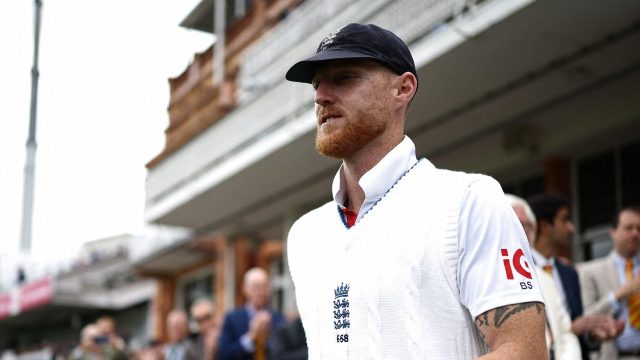
England captain Ben Stokes and bowler Gus Atkinson will not take part in the Test against New Zealand at The Oval, starting on 17 June, after breaking curfew rules in a Chelsea nightclub following their victory at Lord’s, England Cricket announced last week. Sonny Baker and Jordan Cox will make their debuts as their replacements.
At a press conference at The Oval, managing director of England men’s cricket Rob Key “answered the myriad questions over this whole mess with the enthusiasm of someone in a hostage video”, said cricket correspondent Chris Stocks in The i Paper. And as Key was fielding questions “mere metres away from a row of kegs of beer, the irony was lost on nobody”.
Key confirmed that management were considering a ban on alcohol for a national side that has repeatedly faced allegations of booze-fuelled unprofessionalism.
‘Staggering stupidity’
One of Stokes’ strengths as England captain has been his “capacity to show the way”, said Harry Latham-Coyle in The Independent. Given the additional scrutiny around the team’s culture, it is “scarcely believable” that he would allow himself to end up in a boozy altercation at a Chelsea nightclub.
Coming on the heels of reports of excessive drinking at last year’s Ashes, as well as white-ball captain Harry Brook’s run-in with a bouncer in New Zealand, Stokes’ behaviour shows “staggering stupidity”. The leadership team made a vow that things would be different after the Ashes. “That promise has been broken at virtually the earliest opportunity.”
“I find this beyond staggering,” said Matthew Syed in The Times. Stokes’ actions are born out of “utter, crass and unforgivable selfishness”, the symbol of an English side that is neither “trustworthy” nor “mature”. There is something “seriously wrong with the culture” of the England men’s cricket team. For that reason above all, Stokes’ captaincy is “permanently and irredeemably untenable”.
It is “impossible not to feel sympathy” for Stokes, said Emma John in The Guardian. This is a man who recently celebrated his 35th birthday, had just won the first Test of the summer, had 10 days before the next game and has been “teetotal for the best part of a year” in order to manage his heavy workload. England cricket has a “tradition of shooting itself in the foot”, and the instinct to judge him “for the most meaningless of infractions” has felt “perverse”.
‘Lagging behind’
“Heavy drinking sessions are nothing new,” said cricket reporter Elizabeth Ammon in The Times. “Cricket and alcohol have been intrinsically linked since the sport was invented.” Some players believe that “natural talent is a shield”, protecting them from the effects of alcohol, while excessive drinking can also be a response to the “sheer mental toll of long, isolated tours”. But although the modern cricketer is typically more professional than previous generations, the sport is “still lagging behind” its contemporaries.
“The absurd affair captures a simple truth,” said Tim Wigmore, senior cricket writer at The Telegraph. “Cricket is less professional than other leading sports.” Top England cricketers can be earning in excess of £1 million a year – excluding personal sponsorship deals – but this “surge in salaries” does not reflect “comparable advances” in professionalism.
Naturally, the “sheer brutality” of Test cricket – spending “hundreds of days” away from home and 30 hours per game “under spectators’ glare” – demands a “release”. But international cricket has “not merely tolerated alcoholic excess” as a means of escape, but “celebrated it”.
“Does cricket still have a drinking culture?” said The Athletic. “Yes.” But the situation is “complicated and more nuanced than it sometimes appears”. The game is full of “alcohol-related anecdotes”, and social drinking is “deeply entwined” with the sport. Indeed, at the grassroots level, booze is the “lifeblood” of many clubs, with the clubhouse bar “often central to the community”. But admittedly, and “increasingly at the top level, a compromise has to be reached”.
Star players dropped for breaking curfew, amid claims there is something ‘seriously wrong with the culture’