
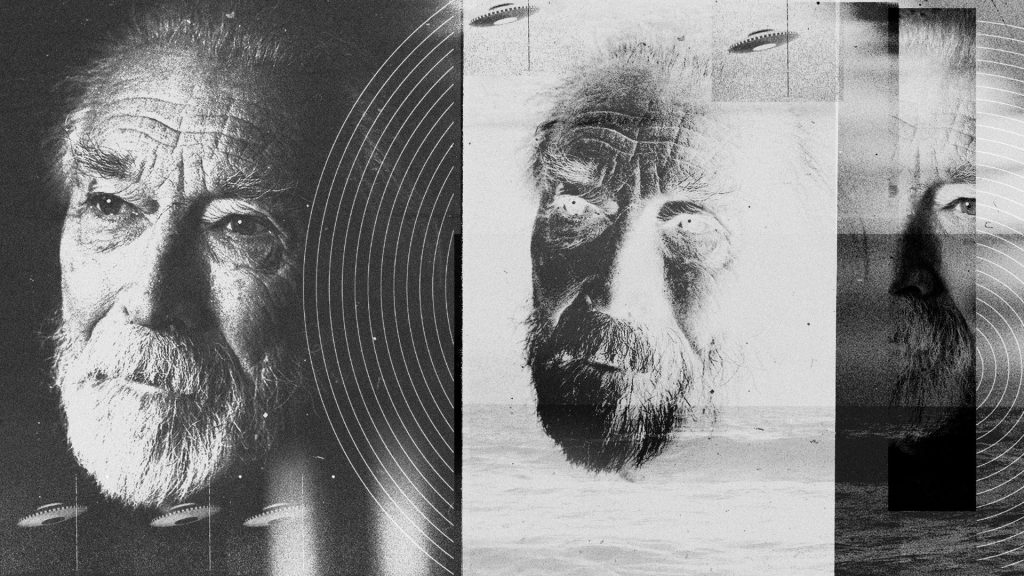
M. John Harrison has supplanted Margaret Atwood to become the oldest winner of the Booker Prize, scooping the prestigious award for “The End of Everything”.
The 81-year-old English author won the £50,000 prize for a post-apocalyptic novel that has divided opinion. The judges’ chair, Mary Beard, called it a “challenging read”.
But while previous Booker winners have dabbled in the tropes of science fiction, Harrison is the first to have “emerged from the bona fide SF world”, said Gaby Wood, chief executive of the Booker Prize Foundation. It is “a historic win”.
‘A genre-defying writer’
“The End of Everything” is set in “a semi-gentrified seaside art town” on the south coast of England and in a near-future that has seen the arrival of a mysterious race of aliens called the iGhetti, said The Times.
The narrative follows Phillip Tennent, a beachcomber, who fishes a strange creature out of the sea and decides to go on the run with it, along with his elderly aunt, Marnie. The “outlandish developments” of the plot are told in “prose of deadpan precision”, while the “origins, motives and even physical existence” of the iGhetti remain mysterious, as does the nature of the disaster that has caused society to collapse.
Harrison said he “deliberately omitted” as much explanation as possible, said the BBC, so readers feel “the same disorientation as the characters”.
He has been called “the titan of literary science fiction”, but Harrison “dislikes labels like science fiction and fantasy”. He is “a genre-defying writer”, said Wood.
‘Famously overlooked’
Science fiction is “famously overlooked” by the Booker Prize committee, said The Guardian. But although “The End of Everything” is set on Earth, readers can detect “the operatic wonder and alienation of space opera”.
Harrison published his first short story in Science Fantasy magazine in 1966, and became part of the New Wave science fiction literary movement in the 1970s. But from the beginning, he “butted at genre conventions”.
The “most capacious pigeonhole” for his novels is “Weird literature”. It emerged in the 1990s, blending elements of science fiction, fantasy, satire and horror, “often through a politically aware lens”. British novelist Olivia Laing called him “the missing evolutionary link between William Burroughs and Virginia Woolf”.
It’s easy to see why Harrison dislikes labels; he’s “spent half a century being dismissed as a sci-fi hack”, said The Telegraph. But this “gem” isn’t quite sci-fi, nor is it a thriller. It’s a “strange and beautiful thing”, one that “speaks to our deepest fears about collective memory and big tech”. It might be “speculative fiction” – but “unless you’re a bookshop, you don’t need to call it anything”.
Harrison’s Booker triumph is a reminder that the notion of “genre fiction” is “a paper tiger”. “Look down on sci-fi” and you’re looking down on J. G. Ballard, Frank Herbert and John Milton.
M. John Harrison hailed as ‘titan’ of overlooked genre, but post-apocalyptic novel The End of Everything defies pigeonholing