
‘This Land Is Your Land: A Road Trip Through U.S. History’ by Beverly Gage
“In one obvious respect, This Land Is Your Land is perfectly timed,” said Jennifer Szalai in The New York Times. Our country’s looming semiquincentennial inspired historian Beverly Gage to embark on the “companionable” national tour she chronicles here. In 2023 and 2024, the Pulitzer Prize– winning author visited roughly 300 historical sites associated with particular events, choosing to focus on just 13, which she presents in chronological order. Because Gage avoids venerating or condemning her countrymen for past deeds, “what comes through is how complicated and just plain weird a lot of American history is.” The sites she visits are “often marked by contradiction,” which Gage “highlights to powerful effect.” And while her accounts of past events are never divisive, “as a historian, she knows that none of the attempts to fulfill the Declaration’s promise of freedom and equality has ever come easily.”
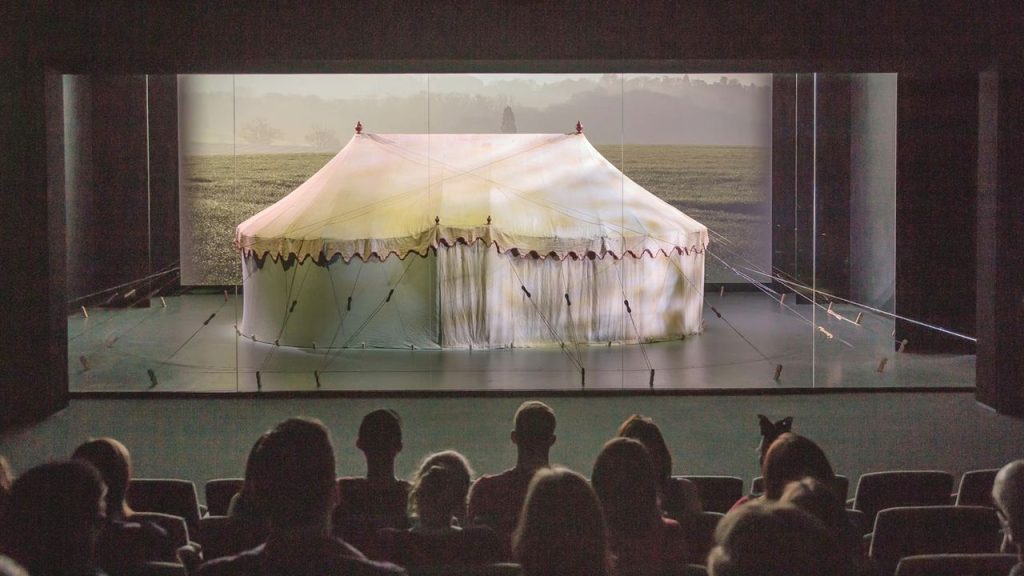
To anyone expecting an old-fashioned American road trip, with all the minor misadventures such journeys entail, “you’ll be disappointed,” said Ceci Browning in The Times (U.K.). As a guide to the story of the nation as told by its historic sites, though, “it’s pretty great.” Gage begins her tour in Philadelphia at the Museum of the American Revolution, which, she notices, lavishes more attention on George Washington’s tent than the thousands of soldiers he camped alongside. At Washington’s Mount Vernon home, barely a mention is made in the main tour of the people he enslaved. Gage admires the National Women’s Hall of Fame, in Seneca Falls, N.Y., but points out that it’s housed not in a majestic building but in a former sock factory. Does she end up making sense of the American story? “She certainly shows that ‘sense’ of any kind is getting harder and harder to come by” as the sites of many important events either venerate or condemn, simplifying history to make it easier for tourists to absorb.
Though Gage is “an accomplished historian and capable writer,” said Charles Lane in The Wall Street Journal, her “warts-and-all look at the American past dwells, a bit predictably, on the warts.” When the time comes to cover World War II, for example, she takes readers to the remnants of a Japanese internment camp and the atomic bomb testing site in Los Alamos, N.M. “If Gage wanted some celebratory leaven,” she’d have had plenty of options, including, say, the many sites in Dayton, Ohio, devoted to the Wright Brothers. But credit Gage for finding a fresh way to tell a history of the U.S., said Edmund Fawcett in the Financial Times. And while she does her best to stay hopeful, it’s clearly a struggle, given the dour mood of the nation amid its 250th year.
‘Beyond Inheritance: Our Ever-Mutating Cells and a New Understanding of Health’ by Roxanne Khamsi
“People tend to assume that the genes we inherit from our parents are a fixed blueprint for our growth and development,” said Jerome Groopman in The New Yorker. But medical researchers are increasingly interested in the ways our DNA is forever changing, and in Beyond Inheritance, science journalist Roxanne Khamsi “provides a useful guide to this body of research and its far-reaching implications.” Advances in DNA sequencing have revealed that of the 30 trillion cells in the human body, about 4 million are replaced every second, requiring 4 million copies of a code that’s many billions of letters long. Eventually, errors slip in, errors that accumulate. These can be harmful, producing cancer, while some have real benefits.
Still, Khamsi’s “disquieting” book vividly reveals the battle that our cells are forever waging against one another, said David A. Shaywitz in The Wall Street Journal. Cancers begin with a single mutant cell whose offspring compete for dominance while acquiring additional mutations that can render them resistant to medication. As even healthy-seeming people age, they accumulate mutant blood cells that have a growth advantage over healthy cells. This makes many seniors far more susceptible to blood cancers, heart attacks, and strokes. Mutant cells in the aging brain, meanwhile, appear to contribute to cognitive decline. At times, Khamsi “seems almost apologetic for the dismal message she carries,” but, from birth, a process is unfolding within us that will kill us if nothing else does sooner.
“It isn’t all bad news,” said Michael Le Page in New Scientist. Khamsi’s “most astonishing chapter” describes how mutations sometimes correct inherited conditions, including the rare immunological disorder associated with babies who must live in protective bubbles. Still, “helpful mutations are the exception rather than the rule,” and there’s apparently no escaping the damaging ones. Khamsi “doesn’t go on to draw what seems the obvious conclusion: that the only way to dramatically extend lifespans is to redesign the human genome to massively reduce the mutation rate.” While the resulting new beings may look like us, however, they’ll “no longer be human.”
A tour through American history and a new look at how cells affect our health