
‘The Telephone: A New History’ by James Gleick
When Alexander Graham Bell was racing to lay claim to inventing the telephone, “it wasn’t immediately apparent what the phone would be for,” said Joshua Brustein in Bloomberg. Some dismissed it as a useless toy. Others thought it’d be most useful for the widespread sharing of musical performances or government propaganda. James Gleick’s new book reminds us that such speculations hardly matter. “As Gleick convincingly argues, important new technologies arrive unformed; they’re then shaped by how people use them, while also shaping their users in the process.” Gleick’s highly readable history “weaves together the science, economics, and culture of telephones,” reminding us along the way how the technology remade the way we live. “For a book whose action mostly takes place in the period between the 1870s and the 1980s, it is strikingly relevant to our current era of technological ferment.”
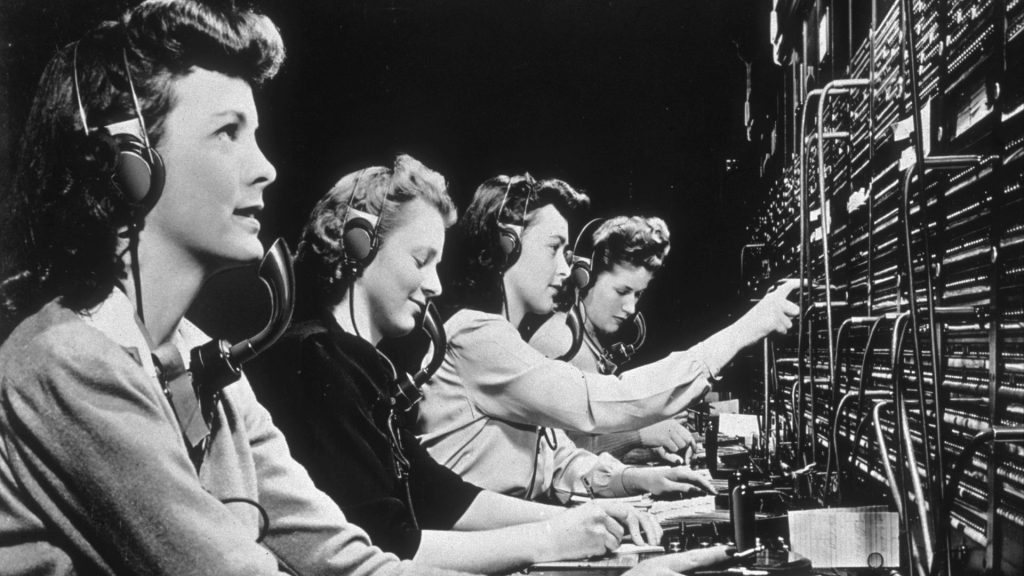
Gleick’s The Telephone “restores the old instrument to its rightful place in history,” said Alexandra Jacobs in The New York Times. “Furthermore, it burnishes a once mundane tool with dignity and mystique,” urging us to consider if it was a unifier or a social disruptor. Bell, we learn, owed his life-changing 1876 patent to tinkerers who’d achieved bigger breakthroughs before him. And Gleick believes he would have been surprised by how the phone opened up the world for women, expanding their social reach and ushering them into the workforce first as switchboard operators, then secretaries. Phones also changed our relationship to distance and time, even how we greet each other, transforming “hello” into a commonplace. Given its insights into the texture of life in the 20th century, “this elegant survey should be required reading for digital natives.”
Gleick writes “remarkably clearly and instructively” about science, technology, and both fields’ pioneers, said Ann Fabian in The Boston Globe. He showed that skill in previous books about Isaac Newton, physicist Richard Feynman, and chaos theory, and he makes the early history of the phone “a story peopled by a large cast of dreamers, gifted amateurs, and eccentrics.” Among those, “my favorite, and Gleick’s too, I suspect,” is Almon Strowger, a Kansas City undertaker who in the 1890s invented the first automatic telephone exchange because he suspected the woman running his local switchboard was directing likely customers to a rival funeral director. Despite all of its historical tidbits, I finished this book thinking not about phones but about how AI may soon alter our lives. Rather than doing the guesswork myself, “I’ll wait for Gleick to assemble the cast and solve the equations that will help us make sense of our lives amid thinking machines.”
‘Look at Me’ by Dustin Hoffman
Dustin Hoffman, across his long career, has proved himself “a sharp, funny, and engaging raconteur,” said Bruce Handy in Air Mail. His new memoir, a best seller, appears “proud to be a raconteur’s book.” Hoffman, now 89, never addresses in detail the allegations of sexual misconduct that surfaced as the #MeToo movement crested, but he’s happy to share the inside dope on the making of such classics as Midnight Cowboy, All the President’s Men, and Rain Man. He and his co-author, Ariel Levy, also provide “vivid, sometimes spiky portraits of the co-stars and directors with whom he collaborated and/or clashed.” Unfortunately, “chronology is not this book’s strong suit.” As Hoffman dishes on Steve McQueen or admits giving Meryl Streep cause for resentment, his account “rambles, zigzags,” and “digresses.” Mostly, though, “it’s a pleasure to tag along.”
“Hoffman wasn’t the most congenial of colleagues,” said Julia M. Klein in the Los Angeles Times. Taking on a character or scene, he trusted his own instincts above all. Fortunately, “there is just enough candor and self-reflection in Look at Me to make the actor seem, on balance, sympathetic, even endearing.” Growing up, he felt destined for failure until he found an outlet in acting, and after moving from Southern California to New York City to work in theater, he was still struggling to make a living when he was tapped to play the lead role in The Graduate at almost 30. He writes that working with director Mike Nichols was “a terrible experience,” but the 1967 movie made Hoffman a star.
Two painful facets of Hoffman’s story leap out, said Peter Bradshaw in The Guardian. The book’s tragic hero is “Hoffman’s angry and opinionated dad,” who’d failed to achieve his dream of becoming a film director and took his frustration out on his sons. Then there are the sexual misconduct allegations that have been a stain on Hoffman’s career since 2017. Hoffman admits having made dirty jokes decades ago, but he denies ever physically harassing anyone while failing to even repeat the accusations of groping that women have made against him. In the pages of this book, Dustin Hoffman is both a screen legend and “a garrulous, grandfatherly, un-self-aware figure.” Clearly, that’s how he’d like to be remembered.
James Gleick gives the invention of the telephone the respect it deserves, and Dustin Hoffman gets real in his memoir