‘The Rush: California Gold, the Civil War, and the Making of the Modern World’ by Nathaniel Philbrick
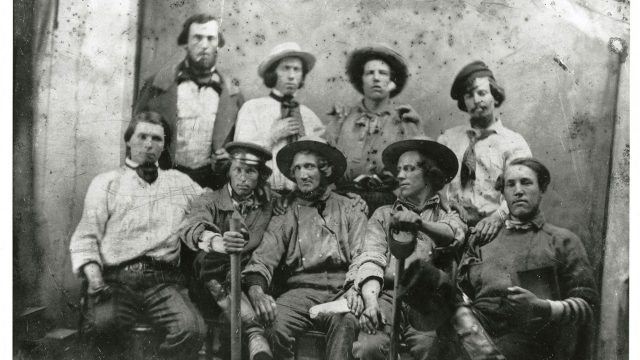
“The Gold Rush is a fascinating saga, especially in the hands of so capable a chronicler as Nathaniel Philbrick,” said Richard Snow in The Wall Street Journal. The bestselling author of In the Heart of the Sea and three George Washington books turns his gaze to the prospecting dash—second only to the Civil War as the defining event of 19th-century America. It all began in 1848, when carpenter James Marshall noticed something sparkly in the channel below the California sawmill he was building. By the following year, more than 50,000 fortune seekers from every continent had arrived, hunting the flakes, nuggets, and veins of gold spread along 150 miles of the Sierra Nevada. Philbrick chooses “as our inaugural guide to gold country” one Vicente Rosales, a highhearted Chilean who kept observant diaries of the madness he witnessed as he sought his own fortune, if unsuccessfully.
Philbrick’s “engrossing” tale recounts “the birth of California, and the way gold and greed remade the nation,” said Hamilton Cain in The Boston Globe. The influx of prospectors and those profiting off them spawned cities including San Francisco and Sacramento, and, by 1850, California, newly taken from Mexico, had joined the union. The battle for the heart of the new state is reflected in its two maiden senators. Staunch slavery opponent John Frémont duked it out with William Gwin, a former plantation owner who sought to cleave off Southern California as its own slave state. Conjuring “time and place in lush detail,” Philbrick “grounds California’s fractious debates in human stories,” including those of Samuel Brannan, the con man who co-founded Sacramento; the murderous judge David Terry; and Native women victimized within their own homeland. And the author “spins his tale with aplomb, hitting his notes just so.
The Rush is “a sprawling book, characters and stories spilling out everywhere, as dense with claims as the goldfields it describes,” said Kathryn Schulz in The New Yorker. Woven throughout are two dominant ideas: The scramble for wealth, labor, land, and power contributed to the onset of the Civil War, and the rush birthed a new, distinctly American taste for novelty and transformation that still informs our character. Sadly, Philbrick is “not particularly convincing about either of these claims,” which are “a little rickety” and “too different to comfortably coexist in a single book.” The Rush is “at its best when it simply shows us this mayhem as it unfolded in a specific place and period,” not when using it to illuminate the present. After all, “the past is its own kind of gold— abundant, difficult to access, inordinately valuable—and sometimes it is enough to let it shine.”
‘Redemption: Faith, Justice, and Sisterhood on Death Row’ by Lawrence Wright
“Here’s a cheery subject for a book,” said Timothy Egan in The New York Times. Redemption explores what happens when a group of nuns ministers to seven women on death row outside Waco, Texas, many of them convicted of unspeakable crimes. And yet in the hands of Lawrence Wright, the Pulitzer-winning author of The Looming Tower and Going Clear, “this tale is oddly compelling, even, dare I say, uplifting.” At first, it’s hard to feel sympathy for inmates whose alleged crimes include the murder of a toddler. But what elevates Wright’s “latest master class in narrative nonfiction” is how he finds “nuance behind the notoriety,” forcing us to question the looming execution of women who may be innocent or have at least changed for the better.
Wright “explores not just their gruesome crimes but their horrific backstories,” said Julia M. Klein in the Los Angeles Times. Most were victims of violence and sexual abuse; many succumbed to drug addiction and lived in poverty. Given “extraordinary access,” the author recounts how visits from the Sisters of Mary Morning Star instilled in them a sense of community, spirituality, and creative potential. Throughout, Wright “interrogates the boundary between severe mental illness and evil, and wonders whether, even in extreme cases, redemption might be possible.” Still, in expanding a 2025 New Yorker article to book length, he “sometimes loses the thread, indulging in digressions that detract from his study of transformation and redemption.”
This “may be Wright’s most personal work of journalism,” said Kate Tuttle in The Boston Globe. He grew up worshipping at a Methodist church in Dallas, but he saw early on how religious fervor could stoke political extremism. Redemption’s “most revealing” parts find him exploring his and America’s relationships with the death penalty, which, one law professor tells him, wouldn’t exist here without Christians’ support. Wright says he’s not attempting to solve capital punishment’s moral dilemmas. But having absorbed his “richly observed and beautifully rendered” profiles of these inmates and nuns, “it’s difficult to imagine any reader’s faith or support of the death penalty could withstand the evidence his reporting so eloquently illustrates.
Nathaniel Philbrick’s fascinating deep dive into California’s gold rush, and Lawrence Wright details a relationship between nuns and women on death row