‘London Falling: A Mysterious Death in a Gilded City and a Family’s Search for Truth’ by Patrick Radden Keefe
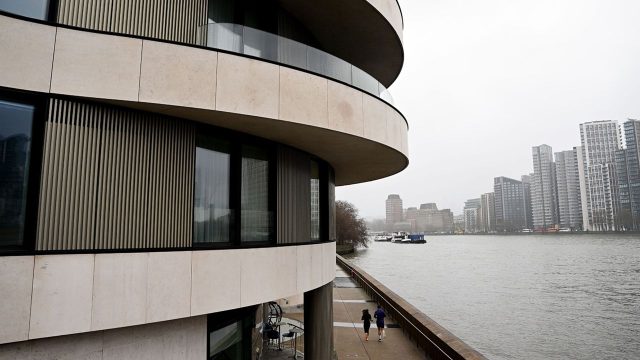
“The best true-crime stories use a particular event as a key to unlock a world,” said Laura Miller in Slate. Patrick Radden Keefe’s latest book “does just that,” finding, in the unexplained death of a London teenager, “both a private loss and a parable of the decay of a once great city.” In the early hours of Nov. 29, 2019, Zac Brettler, a 19-year-old from a comfortably middle-class family, leaped from a fifth-floor balcony into the Thames River and drowned after striking the sloping river wall. Though the official inquest failed to determine whether Zac jumped to escape danger or to kill himself, The New Yorker’s Keefe winds up blaming the death on the corruption of London in recent decades by oligarchs, con men, and international criminals. The strands of the story he tells “strongly suggest that it was the city that destroyed the boy.”
Keefe’s book “opens a window onto a world of financial dirty work and Walter Mitty–like fantasies of aspirational wealth,” said Ian Thomson in The Guardian. As a teenager, Zac became wealth-obsessed, but his parents were unaware their son had become a compulsive fabulist who had told entrepreneur Akbar Shamji and Shamji’s violent associate, Verinder Sharma, that he was “Zac Ismailov,” a Russian oligarch’s son soon to receive a hefty inheritance. The pair eventually uncovered Zac’s ruse, and they were the last to see him alive, but they denied causing him to jump from the balcony of Sharma’s apartment. Keefe’s “scrupulously researched” account proves “grimly absorbing from start to finish” as the author of Say Nothing and Empire of Pain weaves together the stories of these three men.
With London Falling, Keefe has given us “a morality tale for an amoral age,” said Hamilton Cain in The Boston Globe. But he appears to have been so invested in providing Zac’s parents’ perspective on the story that his own conclusions can’t be fully trusted. “He shrugs off Zac’s deceptions as a kind of precocious child’s play,” and “despite red flags everywhere,” proves “reluctant to consider the teenager’s fraught mental health,” leaning instead on “a golden-boy-ensnared-by-the-wrongcrowd approach.” For me, Keefe’s close collaboration with Zac’s parents “transforms the narrative from a standard true-crime procedural into a profound exploration of parental grief and the search for accountability in a city that often protects its most shadowy residents,” said Tobias Grey in Air Mail. The police come off as disturbingly negligent, but even the Brettler family takes its knocks, and “Keefe’s probity and knack for telling a compelling story ensure that no stone is left unturned.
‘Western Star: The Life and Legends of Larry McMurtry’ by David Streitfeld
“An unmistakable sadness clings to Western Star,” said Andrew R. Graybill in The Wall Street Journal. Though David Streitfeld’s new biography of Larry McMurtry is also “highly entertaining,” it can’t ignore that Texas’ most famous novelist was also, despite his Hollywood triumphs and enduring friendships, a loner at heart who was defined by his deep ambivalence about his home state. Characteristically, McMurtry wasn’t keen on being the subject of a full biography; Streitfeld, after befriending him, won his cooperation piecemeal. Somehow, the veteran journalist succeeds in “resisting any inclination to hagiography,” creating a memorable portrait of the author of Lonesome Dove, Terms of Endearment, and dozens of other novels.
“Streitfeld’s writing is notable for its descriptive energy and reportorial straightforwardness,” said Joyce Sáenz Harris in The Dallas Morning News. After a flash-forward to the 2023 estate sale that followed McMurtry’s 2021 death, Streitfeld lays out his subject’s life nearly chronologically, starting with his 1936 birth in Archer City, the small Texas town that inspired The Last Picture Show. McMurtry’s obsession with books began in childhood, and his ties to Hollywood began when his first novel, published when he was 25, was adapted as Hud, the 1963 Paul Newman classic. Streitfeld also covers the filming of the screen adaptations of Picture Show and the Lonesome Dove series as well as McMurtry’s late-career co-authoring of the screenplay for Brokeback Mountain. As the life chapters accrue, “it is hard to imagine anyone could have done a more thorough, honestly reported, yet compassionate job.”
McMurtry loved spinning tales about himself, and though Streitfeld reports the lore, “he fact-checks as he goes,” said Marilyn Bailey in Texas Monthly. McMurtry liked to claim that he grew up in a home bereft of books, but that now looks like a stretch. It’s also doubtful that the home sat on “Idiot Ridge.” McMurtry did die with 228,000 books on his shelves in Archer City. He just didn’t die in Archer City, as obituary scribes were told. As Streitfeld puts it, “If you’re the greatest writer in Texas, there’s no romance to dying in Arizona.”
A journalist digs into a London true-crime mystery, and understanding Texas’ most famous novelist