
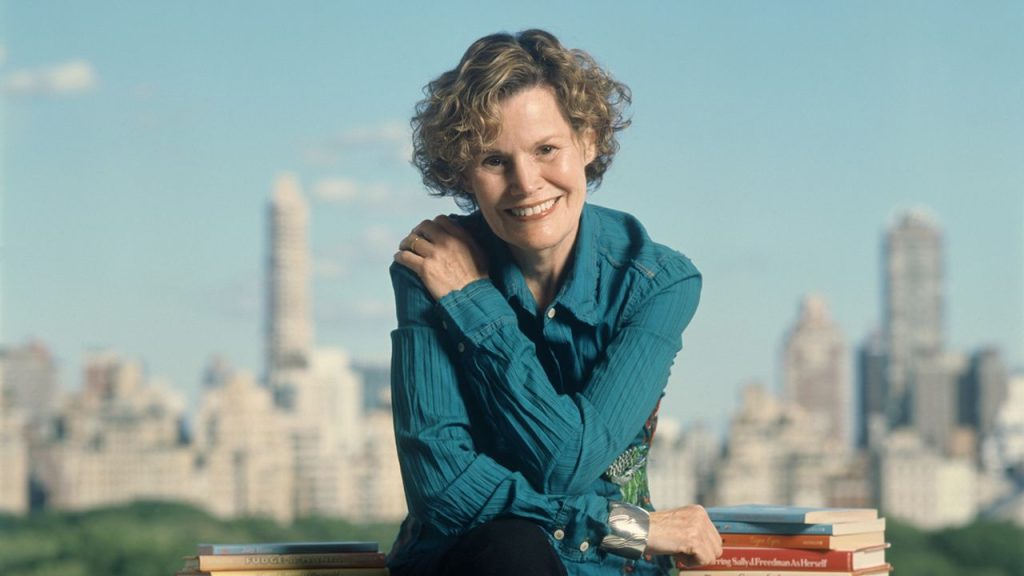
‘Judy Blume: A Life’ by Mark Oppenheimer
“Writing the first big biography of Judy Blume had to come with enormous pressure,” said Kate Tuttle in The Boston Globe. Blume is “a treasure, an icon”: Her books, mostly written for young adults, have sold 90 million copies and earned widespread adoration because, at a fortuitous time, she was “a wild and bold truth teller” about pivotal adolescent experiences that many adults didn’t like to talk about, including menstruation, sex, divorced parents, and loneliness. Mark Oppenheimer, a veteran journalist and author, confesses at the end of his new book that he fears he may have under-delivered. But “he is being too hard on himself.” He has written a “thoughtful, thorough” biography in which Blume comes across as a breakthrough cultural figure “firmly shaped by the time, place, and culture of her birth.”
Oppenheimer’s book is at its best in its “lucid, sensitive evocations of Blume’s suburban girlhood,” said Katy Waldman in The New Yorker. Born in 1938 to a middle-class Jewish family in New Jersey, Blume was encouraged by her parents to read broadly, exercise her creativity, and live without any shame about the human body. When she began writing after college, marriage, and early motherhood, those attitudes shaped her run of early blockbusters, beginning with 1970’s Are You There God? It’s Me, Margaret, but we benefit from also having learned of the conflicts and sorrows that shaped Blume’s coming of age. In describing Blume’s best work, Oppenheimer “can be overly besotted.” But he also includes biographical material “that Blume might have bristled at,” including the abortions she had at 39 and 41. It has been reported that Blume, now 88, stopped speaking to Oppenheimer when he was well into the project, but nothing in the book seems out of place in any serious biography.
The book is strong in its general insights as well, said Meghan C. Kruger in The Wall Street Journal. “Though Blume was gifted and prolific, Oppenheimer suggests that two revolutions enabled her superstardom.” First, her early books coincided with the rise of paperbacks and mall bookstores, allowing young readers to purchase a Blume novel for just $1.25 in 1972 (the equivalent of less than $10 today). Also, the cultural moment was right. Though there were always some objections to the explicitness of Blume’s novels for both teens and adults, parents of the ’70s were more open than their predecessors to messages about body positivity, and the era’s media was less likely than today’s to judge her marital infidelity and divorces as disqualifying for a public figure guiding teens’ life choices. In the end, “Blume might seem prickly,” but “she also comes across as witty, optimistic, devoted to her craft, and sincere in her desire to nurture relationships with readers.”
The beloved author gets her own story told