
A remote town of some 900 souls beside Hudson Bay in Canada, Churchill is known as the “polar bear capital of the world”. Every autumn, as the bay freezes, hundreds of these bears gather around it before heading out across the ice, and thousands of tourists come to see them. But Churchill also hosts another annual wildlife spectacle, said Oliver Smith in the Financial Times – one that attracts fewer visitors but is equally worth seeing.
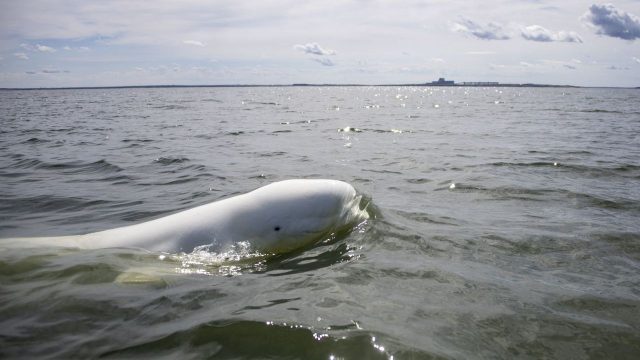
Each summer, thousands of beluga whales migrate to the mouth of the Churchill River, to feed on small fish and nurse their young. These pale cetaceans, which grow up to 18ft long, look from a distance like countless “white-topped waves” in the river (which is more than a mile wide here), and visitors can safely kayak and paddleboard among them.
Churchill is inaccessible by road, so I flew there in a prop plane from Winnipeg, admiring the “vastness” below, where sunlight danced on rivers, and the forest gradually gave way to tundra. (You can also travel by train – a two-day journey.)
The “wind-harassed” town sits in pancake-flat surroundings studded with “landmarks of rust and ruin” – the wrecks of a cargo plane and a steamship, the remains of an old rocket research facility, and so on. I stayed at the Churchill Northern Studies Centre, where lay visitors mingle with research scientists.
My six-day Belugas for the Bold itinerary included shared accommodation, guided nature walks, lectures on ecology and indigenous culture, and water activities. The town’s museum has beautiful indigenous artefacts, and on walks you will see lovely flora and might spot polar bears.
But most wondrous is the chance to see the belugas. Apparently, they are sometimes “mischievous” enough to tip paddlers into the water, but I felt a great sense of peace among them. So low to the water, I could “almost sense the stroke and whip of each flipper”, and every time a curious whale surfaced, I felt a “jolt of surprise, as though aquarium glass were fracturing”.
The trip costs from £2,075, excluding flights (churchillscience.ca).
The creatures are dubbed as ‘mischievous’ but they bring a ‘great sense of peace’