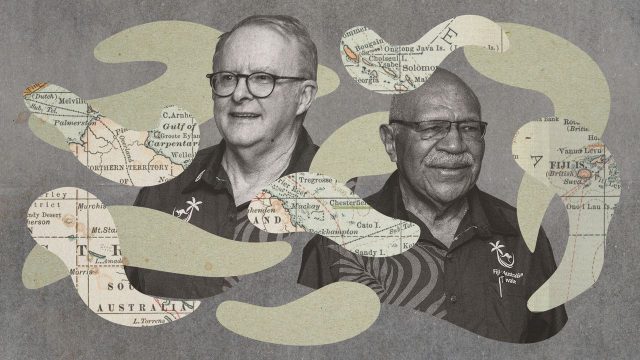
Australia and Fiji have agreed a new defence alliance, the latest in a series of regional pacts that could significantly alter the Pacific’s defence landscape.
In a “surprise move”, Prime Minister Anthony Albanese and his Fijian counterpart, Sitiveni Rabuka, elevated diplomatic ties between the two countries to a “formal treaty”, said The Guardian. The Ocean of Peace alliance, which will in the future be open to other Pacific nations to join, aims to bolster regional security and “limit China’s influence”.
The Vuvale Union
For 75 years, Australia had just two formal alliances – with the US and New Zealand under the ANZUS Treaty, signed in 1951. But recently, it has been “racing to shore up defence ties with its Pacific neighbours”, said the BBC, to counter China’s “military expansion”.
In October, Canberra signed a defence deal with Papua New Guinea – the most populous South Pacific nation – granting it access to PNG’s military facilities and troops.
At the end of June, after “months of negotiations”, Albanese also signed Australia’s long-awaited treaty with the South Pacific island of Vanuatu. Called the Nakamal Agreement, it “recognises Australia as Vanuatu’s primary policing partner”, and prevents any other nation from establishing a military base there.
The latest Australia-Fiji pact, the Vuvale Union, is more significant than previous deals because it includes a mutual defence agreement, committing each country to come to the other’s aid should there be the threat of an armed attack. It also offers closer military cooperation, including planning, exercises and intelligence sharing.
It is open for other Pacific nations to join, although at first Australia would “likely only look to extend the treaty to Pacific nations which maintain a standing military”, said ABC News: New Zealand, PNG and Tonga.
New Zealand will consider joining, Prime Minister Christopher Luxon said on Thursday. The country has only one formal ally, Australia , although it is part of the Five Eyes intelligence sharing group (Australia, UK, US and Canada are the others) and it is “a key partner of Nato”, said Reuters.
Has Fiji picked a side?
China has “sharply criticised” some of Australia’s recent agreements, accusing Canberra of using them as a “geopolitical tool” to keep Beijing out of the Pacific, said ABC News. But Rabuka said he did not believe that either Australia or Fiji would have to deal with “severe pushback” from China, but that they will “welcome the understanding that is between Australia and Fiji”, he said.
Those remarks were “telling”, said The Conversation. Rabuka stressed that the alliance threatens neither country’s relationship with Beijing, but a leader “does not repeatedly reassure a country that a treaty is not aimed at it unless everyone understands it is”, and is to some degree a sign to the region to see whether “Fiji has picked a side”.
Hours after the pact was signed, China test-launched a long-range ballistic missile with a dummy warhead into the Pacific Ocean. Beijing described it as “routine”, part of the country’s annual programme, but the launch provoked an angry response in Canberra, which accused China of destabilising the region. Ultimately, the test “underscored the need for Pacific Island countries to collectively think through their defence and security arrangements”.
Alliance is one of a flurry of treaties Canberra is making in the Pacific to cooperate on security and counter China’s growing influence