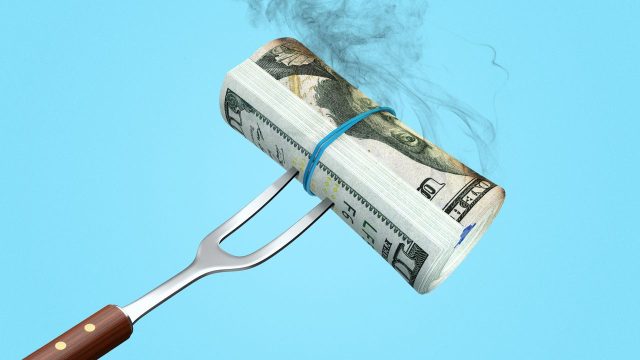
Climate change has led to a marked decrease in salaries across the country, including in places that haven’t experienced significant temperature changes. The problem is likely not limited to the U.S. and is expected to worsen without intervention.
Heating costs
Global warming has cut incomes in the U.S. by 12% since 2000, according to a study published in the journal PNAS. “A lot of the real cost comes from how temperature changes across the whole country ripple through prices and trade,” Derek Lemoine, an economics professor at the University of Arizona and a lead author of the study, said in a statement.
Climate change has a substantial effect on the economy. Heat “reduces productivity, lowers crop yields and changes how people spend money,” said ZME Science. These events “feed into the price of goods and shipping across state lines.” And temperatures in “California or Iowa can influence income in Arizona,” said Lemoine.
Temperature was used as the metric of measurement because it can be “tracked everywhere and provides a consistent way to link climate change to economic activity,” said the statement. Nonetheless, there are “uncertainties,” said the BBC. The “true income hit could plausibly sit anywhere from 2% to 22%, according to the study’s confidence interval.” The study also excluded losses from “specific extreme weather events, such as hurricanes or wildfires.”
It only tracked temperatures in the U.S. and not the global impact, but similar trends are likely present in other countries. “What does not change, though, is that climate change has caused losses of at least several percent,” Lemoine said to the BBC. “These losses are driven by how it altered weather elsewhere in the country, not by how it altered a county’s local weather.”
Domino effect
While temperature can affect national trade routes, it also “affects workers’ productivity, agricultural yields and how people spend their time,” said the BBC. All could “affect income directly and could affect the prices of traded goods.” In addition, the shift can affect the supply of natural resources, which directly correlates to prices. “Recognizing economic losses that have already occurred illustrates the importance of resilience planning for businesses,” said Lemoine.
Understanding how climate change has affected the economy can help determine what actions can be taken. “If you want to decide where to direct adaptation resources, you have to know what’s already happening on the ground,” said Lemoine. “Measuring the current economic effects of climate change helps businesses and policymakers understand where risks are emerging right now.” And the risks are only expected to increase. The global economy could also be significantly impacted and likely already has.
A similar type of risk analysis could continue. Agencies could “update estimates like this regularly, making climate damage a standard economic indicator reported alongside employment or inflation,” said ZME Science. Climate change is “pervasive,” said Lemoine. “Climate adaptation must mean more than just protection against local weather.”
Elevated temperatures are capable of affecting the entire economy