
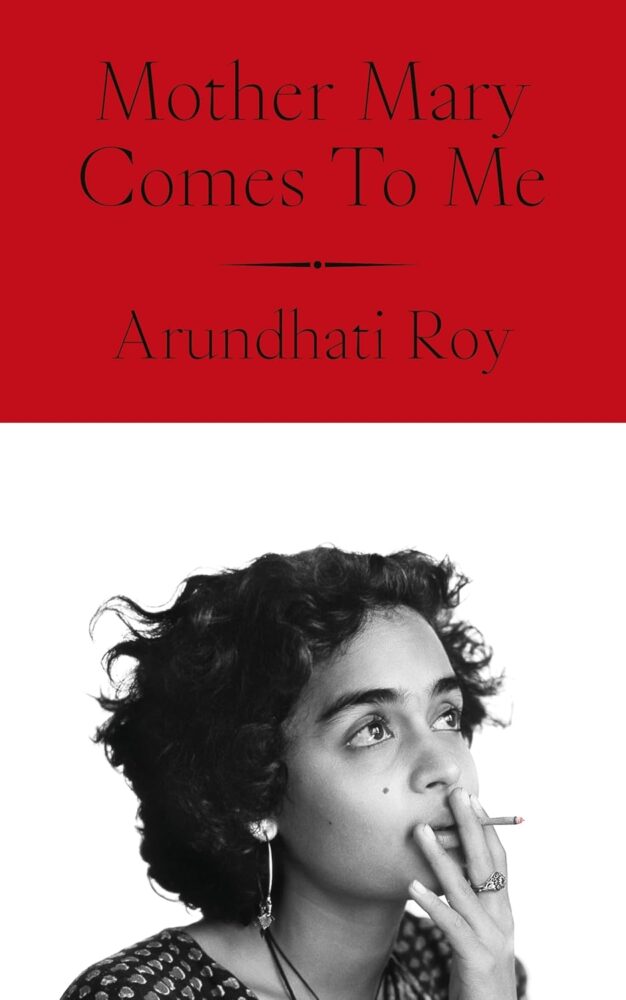
Arundhati Roy has become the figure of brilliance and rebellion; a literary giant who hails from Kerala, India and lays bare the emotional and political realities of her homeland. Her stories can unsettle a reader but equally compel them to turn the next page to follow the complex nature of her stories.
She won The Booker Prize in 1997 for her novel The God of Small Things, which was published against a backdrop of what would become a turbulent time in India as far-right Hindu nationalists took power.
Roy has been a fervent critic of the regime, labelled as a traitor on many occasions and accused of “corrupting morals”. She has spent days in court to defend her work and her thinking; because they unmask the secrets of the country’s politics through the struggle and deprivation of the people.
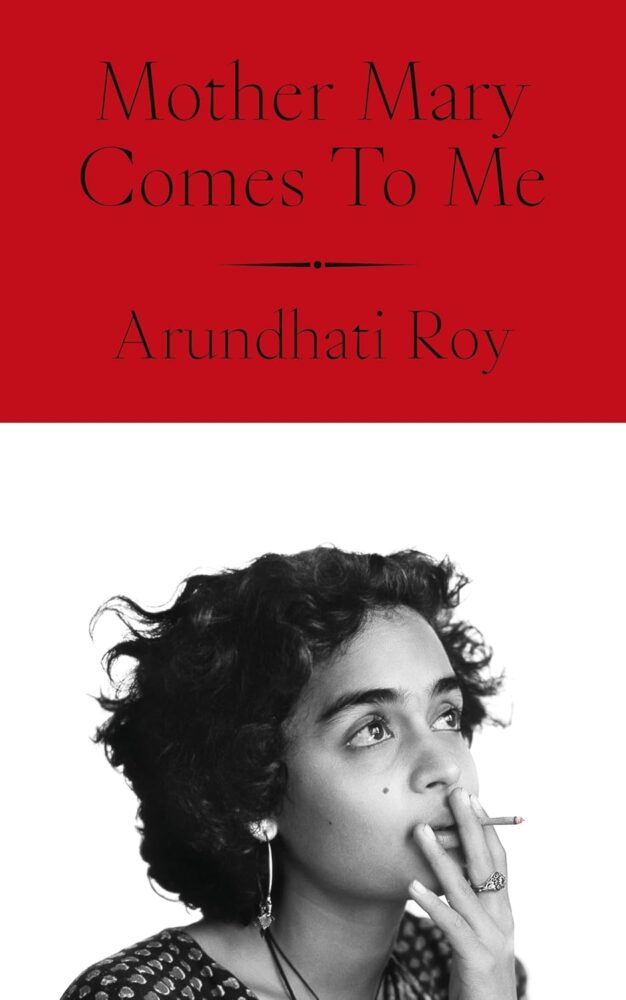
Her latest memoir, Mother Mary Comes to Me, is no different in the way she lays out themes of politics that undermine women but raises them at the same time.
When I set out to read the novel through The Johannesburg Book Club, I did not know what to expect. I have always admired Roy as a commentator of global politics because she has an intelligent way of identifying complex subjects and speaking about them in a literary context.
She has written non-fictional works, among them My Seditious Heart, Azaadi (meaning freedom) and The Architecture of Modern Empire. She uses revolutionary words and speaks of rebellion and change in a way that inspired a generation fighting the good fight; not just in India.
Her prose has reached the hands of many South African readers as well. She came here in 2018 to discuss her book The Ministry of Utmost Happiness, which was longlisted for the Booker Prize in 2017.
I was utmostly happy to see her in the flesh and watch as words that could inspire change fell so eloquently from her lips.
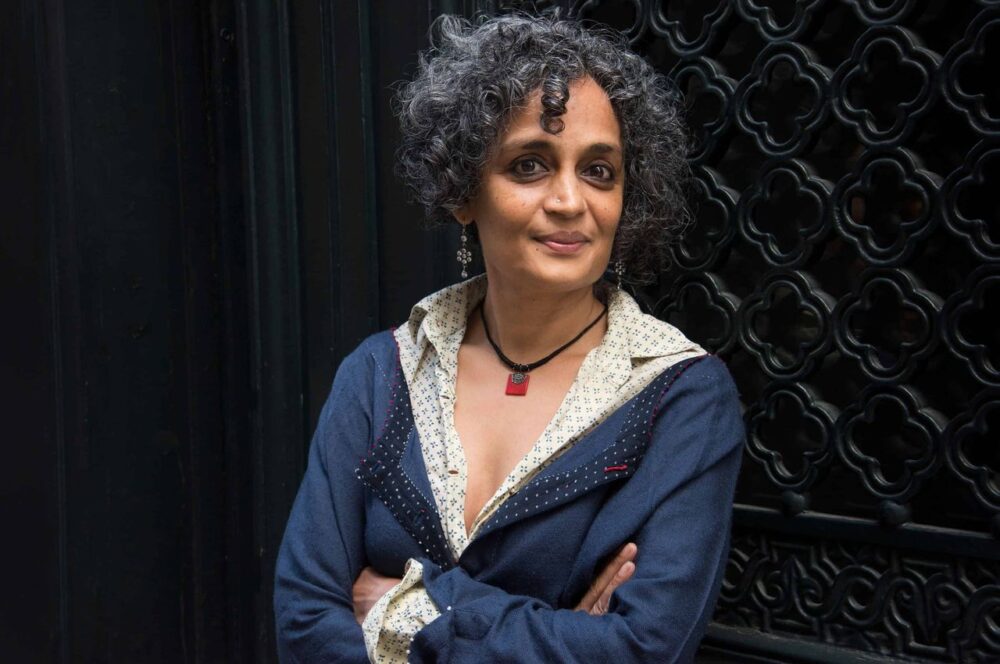
I imagined her to have a background in literature, language and politics from a respected institution. I imagined her walking around university corridors in a sari with her striking curly grey hair, commanding respect.
I hoped to see myself in her. But upon reading the first page of her memoir, I could not have been more wrong. No least because the title is borrowed from a song by The Beatles, Let it be.
I thought it would have some significance and a strong theme about how God brought her into her talent for writing. Hardly.
She opens the story immediately about the day her mother, Mary Roy, died and how the townspeople, including herself, prepared for her funeral. She was no ordinary woman, Roy says. She won a historic 1986 Supreme Court of India case that secured equal inheritance rights for Syrian Christian women in Kerala, specifically for their fathers’ ancestral property.
She built and established a school, Pallikoodam, in 1967 in Kottayam, Kerala, as what has been understood to be an experimental, progressive institution focused on critical thinking, independence and holistic education over rote learning.
A heroine in her own right but an antagonist and harsh critic in Roy’s life.
The book shattered the image I had of her perfect life and so the unravelling began. Roy studied architecture, not writing and moved briefly through the worlds of screenwriting and film before becoming an influential literary voice in India.
It was not a path shaped by passion alone but also by a desire to escape her, some may argue, abusive mother.
“When it came to me, Mrs Roy taught me how to think, then raged against my thoughts. She taught me to be free and raged against my freedom. She taught me to write and resented the author I became.
“The price I paid for being Mother Mary’s daughter and the writer that I am today was not a prison or persecution (although there was some of that, too). It was a catastrophic heartbreak,” she writes.
She describes scenes in which her mother cursed her existence and speaks about wanting to send her to an orphanage. Roy describes this as her mother’s “wrath against motherhood itself”.

Roy introduces her elder brother, who also faced the wrath of Mary’s resentment towards men. They had a complicated relationship with their mother and no relationship with their father, until he is introduced a few chapters in. An eccentric fellow, poor and constantly seeking money from Roy’s earnings.
In my eyes, Mary would not win the “Mother of the Year” award but she was no less than a mother to the people she schooled and raised.
This is where Roy’s pride and valour for her mother existed but she does not separate her pain from the pride. She does not discount her mother’s actions nor her love. Two worlds exist at once.
As I moved through the 372-page memoir, I longed to use her language to understand a country that I would visit with my family in a few weeks: India.
I went as an empty vessel, curious and open to whatever experience the colour and culture of the country offered.
I saw my ancestral homes and experienced the sacredness of Hindu religious sites.
I created memories with those closest to me. I also searched for the world that Roy wrote about in her books — to relate to India — but the country is so vast that the stories could exist in the crevices of the slums, in the street markets and stores, in the heart of the auto-rickshaw drivers.
I sought to find soul in the streets to fuel my writing the way Roy did.
I found it in the hustle of the Indians, the workmanship and the will to earn a living; in the hard faith of temple goers — whether in service or to change their destiny and in my search for some kind of belonging to the home of my ancestors.
Roy’s unravelling of her own identity through her mother’s existence and closure to her mother’s absence is what sets the scene for making sense of complexities, contrasts and chaos in our own worlds.
She reminds her readers why this memoir matters: “It is hard to write as it is not to.
Perhaps even more as a daughter mourning the passing of her mother, I mourn her as a writer who has lost her most enthralling subject. In these pages, my mother, my gangster, shall live. She was my shelter and my storm.”
Arundhati Roy’s ‘Mother Mary Comes to Me’ is a deeply personal memoir that lays bare the contradictions that shaped both her writing and her life