Space programmes cost billions. By 2028, when the fourth mission in its current Artemis programme lands astronauts back on the Moon, Nasa will have spent $105 billion (£78 billion) – which is “a chunk of change”, said USA Today.
Spending so much seems puzzling “when we already did” the Moon thing: are “science, exploration and the possible value of moon materials” really worth it? Or would that all public money be better spent on ”healthcare or tax cuts”?
‘Futile pursuits of prestige’
“It’s absolutely self-evident to me that space exploration is pointless,” said Zoe Williams in The Guardian. And the more crises there are “besetting this planet we live on, the more pointless it becomes”. The US, “of all nations”, has got bigger issues right now, so “seriously, Nasa, can you not just knock it off”?
Ordinary Americans are tired of “these absurd expressions of vanity, these futile pursuits of prestige”, said space historian Gerard DeGroot on UnHerd. Even the Apollo missions in the late 1960s “were not as popular as Nasa pretended”: opinion polls showed “support was consistently below 50%”, with women, people of colour and the poor, in particular, questioning the “obscene cost”.
The current Artemis enterprise “reeks” of Elon Musk: his SpaceX Starship will have increasing involvement as the missions progress and, although the details of the deal are “shrouded in mystery”, it’s “safe to suspect that some quid pro quo is involved”. We know that SpaceX has received $17 billion (£12.6 billion) in government funding already.
Images to ‘catch the breath’
I’ve always thought the so-called “choice” between “advancing to the stars and solving problems back on earth” to be “a false one”, said Séamas O’Reilly in The New Statesman. Yes, the Artemis budget “may seem hard to justify” for what appears to be “a few rocket launches” and some “charming zero gravity footage of bulky astronauts surrounded by floating pens” but “this elides the truth” of the “titanic boost to science, technology and economies back home”.
Nasa’s Apollo programme “returned around $7 to the US economy for every $1 spent”. In all our homes, we can see “developments made at the bleeding edge of space”: if you have a laptop, a camera phone or a memory foam mattress, “you have Nasa to thank”. The same goes for advancements in water purification, landmine removal and artificial limbs – “not to mention the invention of ear thermometers and CAT scans”.
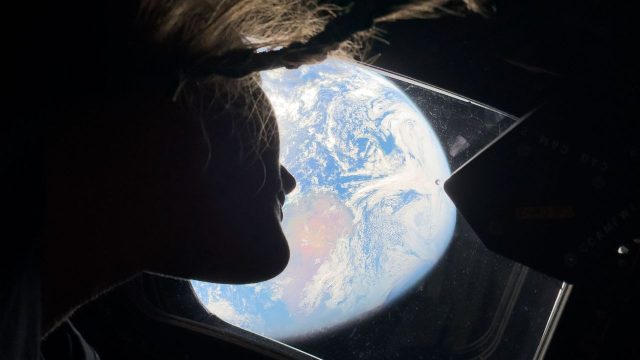
If those images beamed back from the Artemis II this week didn’t “catch the breath” in your throat, you can’t “be fully alive”, said Sam Leith in The Spectator. “The experience of seeing the Earth photographed from space” has “an effect on our collective imaginations”. The Apollo 8 “Earthrise” image, for example, is widely thought to have “kickstarted the modern environmental movement”.
Artemis II is “one small step towards living in deep space”, said evolutionary biologist Scott Solomon in The Washington Post. I see parallels between “establishing an enduring human presence” on the Moon (and, ultimately, Mars) and “the processes by which animals and plants” arrive on Earth’s islands and “evolve into new species”. Future generations living on other planets will “gradually become different from people on Earth”. And that will be “a giant leap for all humanity”.
Are new Moon missions worth the astronomical cost?