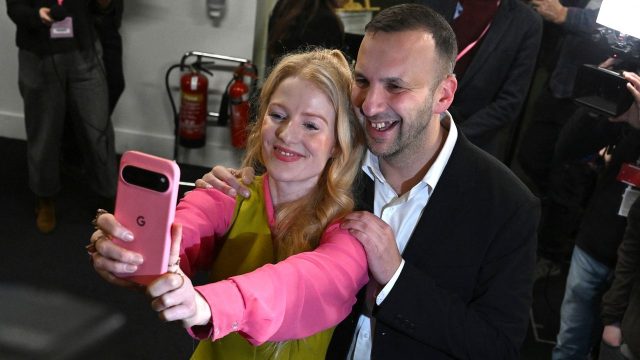
The Greens’ first ever Westminster by-election victory has prompted further soul-searching for a listless Labour Party less than two years on from their landslide election win.
“By-elections seldom matter much once the circus packs up, but this one is existential” for Labour, said Patrick Maguire in The Times. The rise of Reform UK has been much talked about and the “essay question of British electoral politics remains how the left might beat them”. But now “nowhere in the country does the answer appear to be a vote for the Labour Party”.
But the Gorton and Denton result is as much about the Greens’ emergence as an electoral force as it is about the love Labour’s lost.
What did the commentators say?
The result caps six months in which Zack Polanski “has presided over a leap in his party’s poll ratings and sought to retool its message”, said Politico. In her victory speech Hannah Spencer, the party’s fifth and newest MP, followed the way Polanski has “tried to foreground cost-of-living concerns, at the expense of the Greens’ traditional eco message”. But the party has also faced claims that it is stoking division.
“The extent to which the party has campaigned in an unashamedly sectarian manner is shocking,” said The Times in an editorial. The party released a video in Urdu, appealing directly to the constituency’s large Muslim population, featuring Keir Starmer shaking hands with Narendra Modi, the Hindu nationalist prime minister of India, while Spencer said voters should “punish Labour for Gaza”. The win does nothing for “those who believe elections should be fought on issues, not religious identity or about conflicts far away”.
Nigel Farage claimed that there were high levels of “family voting”, an illegal practice which can include husbands instructing their wives how to vote. “Whether the vote was genuinely corrupt,” said Jake Wallis Simons in The Telegraph, “there is little doubt that we are witnessing the manipulation of tribal voting as a decisive power-play in our political system.”
But “in reality the result was not a victory for sectarianism or ‘cheating’”, said Adam Bienkov in Byline Times. Instead it showed the ability of “most voters in the Greater Manchester seat to reject the politics of Reform”. In Matthew Goodwin, Reform chose “an extreme and divisive candidate, with a history of dabbling in racist comments and discredited race science”, and he has been rejected by voters. “For now at least, in a battle between hope and hate, hope has won.”
What next?
The Green Party is now a “large, viable, organised electoral vehicle, aiming to replace Labour at the polls”, said Ben Walker in The New Statesman.
The result in Gorton and Denton “says to the one in three current Labour voters also giving thought to switching that a Green vote is no longer a wasted vote”. With the upcoming local and devolved elections in May, Green “gains in London and urban northern England, as well as Wales and Scotland, would embed the feeling that the Labour Party is no longer the pre-eminent party of the left”.
The Greens can now “position themselves as the ‘anti-Farage’ party in swaths of working-class Britain”, said George Parker and Jennifer Williams in the Financial Times. In 2024, they won 6.7% of the national vote and four seats at Westminster, “but the party came second in 40 constituencies, 18 of which were in London. In all but one of those seats, the party was second to Labour.”
Gorton and Denton by-election victory shows that ‘a Green vote is no longer a wasted vote’