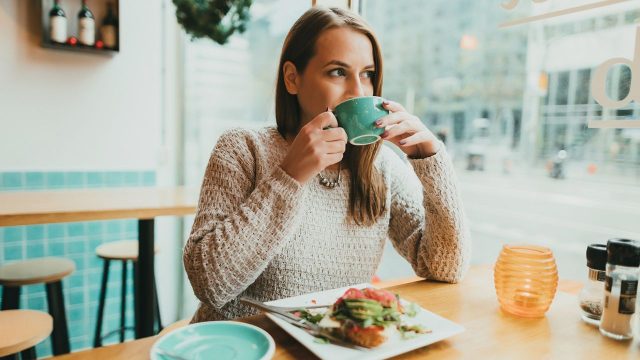
Table for one, please
More of us are dining out solo, and enjoying it, apparently. Recent surveys show that reservations for one have risen dramatically, and 49% of Gen Zers say they dine out alone at least once a week. While lunch is the most common meal to eat alone, solo suppers have become a self-care ritual for some diners able to find places where they don’t feel judged by observers or resented by staff who might worry about losing revenue to a twotop left half empty. “As a longtime waiter, I can guarantee that your server does not care at all,” said Darron Cardosa in Food & Wine. “Embrace your solitude and enjoy a meal with just yourself.”
Make mine with tallow
The “Make America Healthy Again” movement is making a difference in the nation’s food aisles. While many of their claims lack scientific backing, social media influencers such as the MAHA Girls and podcasts like Culture Apothecary are echoing the talking points of Health and Human Services Secretary Robert F. Kennedy Jr.: beef tallow over seed oils, cane sugar over corn syrup, nix to ultra-processed foods and artificial food dyes. Nestlé, Starbucks, and other major companies have responded by tweaking ingredients, while Walmart has cleared space in its grocery aisles for moringa, chia seeds, and lion’s mane mushrooms. The push may not last, but health advocates are hopeful. “Food is the only bipartisan issue we have,” food and wellness consultant Maha Tahiri told The New York Times. “This is really a moment if we play it well.”
Protein everywhere
Protein everywhere “There’s no escaping the sense that we’re living in the era of peak protein,” said Emily Heil in The Washington Post. Forget protein bars and shakes. Boosted levels of the macronutrient are now a marketed feature of everything from pasta to potato chips to moon pies. While justly touted as critical to building and retaining muscle mass, protein has become synonymous with healthy for many consumers. Experts note that most of us are getting plenty of protein without having to supplement our intake and should resist doing so by neglecting other key nutrients. “Treating protein as a holy grail of health ignores the fact that your body’s needs are complex and nuanced,” said Caroline Tien in Self. “Your diet should reflect that.”
Got milk again?
Cow’s milk is making a comeback. Reversing a long trend, sales of dairy milk are on the rise and alt-milk sales declining. The protein craze and MAHA’s interest in raw milks have contributed to the rebound, and milk has enjoyed an image makeover. Demonized in the 2010s as inflammatory, unethical, and environmentally harmful, it’s being recognized again for its health benefits and for being purer than processed soy, nut, and oat milks. On TikTok and beyond, young consumers who grew up on plant-based milks are discovering dairy for the first time and, perhaps inspired by Nicole Kidman in Babygirl, treating it as the decadent, sexy choice. “After a decade of restriction and replacement,” said Ashliene McMenamy in Bon Appétit, “milk feels nourishing and subversive.”
The Southeast Asian breakout
It was a banner year for restaurants featuring the cuisines of Southeast Asia, with new footholds in fine dining established for several foodways. Kasama, a Filipino tasting-menu restaurant in Chicago, gained a second Michelin star, while the James Beard Award for Emerging Chef went to Phila Lorn for the Cambodian-American cooking at Philadelphia’s Mawn. Minneapolis became the U.S. capital of Hmong cooking thanks to Vinai and Diane Moua’s Diane’s Place, which earned Food & Wine’s Restaurant of the Year honors. It was joined on other bestrestaurant lists by New York City Vietnamese standouts Bahn Ahn Em and Ha’s Snack Bar and by three Laotian restaurants: Baan Mae in Washington, D.C., Bar Sen in Oklahoma City, and Lao’d Bar in Austin.
Flavor combos gone wild
Food collaborations got seriously weird this year. Cruising the grocery aisles in 2025, consumers could find Pepsi tinged with Peeps Easter candy, Chunky soups infused with Pabst Blue Ribbon, potato chips that tasted like IHOP pancakes, a hot sauce spiked with 5-Hour Energy, and other way-out food collaborations. At times, even nonfood products got in on the action. Krispy Kreme and Crocs gave us doughnut-themed clogs, while Red Clay and the hair-care company TRESemmé put out a hot honey called Hot Gloss. That move evoked a hair oil add-in and for me went too far, said Jaya Saxena in Eater. “Absurdity is fun, but I don’t want to drizzle it on my pizza.”
Matcha mania
The focus of tranquil tea ceremonies in Japan, matcha has become a monster in the U.S. The green tea powder now helps sell lattes, cookies, and even KitKats, and matcha bars draw long lines in cities across the country. The boom has caused matcha shortages in Japan and a profusion of counterfeit powders. Meanwhile, Americans are drowning the tea’s subtle grassy flavors in sweeteners, ignorant of the four principles of the matcha tea ceremony: respect, purity, harmony, and tranquility. “Sure, let’s sip our strawberry matcha lattes,” said Frances Giangiulio in Salon, “but maybe, while we’re sipping, we can remember the farmers who picked the leaves and the monks who first whisked them into something more.”
From dining alone to matcha mania to milk’s comeback