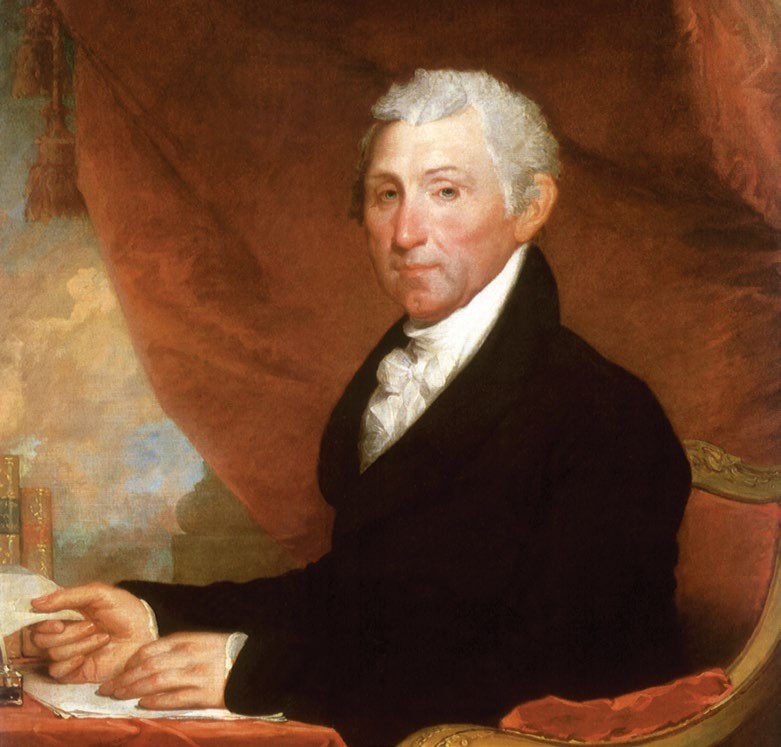
In December 1823, President James Monroe declared in his State of the Union address that “the American continents… are henceforth not to be considered as subjects for future colonisation by any European powers”, setting out a vision of US dominance over the New World.
Now, President Trump has revived the so-called Monroe Doctrine to justify his aggressive foreign policy in the Americas
Why was the Monroe Doctrine established?
In the years before Monroe’s address, Spain’s vast empire in the Americas had collapsed. Venezuela, Mexico and around a dozen other former colonies had won independence and opened their once-closed ports to American and British trade.
Rumours were circulating that Spain might try to reconquer its New World possessions, while Russia claimed control of the Pacific Coast from Alaska to Oregon. Monroe’s statement was, at the time, quite limited: he said that the US would “not interfere” with existing colonies (Britain and Spain’s Caribbean territories; and Russia’s in Alaska, which lasted until 1867).
Did other countries take Monroe’s warning seriously?
Not initially. The young US was not yet a major military power, making the policy more of an aspiration than a declaration of intent; it was not known as the “Monroe Doctrine” until the 1850s. And it did not, for instance, stop the French from invading Mexico and installing a puppet monarch, the Austria-born Maximilian I, in 1864, while the US was distracted by the American Civil War. It was only as the century came to an end that America started to meaningfully enforce and broaden the doctrine, during what became the nation’s only period of out-and-out imperial expansion beyond the continental United States.
How did US policy change?
The Monroe Doctrine was invoked during the 1898 Spanish-American War, when the US helped liberate Cuba from Spanish rule – and also took direct control of Madrid’s former possessions of Puerto Rico, Guam and the Philippines (which the US held until 1946). In that year, the US also annexed Hawaii.
Emboldened, President Theodore Roosevelt would radically expand the doctrine after taking office in 1901. When British, German and Italian gunboats blockaded Venezuelan ports in 1902 to collect debts, he told the Europeans to strike a deal quickly with the dictatorship in Caracas or see a US fleet dispatched against their ships. The Europeans complied. In 1904, he laid out what became known as the Roosevelt Corollary to the Monroe Doctrine. The US, he said, must act as “an international police power” to keep America’s backyard “stable, orderly, and prosperous”. A period of extensive interventionism followed.
What did that entail?
Between 1903 and 1934, US marines were deployed to half a dozen countries in the Western hemisphere. These included Honduras, where troops were sent seven times to quell revolutions; Nicaragua, which was occupied near-continuously from 1912 to 1933; the Dominican Republic, which US forces occupied in 1916; and Haiti, which the US controlled between 1915 and 1934.
Nicolás Maduro joins a long list of Latin American and Caribbean leaders who have been dislodged by the US, from Nicaraguan president José Santos Zelaya, in 1909, to Hudson Austin, who led a Soviet-backed coup in Grenada in 1983. The great exception, of course, is Cuba’s Fidel Castro, who resisted not only the Bay of Pigs Invasion (1961) but a series of attempts on his life.
Why did such interventions happen?
Their goals were to protect sea routes – including the new US-owned Panama Canal, completed in 1914 – and the interests of US companies such as United Fruit, which controlled the trade in bananas and other tropical fruits. A powerhouse in Washington, the company backed coups against elected leaders and the installation of accommodating puppet governments (hence “banana republics”).
These occupations became military quagmires, in which hundreds of US soldiers and tens of thousands of civilians were killed. The “Banana Wars” became very unpopular in the US; and in 1933, the president, Franklin D. Roosevelt, put an end to them with his Good Neighbour Policy, which stressed regional cooperation over military force.
Did FDR’s policy last?
It did in the sense that the US became, in theory, anti-imperialist again. But in the Cold War, the Monroe Doctrine was invoked to combat the spread of Soviet-style communism across Latin America. In 1954, shortly after CIA-backed insurgents toppled a Leftist government in Guatemala, the secretary of state, John Foster Dulles, said the “intrusion of Soviet despotism” there was “a direct challenge to our Monroe Doctrine, the first and most fundamental of our foreign policies”.
Over the following decades, the US covertly supported the overthrow of left-wing governments in Brazil (1964), Bolivia (1971), Chile (1973) and Nicaragua (the 1980s), among others. The historian John Coatsworth has detailed 41 interventions between 1898 and 1994, 17 direct and 24 indirect. In many of these cases (notably Guatemala and Chile), the US was implicated in atrocities: mass extrajudicial killings and forced “disappearances”.
With the collapse of the Soviet Union, such interventions fell out of favour; in 2013, the then-secretary of state, John Kerry, won applause when he told an audience of Latin American officials, “The era of the Monroe Doctrine is over.”
How has President Trump resurrected the doctrine?
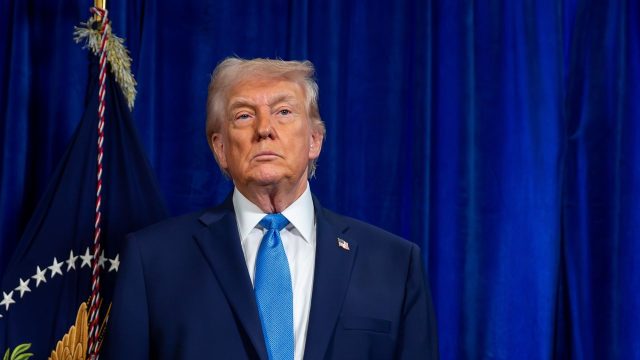
Trump keeps a portrait of Monroe in the Oval Office, and his administration’s recent National Security Strategy laid out a “Trump Corollary” to the doctrine, known as the “Donroe Doctrine”. The US, it states, will keep the Western hemisphere “reasonably stable and well-governed”, and will insist that governments cooperate to combat mass migration, drug trafficking and “hostile foreign incursion or ownership of key assets”.
It soon followed through with the removal of Maduro – whom it accused of drug trafficking and hosting “foreign adversaries”. Trump later asserted that the US would “run” Venezuela. He has also threatened to use military force in Mexico and Colombia, to “take back” control of the Panama Canal, and to annex Greenland. The Monroe Doctrine “was very important, but we forgot about it”, Trump said last month. “We don’t forget about it any more.”
Donald Trump’s 21st century take on the Monroe Doctrine harks back to an earlier era of US interference in Latin America