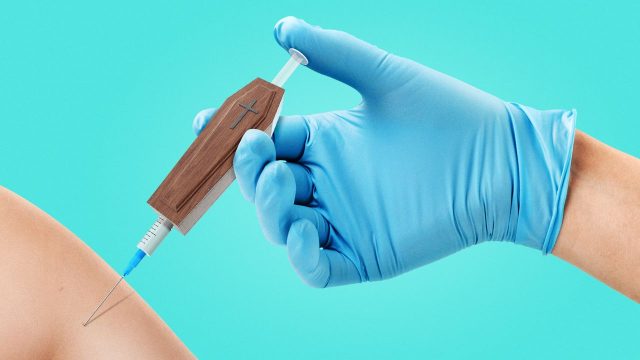
A new injectable filler is making a splash for being minimally invasive and for the source that fills its vials: donated human fat from cadavers. The eerie origins of the shots have led to a mixed response. Some praise the innovations; others worry about future complications.
The rise of ‘corpse cosmetics’
Tiger Aesthetics’ new product, AlloClae, has become popular with “patients eager to look their best in the boardroom” without “undergoing general anesthesia or taking days off for recovery,” said Business Insider. Rather than using an implant or a patient’s body fat to add volume to hips or augment breasts, AlloClae relies on “donor fat from a cadaver as a first-of-its-kind body filler.”
While the procedure could cost as much as $100,000, people are “paying for the convenience,” cosmetic surgeon Sachin Shridharani said to Business Insider. It is about “not having the downtime, not needing more aggressive procedures, not having an anesthetic.” On social media, influencers sometimes refer to buttocks injections of AlloClae as ‘zombie BBLs,’ ‘zombie filler’ and ‘corpse cosmetics.’
The rise in GLP-1 use has contributed to the trend, along with “filler fatigue” as traditional fillers can “cause problems such as puffiness and lymphatic issues,” said The Guardian’s Ask Ugly column. People who are on Ozempic or are dieting heavily are “really thin and don’t have enough fat to transfer,” plastic surgeon Melissa Doft said. They want their “legs and their belly to be skinny but want their breasts to be fuller.”
Even though AlloClae comes from cadavers, the product is “less macabre than you may think,” said Business Insider. Tiger Aesthetics purchases abdominal fat cells from organ donations at tissue banks. Then the company “screens it for diseases, purifies it and processes it.” The practice of using cadaver material is not unprecedented. There is already a donor fat product called Renuva, used for facial injections, while AlloClae uses higher volumes for the body. Cadaveric bones have also been recycled in dental grafts. Cadaver tissue, known as “allografts,” is “commonly used in surgically treating ACL tears,” said The Guardian.
Concern brews among surgeons
While a select few plastic surgeons have begun offering AlloClae injections, others have concerns, “especially when it comes to using AlloClae in the breast,” said The Cut. Breast is not “just fat, it’s glandular, hormonally active and requires lifelong imaging for cancer screening,” said plastic surgeon Adam Kolker. Anything injected can “create new densities, nodulifications or cysts,” which can “complicate mammography and ultrasound.” Without imaging and safety studies, physicians can’t responsibly predict how AlloClae will “behave during cancer surveillance.” A new “biologic material with unknown imaging behavior” becomes a “big diagnostic question mark.”
AlloClae is a “good tool,” said surgeon Glenn Lyle to The Guardian, but there is wariness about how eagerly people are adopting it. The industry is “moving too fast with this” without “follow-up studies.” The product is “being put in willy-nilly.” AlloClae is FDA compliant, which is “not quite the same as it being FDA approved,” the outlet said. Because human fat tissue is considered an existing product, it is “not subjected to the same standards as cosmetic interventions such as botox, dermal fillers or breast implants.”
Others are worried that fears about the origins of AlloClae could have a negative impact on organ donation. If people start “restricting their participation” due to fears of the product being used for cosmetic purposes, “the harm may outweigh the good,” Ryan Pferdehirt, the vice president of ethics services at the Center for Practical Bioethics, said to the Guardian. We need “skin grafts, bone marrow transplants and organ donation.” That is “far more important, I think, than the cosmetic aspects.”
Patients are seeking help from cadavers for these innovative fat transfers