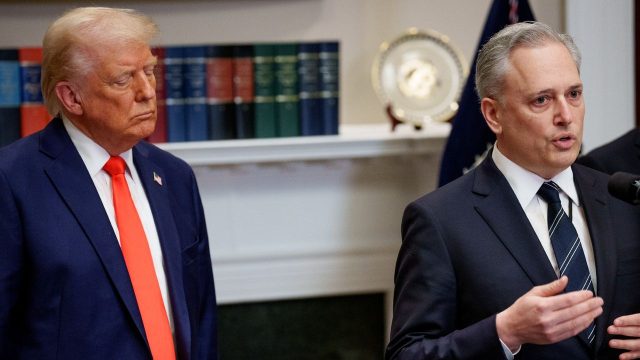
The Trump administration has “pulled a 180” on AI oversight, said Tina Nguyen in The Verge. For most of his second term, President Trump has been a vocal champion of the artificial intelligence industry. Heeding the advice of his AI czar, venture capitalist David Sacks, he repealed former president Joe Biden’s AI safety orders, lifted export controls on AI chips, and even threatened to sue states that tried to pass and enforce their own AI regulations.
Suddenly, though, the administration has changed its tune. The New York Times reported two weeks ago that the White House is considering an executive order that would create a working group to examine potential AI oversight procedures, including “a formal government review process” of new AI models before they’re released. That shift was the result of three big changes. First, the arrival of Anthropic’s powerful new Mythos model—which has superior hacking abilities—“spooked the national security apparatus.” Then other countries began to craft their own AI regulations. And finally, Sacks was pushed out of his czar role in March, “giving Silicon Valley one less mechanism to pitch an industry-friendly, ‘innovation-at-all-costs’ agenda to Trump.”
Trump tends to declare a “whole bunch of things to be stupid” only to later realize they were “important and structurally necessary,” said Mike Masnick in TechDirt. He criticized the Biden administration for working with OpenAI and Anthropic on policies such as “voluntary testing” of frontier models. That effort drew howls of protest from tech bros and VCs like Marc Andreessen, who later “went all in for Trump” in the election. Joke’s on them. Trump’s new plan is even more “stringent and compliance-oriented” than Biden’s. The administration should have taken AI fears seriously all along, said Casey Newton in Platformer. But it’s better late than never. “The models are getting more capable—and more dangerous.”
AI safety shouldn’t be a partisan issue, said Dean Ball and Ben Buchanan in The New York Times. There’s commonsense action that Congress can take immediately “to tighten controls on the critical technologies that China needs,” like AI chips. It should work to “safeguard kids’ safety through age limits and parental controls.” And there should be “appropriate guardrails on AI development,” beginning with mandatory audits of developers’ safety claims “by independent expert bodies overseen by the government.” But the U.S. under Trump will likely never lead the way on regulating AI, said Parmy Olson in Bloomberg. His proposed working group would include tech execs, letting them “write the rules meant to police them.” Abroad, however, regulation has sharper teeth. The London-based AI Security Institute is “the best-funded AI vetting agency in the world,” and the only government agency Anthropic trusted with Mythos. That’s the one to watch.
The Trump administration is switching things up