Even before he stood on the podium to give his State of the Nation address (Sona), many opposition parties had already given President Cyril Ramaphosa the thumbs down, with the official opposition uMkhonto weSizwe (MK) party calling out what it deemed his failure to deliver on most promises made over the past eight years as South Africa’s leader.
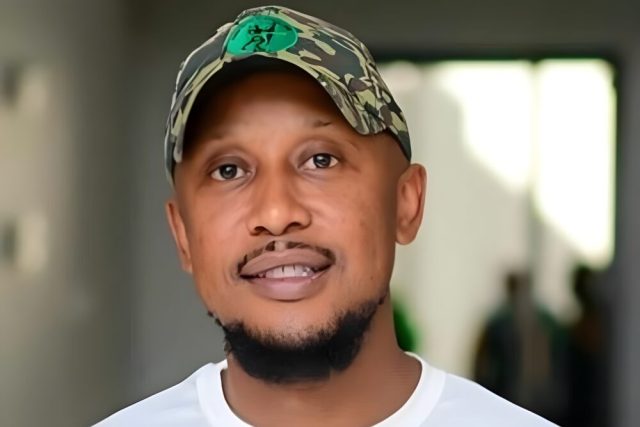
“This is a waste of time. It is a state of nothingness address. He has not delivered anything in the [nine] Sonas he has delivered,” MK national spokesperson Nhlamulo Ndhlela told the Mail & Guardian.
“Tell me about one infrastructure project he has completed during his tenure. What has Cyril launched that he started? Give me one building that Cyril has opened for public service that he initiated from scratch.”

Ndhlela. Photo: X
African Transformation Movement (ATM) president Vuyo Zungula was equally scathing, saying years of government failure meant South Africa was not a capable state.
“Since 2018, we have been fed grand promises — a bullet train, a university in Ekurhuleni, a smart city — yet none of these have materialised. Instead, the country is deteriorating before our eyes,” Zungula said.
“Communities in Midrand, at the heart of economic activity, are queuing for water from trucks like refugees in their own country. This is not progress; it is regression.”
Ramaphosa continued to sign off on public-private partnerships (PPPs) while the state abdicated its responsibility to deliver basic services,” Zungula said.
“After nearly eight years in office, excuses have run out. What remains is failure. I cannot ignore the collapse of safety and security under this administration. We are witnessing mass murders almost daily, yet instead of strengthening policing, intelligence and community safety, the president chose to centralise state security in his own office.
“South Africans are not safer. They are more fearful. Every credible metric used to assess governance, service delivery, infrastructure, safety, economic growth and state capacity points to one conclusion.”
He added that Ramaphosa’s presidency has failed and that the gap between speeches and reality grows wider each year.
“I therefore do not listen to Sona to be inspired by words but to measure accountability. By that measure, this president has failed to improve the lives of South Africans and has overseen the steady decline of the country since taking office.”
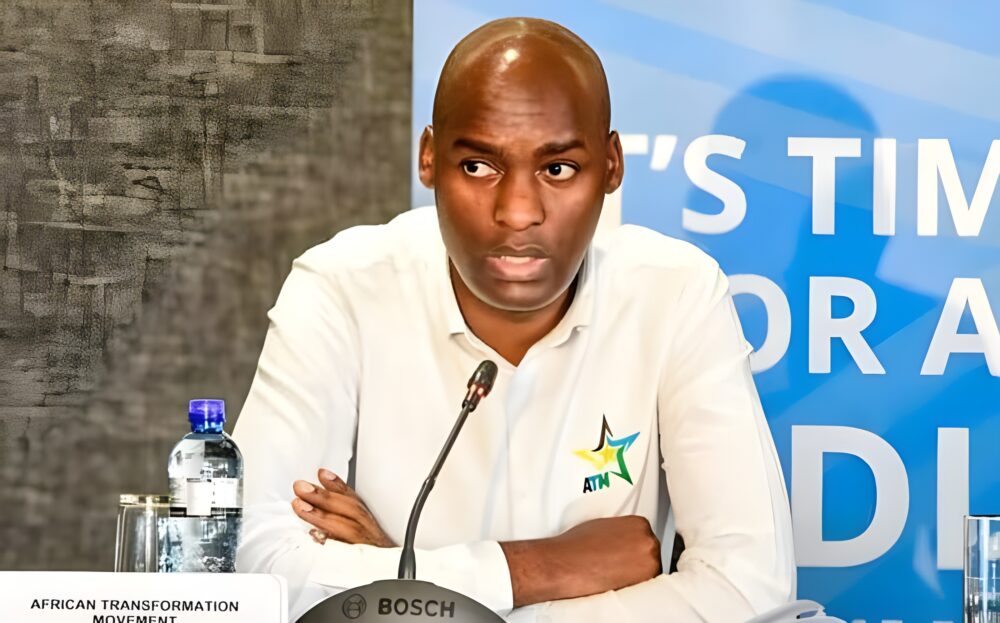
Vuyo Zungula Photo: X
Sona has become a ritual of MPs “dressing in their matric dance outfits”, made more intolerable by a government of national unity (GNU) that “claps like well-trained seals while Ramaphosa continues to run the country down a path of failed delivery, joblessness and unchecked lawlessness”, ActionSA chairperson Michael Beaumont said.
Inkatha Freedom Party (IFP) chief whip in parliament, Nhlanhla Hadebe, whose party is in the national coalition government, said while there has been measurable progress on certain commitments made during last year’s speech, several critical areas still require urgent and sustained intervention.
“We note modest improvements in the economy, including an uptick in quarterly GDP figures driven by a stabilising energy supply and improved export volumes. Additional positive indicators include South Africa’s removal from the grey list, relatively steady interest rates and gradual economic recovery,” Hadebe said.
“Progress has also been observed in the upgrading of key national road corridors, including sections of the N2 and N3, as well as the rehabilitation of rural bridges in KwaZulu-Natal and the Eastern Cape. The IFP further commends the government’s acceleration of the long-overdue review of the 1998 white paper on Local Government.
“This process is critical to ensuring that governance frameworks reflect current realities, including the reassessment of municipal funding models, the role of traditional leadership and the strengthening of accountability mechanisms for dysfunctional municipalities.”
To get South Africa back on track, a coordinated water security plan is needed, Rise Mzansi said.
In a statement ahead of Ramaphosa’s speech, the party said close to 50% of potable water is wasted due to crumbling infrastructure. Cities, towns and villages are without water, which violates one of the most basic human rights.
It said more should be done to give municipalities the capacity to keep people and property safe.
“Both people and property are unsafe. Communities cannot rely on the police and local authorities turn a blind eye to the enforcement of by-laws. Moreover, public infrastructure is routinely damaged and stripped,” it said. “Better coordination between the [South African Police Service] and local law enforcement is needed.”
The party noted that over 100 municipalities are operating on unfunded budgets and owe creditors — particularly Eskom and water boards — high amounts of money, creating a cycle of dysfunction where municipal funds are spent on paying debts rather than advancing service delivery.
“This punctuates the need to accelerate funding reform for local government. Furthermore, municipalities need to be centres of excellence where capable and ethical technocrats and bureaucrats are given space to make the right decisions, not politically motivated ones,” it said. “Municipalities must move away from manual processes and embark on digitisation. This will improve efficiency and eliminate opportunities for nefarious human intent. Moreover, the Investigating Directorate Against Corruption (IDAC) and the Hawks [Directorate for Priority Crime Investigation] must act swiftly to remove corruption from local government.”
South Africans are facing a deepening national crisis marked by weak economic growth, persistently high unemployment — particularly among the youth — rising violent crime, deteriorating public services and a growing disconnect between political leadership and the lived realities of ordinary citizens, the United Africans Transformation party said.
“It has been far too long that the president presents plans without providing a full and transparent report on what the state has actually delivered since assuming office. South Africans are entitled to a clear account of performance, not promises.”
It said South Africa’s deepening inequality could not be meaningfully addressed without confronting the persistent lack of land access and the continued failure of land restitution. Decades after democracy, millions of black South Africans remained landless and excluded from productive land, secure housing as well as participation in agriculture and spatial economic development, the party said.
Even before his speech on Thursday, many opposition parties had already given the president a ‘fail’