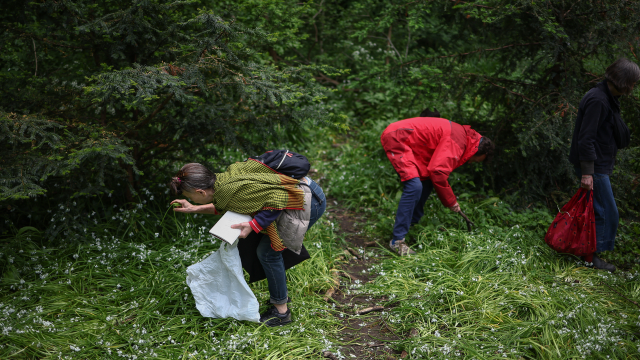
“There are few better ways to immerse yourself in the great outdoors than to forage,” said Connor McGovern in National Geographic. As the countryside springs to life with an abundance of edible plants, now is a great time to start keeping an eye out for ingredients on your next walk.
April is “peak nettle season”. Packed with minerals and vitamins, the herbaceous perennial is surprisingly versatile and can easily be added to soups or used to make tea. Best harvested “sooner rather than later”, make sure you wear gloves to avoid getting stung and only pick the “top few leaves”.
Look out also for wild garlic, which “often grows in dense clusters on the floor of damp woodland and along shaded hedgerows”, said Helen Keating on the Woodland Trust. The leaves and flowers of the native bulb have an “unmistakable” garlicky smell, and can be used to whip up a “wild garlic pesto” or mixed with butter to make a “delicious version of garlic bread”.
Cow parsley, also known as wild chervil, is an “excellent all-round” ingredient. The perennial herb features tiny white flowers in “umbrella-like clusters” and “fern-like” leaves, and can be used in the same way as parsley when cooking. A word of warning: be careful not to mistake it for poison hemlock, which has distinctive purple blotches at the base of its stems, and an unpleasant musty odour.
Now is also the time dandelions “explode across fields, verges, scrubland and any patch of your garden they can set down roots in”, said Carys Matthews on BBC Countryfile. The petals of the bright yellow wildflower can be used to make desserts and “look lovely sprinkled on a cake”.
Be sure to look out for blackcurrant leaves, too, which have palmate lobes and a “serrated margin”. A handful of “fresh, young leaves” from the deciduous shrub can be used to make a “tasty tea with antimicrobial and anti-inflammatory” properties.
And if you’re on a health kick, try swapping out spinach for common mallow leaves or using the edible weed to thicken up soups. Identifiable by its “five-lobed leaves”, it’s rich in vitamins A, B, C and E and come summer its mauve-coloured flowers can be used to garnish cocktails and salads.
Give your meals a flavour boost with wild garlic, dandelions, and blackcurrant leaves