On 23 January 2026, Minister of Employment and Labour Nomakhosazana Meth announced her intention to elevate the legal status of cultural and creative workers to enable them to get benefits usually afforded to permanent employees.
This is seen as a tipping point for the diverse group of about 7% of national employment that constitutes the sector.
“Over the past three years, we’ve seen different ministers, officials have changed and there have been new directors general,” says Gabi le Roux, the founding general secretary of the Trade Union for Musicians of South Africa (Tumsa).
“We came across the same obstacle every time; that the LRA had a specific definition for people like us. I nearly fell off my chair when the announcement was made. Cosatu was also overjoyed.”
The sector is united in its determination to see reforms to the Labour Relations Act in a way that wasn’t viable in the case of the controversial Copyright Amendment Bill (2017) and the Performers Protection Amendment Bill (2016), currently before the Constitutional Court of South Africa.
Once submissions have been reviewed, the minister will determine whether workers in the sector can be deemed employees.
Based on an interlinked investigation into the sector by the National Minimum Wage Commission, the minister might decide to publish a sectoral determination for the sector. An announcement is possible by the end of March, the Acting Deputy Director General of Labour Policy and Industrial Relations Thembinkosi Mkalipi says.
For the South African Guild of Actors (Saga) the idea that performers can be protected through a sectoral determination is not new. Sectoral Determination 10 was introduced to regulate the employment of children in performances decades ago.
Saga suggests that for adult performers sectoral determination should consider:
- Working time rules to fit long shooting days and night performances, while protecting health and family life.
- The management of overlapping contracts and multiple engagements.
- Minimum standards for food, accommodation and transport when performers work away from home.
- A dedicated framework for dangerous and hazardous performances, including stunts and physically
risky scenes. - A structured space for collective bargaining, so that performers and those who engage them can negotiate fair, predictable contracts at industry level rather than re-negotiating the basics on every job.
Ultimately, the Labour Relations Act, the Basic Conditions of Employment Act, the Minimum Wage Act and the Compensation Act should be amended.
“With all these laws, it’s like raising children,” says Cosatu parliamentary coordinator Matthew Parks. “From pregnancy to the birth, to taking them to crèche, to primary school, it takes at least five years from the bureaucrat’s desk in Pretoria, through public comments, parliament, presidency, cabinet and back to the bureaucrat’s desk.”
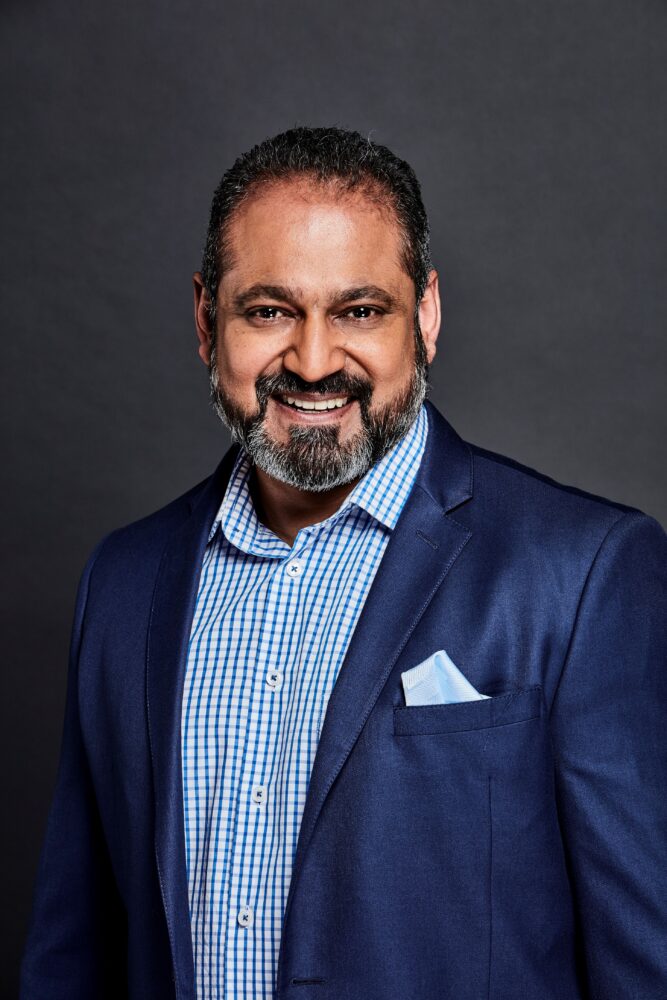
chairperson Jack Devnarain.
Photo: File
Together with Tumsa, Saga and others, Cosatu began to fathom the complex world of technical workers and performers who fell through the cracks during the Covid-19 pandemic.
Sometime later, discussions took place with the National Economic Development and Labour Council to allow government and business to put forward their ideas.
Cosatu raised the plight of atypical and vulnerable workers such as actors, artists, call centre workers and ride-sharing drivers who were without protection.
“We were dismissed as maverick lunatics by government and business, who thought this was just pie in the sky and these people were self-employed,” Parks says.
The team had to find a way to split the de facto alliance between government and business.
After the 2024 elections there was a breakthrough with in-principle agreements from government to legislative changes that determine the minimum number of shifts an atypical worker could be called for and the requirement that they must be called for at least four hours of work a day under the Minimum Wage Act.
Cosatu also got a foot in the door with regard to the rights of actors as atypical workers to form trade unions and engage in collective bargaining.
“We’re excited as this has been a long journey and it’s about ensuring all workers are covered and able to exercise their rights and that our labour laws keep pace with the changing nature of work,” Parks said.
At a consultative meeting convened by the South African Communications Industries Association to discuss the Department of Employment and Labour’s proposal to redefine the status of workers in the entertainment industry, Saga chairperson Jack Devnarain said Saga had been working to bring about the changes since it was established in 2009.
“When government opens its doors, you take the step because it doesn’t happen too often,” he said.
Unlike their counterparts across the world, performance artists are not unionised and don’t have an opportunity for collective bargaining.
The Swedish actors union has been in existence for 135 years and the largest actors union in the world, the Screen Actors Guild — American Federation of Television and Radio Artists, enforces strict labour standards for its 160000 to 170000 members which include actors, voiceover artists, recording artists and broadcasters.
Mkalipi said the department was aware of international best practice and how workers in Europe and North America were regarded.
“How is it possible that workers in Hollywood can go out on strike and workers in South Africa doing the same thing cannot go on strike if they want? They cannot go on strike precisely because they are not employees,” Mkalipi said. “We have to look at the full picture. And then take it from there”.
Devnarain said tricky and nuanced conversations needed to take place, pointing out that Saga was addressing disinformation being spread by certain industry players.
“They cannot by the stroke of a pen change the nature of our work,” he said.
“Government is fully aware of this because we have been making inputs since February of 2020.”
There will probably be more opportunities for further stakeholder engagements but as Devnarain pointed out, the train is in motion.
“The department will screen comments from the workers who want that protection and the people representing the other side — employers in the sector — who are going to
say: ‘No, you should not do this,’” Mkalipi said.
Organisations like the Commercial Producer’s Association which resisted transformation under the copyright reform project also resist reform for labour protections.
Agents like the South African Performing Artists Managers Association representing actors and performers are also opposed to the proposed legislative reforms.
Mkalipi cautioned that changes would need to take place in the sector itself.
“If freelance creatives and crew are deemed to be employees, they will have to act as employees and protect themselves,” he said.
“They can organise themselves into trade unions and do exactly what the workers in America do in order to protect themselves and negotiate with their employers. Then go out on strike if they want to go out on strike.
“They’ll be able to go to court if they want to go to court, to the Labour Court, to the CCMA and all those issues.”
“My problem is that most times when I interact with this sector, I see that they like to play politics and they think that politicians will be able to give them what they want and solve their problems,” Mkalipi said.
“My approach is that we’ll look at the law that prevents you from organising like all other workers but then it’s up to you.
“The American workers in this sector have been able to go to strike because they’ve got strong organisations that represent the interests of workers in the sector and they’re able to negotiate on behalf of those workers. Is it the case here? I don’t think so at this stage.”
There is a lot of work the organisations need to do to prepare themselves for the battles ahead for themselves and for future workers in the sector. “I’m not sure whether they are doing that,” Mkalipi said.
“We have the technology available for a fully regulated sector where proof of work can be recorded and statutory deductions such as PAYE, UIF and voluntary subscriptions such as pension and medical schemes are deducted proportionally by each registered employer
who contributes to a full-time music practitioner’s source of income,” Le Roux said.
Tumsa will be calling a special general meeting for all those related as individuals to the South African music industry — composers, songwriters, producers, performing musicians, session musicians and DJs.
The aim is to reconstitute the union and bring back on board those who have fallen by the wayside because of failure to get the legislation amended.
Government’s proposed labour reforms could finally extend employee protections to South Africa’s creative workforce but unions warn the real work starts now