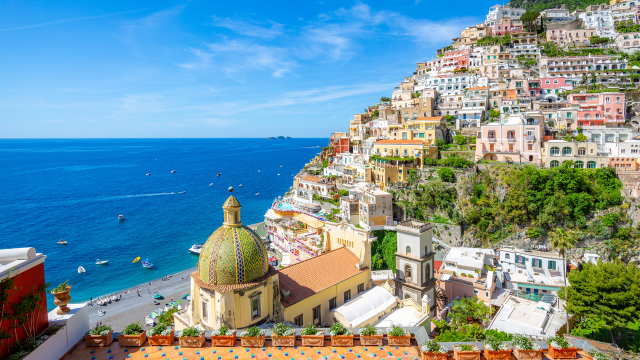
With its pretty pastel houses, shimmering blue water and rugged hills, few places are quite as beautiful as the Amalfi Coast. The dramatic setting has inspired countless writers, including Patricia Highsmith who first visited Positano in the 1950s. From her hotel balcony early one morning, she spotted a pensive young man walking alone on the beach – a chance sighting that sparked the idea for her novel “The Talented Mr. Ripley”.
Spring is a wonderful time of year to visit, before the crowds descend for the summer months. And while there are plenty of lavish hotels scattered among the clifftop towns, there are more affordable options too. Here is our mini guide to the Amalfi Coast for a taste of la dolce vita.
What to do
Ravello, “the region’s dreamiest hill town”, is a great place to start, said Louise Roddon in The Times. Wander through the medieval streets, then stop by at “the elaborate villas of Rufolo and Cimbrone, each set within highly romantic gardens”. The former inspired scenes from Richard Wagner’s “Parsifal” and boasts a terrace with a “wonderful sunset lookout along the coast”.
“If it’s warm – actually, even if it’s not – get out on the water,” said Elise Taylor in Vogue. Be sure to book a boat trip during your stay; the “most popular swimming hole” is Grotta della Smeraldo – a tranquil cave in Conca dei Marini (between Amalfi and Positano).
And if you want to get a feel for the area but don’t fancy braving the “squiggly hairpin bends” of the famed Amalfi coast road, consider hopping on the Sita bus which stops at towns all along the Sorrentine peninsula. It’s a great way to soak up the views of “lemon groves, pine-fringed bays, Saracen towers and pretty villages”.
For history buffs eager to “sample ancient Italy”, a trip to the “mesmerising ruins” of Pompeii is a must, said Helena Smith in Lonely Planet. “Achingly frozen in time” since the eruption of Vesuvius in AD79 , the city’s “frescoed homes, businesses and baths” remain waiting for their occupants to return.
Where to stay
If it’s “unparalleled” views you’re after, then the Caruso Belmond Hotel is a safe bet, said Taylor in Vogue. Nestled on a cliff overlooking the coast in Ravello, the “dazzling historic gem” is set within an 11th-century former palace. From the moment you step through the door you’ll feel “whisked away to another era” while outside you’ll find a pool “which has a serious claim to being one of the most picturesque in the world”. Sipping a Caruso spritz from one of the sun loungers while looking out at the sea is “about as close to paradiso as it gets”.
There are some excellent “mid-range B&Bs” too, said Smith in Lonely Planet. Stand-out options include “Casa Giovanni da Procida, prettily perched La Fenice in Positano and hillside Ercole di Amalfi, just outside Amalfi town”.
Eating and drinking
“You’ll find spaghetti alle vongole (with fresh clams) on practically every menu in the region,” said Smith in Lonely Planet. And of course, the Amalfi Coast is within “dough-throwing distance” of Naples, which is home to some of Italy’s best pizza.
Or, for “pure in-your-face romance”, book a table at La Sponda in Positano, said Nicky Swallow in Condé Nast Traveller. The “dreamy” restaurant – which reopens at the end of March – features a “beautiful vaulted dining room” lit by “400-odd suspended candles” and an “equally atmospheric” terrace looking out over the “theatrically lit town”. Dishes are “unfussy” and delicious; expect classics like “spaghetti with lobster fished from the waters round Galli islands” and a “light-as-air hot lemon soufflé” made with fresh lemons from Amalfi.
History, pasta, scenic views – this sun-drenched stretch of Italy’s southern coast has it all