
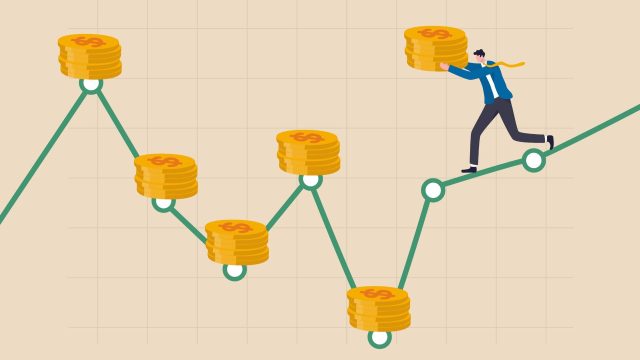
The term may sound complicated, but the concept is simple: With dollar-cost averaging, you regularly invest small amounts over time. This could happen in the form of stocks, ETFs, mutual funds or any type of investment that fits your goals.
The real key? Consistency. The whole point of dollar-costing is to stick to your set investing schedule, regardless of what may be going on with the markets.
What is dollar-cost averaging?
DCA is the “practice of investing a fixed dollar amount on a regular schedule, no matter what the market is doing,” said Experian. “Let’s say you have $12,000 to invest in a particular exchange-traded fund (ETF) and you want to invest it over the course of one year. With DCA, you could invest $1,000 per month so that you have 12 smaller investments,” said J.P. Morgan Wealth Management.
If you have a 401(k) plan through your employer, there is a good chance you are already doing this by investing a certain percentage of every paycheck. Rather than checking in with the markets first or trying to time anything, you are simply contributing the same amount, at the same regular intervals.
What are the benefits of dollar-cost averaging?
Even “experienced investors who try to time the market can come up short,” said Investopedia. But dollar-cost averaging removes the “uncertainty of market timing by adhering to a fixed investment schedule,” which in turn “supports an investor’s effort to invest regularly.” It takes some of the emotion and decision-making pressure from investing away, ensuring your money is actually in the market, where it has the potential to grow.
A slow and steady approach can also have its downsides, however. There are some instances when investing a lump sum, rather than smaller, regular amounts, could yield better returns. And when you have money set aside waiting to invest, that money sitting on the sidelines is not earning as much, and potentially missing out on higher returns. Further, no matter which approach to investing you take, there is still risk involved — the markets could always take a nosedive, or you could pick a bad investment.
How can you implement dollar-cost averaging?
To get started with dollar-cost averaging, you will need to pick your investment, your contribution amount and your investing schedule. For example, maybe you decide you will invest $250 a month into a particular index fund for the next 12 months. Some months, that $250 will buy you more shares of the fund and others less, depending on whether the price of shares has gone up or down. But you will be investing that same amount, at that same interval, either way.
This type of investing removes the uncertainty of market timing