
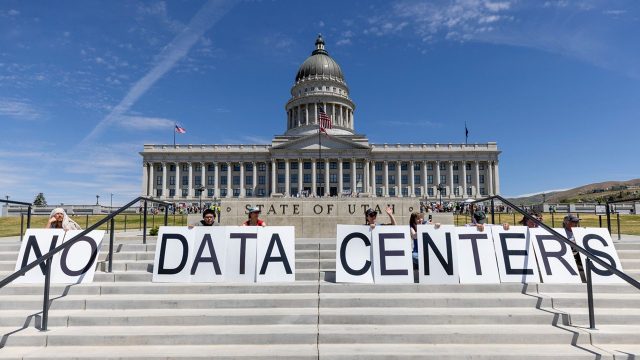
Americans made their feelings about data centers clear in the midterms, said Cecilia Kang and Sophia June in The New York Times. Dozens of winning Democratic candidates, from incoming Texas Gov. Gina Hinojosa to Sen.-elect Sherrod Brown in Ohio, rode the wave of rising anti-tech sentiment to topple Republicans in some of the country’s biggest data-center hubs. In Texas, Clayton Tucker, the first Democrat to be elected state agriculture commissioner in 40 years, credited his victory to support from ranchers and farmers worried about data centers draining water supplies. In Pennsylvania, Democrats’ messaging on data centers flipped four seats in the state senate. And of the 41 local ballot initiatives in 10 states to limit or ban data centers, 40 passed. Shares of AI companies plunged last week as emboldened legislators pledged “to swing a hammer” on the industry. “Expect a tsunami of new rules and oversight,” said Darrell West, a senior fellow at the Brookings Institution.
“Silicon Valley was on the ballot,” said Matteo Wong in The Atlantic, and it lost big. Everywhere, “Americans repudiated the AI boom,” propelling candidates “who made a point of blasting the tech companies” and their noisy, energy-hungry warehouses. More than 70% of voters “oppose data center construction in their area,” but Silicon Valley assumed it could “use its wealth and influence to beat back any substantive opponents or regulations.” Last week, “that playbook failed.” As did President Donald Trump’s defense of data centers as “a national asset,” said The Guardian in an editorial. The president has been “deaf to voter frustration over electricity prices, water demand, and disruption” from these monstrosities, and has cheered their construction. Democrats smartly campaigned on “those costs falling on residents while the gains went to tech billionaires.”
Voters didn’t reject data centers, said The Washington Post. They’re just “demanding better terms.” Many of the state ballot measures sought “financial guarantees from data center developers seeking special tax breaks” or “temporary moratoriums rather than permanent bans.” Other localities decided that large developments consuming substantial amounts of electricity or water should face public approval before breaking ground. Voters wanted candidates who may use moratoriums as “leverage,” but communities that “shun development risk becoming backwaters.” We need data centers “to process the clicks and taps that underpin modern life,” said Thomas Black in Bloomberg. Politicians have been “discussing these projects as if they were nuclear waste dumps.” But other factories—auto plants, for instance—“use electricity, consume water, make noise, and create more traffic.” Should we abandon all those plants as well? There must be a solution that doesn’t shunt economic growth. The takeaway from the election shouldn’t be “the demonization of data centers” but the need to “build them with community concerns in mind.”
People across the nation made their disdain for data centers known