
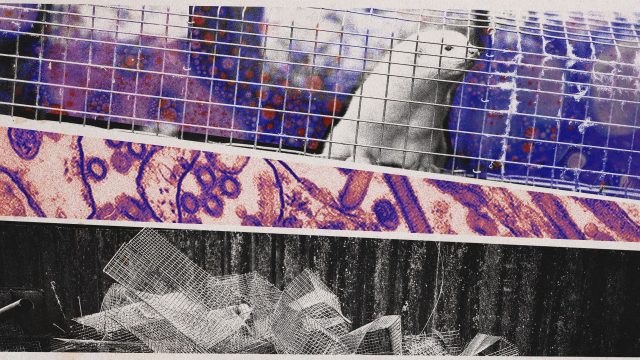
A virulent avian flu strain has made its way to a Utah mink farm, which could potentially open the door for the virus to spread to — and between — humans. Many are concerned about the federal government’s lack of action in preventing the spread.
Bird to mink to human
This strain of bird flu is “so virulent that if a single chicken tests positive, the U.S. government requires farmers to kill the whole flock to protect other farms as well as public health,” said ProPublica. The virus, though, has spread uncontrolled through the mink farm for more than two months, and there are “no federal rules for how to deal with sick mink.” In “other countries where such outbreaks have occurred, the government has ordered farms to kill their mink,” said The Guardian. No similar plans exist in Utah for now.
The outbreak is particularly concerning as “mink have lungs and airways that on a cellular level are remarkably similar to those of people,” said ProPublica. In the past, the animals have contracted Covid-19 and spread it to humans. Bird flu could emulate the same trajectory.
Fuzzy instructions
Despite the risk of a major public health issue, “there’s just not a lot of options out there other than kind of sitting and waiting and seeing what happens,” Utah’s State Veterinarian Amanda Price said to ProPublica. Mink are “bred in captivity and raised on farms, occupying a regulatory gray area between wildlife and agriculture,” said The Salt Lake Tribune. One bird flu vaccine is approved for mammals, but “only USDA Secretary Brooke Rollins can authorize its use.” Because bird flu in mink is new in the U.S., “there’s little research to guide the dosage or determine how well it would work.”
The good news: A pandemic threat is not present just yet. “The risk is greatest among people who have exposure to sick animals,” Brown University epidemiology professor Jennifer Nuzzo said to The Guardian. “If that is not you, I think you can take this off your worry list.” But it still “does not abdicate the government of its responsibility to try to prevent a pandemic.”
The animals have lungs similar to humans